


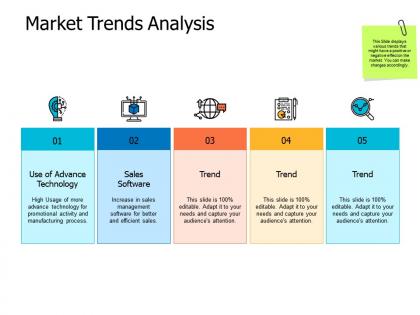
Market trends analysis trend a467 ppt powerpoint presentation inspiration styles




Try Before you Buy Download Free Sample Product
 Impress Your
 Audience
 100%
100% Editable
 Save Hours
 of Time


Eliminate evils with our Market Trends Analysis Trend A467 Ppt Powerpoint Presentation Inspiration Styles. The forces of good get the upper hand.
People who downloaded this PowerPoint presentation also viewed the following :
Market trends analysis trend a467 ppt powerpoint presentation inspiration styles with all 5 slides:
Our Market Trends Analysis Trend A467 Ppt Powerpoint Presentation Inspiration Styles give the forces of good the upper hand. They help eliminate evil.
FAQs for Market trends analysis trend a467 ppt powerpoint
Honestly, I'd focus on the obvious stuff first - revenue growth, profit margins, who's gaining market share. Customer acquisition costs and churn rates tell you a lot too. But here's the thing people miss: the "soft" signals often matter more than the hard numbers. Regulatory shifts can flip an entire industry (just look at crypto). Consumer sentiment changes, new tech disrupting everything. Supply chain issues, executives jumping ship between competitors - all huge red flags or opportunities. Oh, and don't try tracking everything or you'll go crazy. Pick maybe 3-5 metrics that actually move the needle for your space and stick with those.
Honestly, you want to pull from a bunch of different places - social media vibes, Google Trends (I'm obsessed with that site btw), customer data, what competitors are doing. Don't just stick to one thing though. Look for patterns when you combine everything together. Set up some weekly dashboards so you're not scrambling to check stuff manually. Watch for weird spikes or when people start talking differently about things. Pick maybe 3-5 metrics that actually matter for your space and just... stay consistent with tracking them.
Consumer preferences basically drive everything in markets - they force industries to change and adapt. You can track them through surveys, focus groups, social media analysis, and sales patterns. Honestly, what people actually buy matters way more than what they claim they want (we're all terrible at predicting our own behavior). The trick is watching how preferences shift over time, not just one-off snapshots. Different generations love completely different things too. Start by figuring out your main audience segments, then set up regular check-ins to spot changes before your competition does. It's pretty straightforward once you get the rhythm down.
Grab your data from the last 3-5 years and map it against big market events - that's your starting point. Historical trends show you what actually worked when times got rough, not just what you think might work. Check which products did well during downturns and when customers usually start spending more. Marketing channels are huge too - see which ones gave you the best bang for your buck during similar periods. I swear it's better than guessing. Then tweak your inventory and budget timing based on those patterns. Oh, and don't forget seasonal stuff - that data's gold for planning campaigns.
Tech basically flips entire industries on their head by changing what people want and making old business models irrelevant. Look at AI hitting finance and healthcare hard, or how e-commerce keeps destroying malls (honestly feel bad for those places). Changes happen way faster now, so you gotta think about how quick people actually adopt new stuff. Manufacturing usually shifts slowly, but media? Gets turned upside down overnight. Here's what I'd watch - patent filings and where VCs are throwing money. Those are solid early signals for the next big disruption coming.
Honestly, social media's like having a crystal ball if you use it right. Watch what people are actually talking about - not just the viral stuff that disappears in a day. I'd set up alerts for keywords in your space so you're not doom-scrolling all day. Brandwatch is solid, but even Instagram's basic analytics work. The real trick? Look for conversations that keep growing over weeks, not random spikes. Those sustained discussions usually predict what consumers will want way before surveys catch on. Just ignore the noise and focus on patterns that stick around.
Look, traditional methods are basically like trying to predict the future by only looking at old data - which honestly makes no sense when you think about it. You're missing all the real-time stuff happening on social media and forums where trends actually start. Most of these older approaches can't handle the crazy amount of data we have now anyway. I'd mix some traditional techniques with newer real-time tools if I were you. That way you'll catch those early signals before everyone else does.
So basically, people's buying habits shift with the seasons in super predictable ways. Yeah, you've got the obvious stuff - winter coats in fall, swimwear before summer hits. But their whole spending mentality changes too. Holiday shoppers go crazy with impulse buys and gift splurges. Summer = vacation mode spending, winter = cozy comfort purchases and binge-watching gear. Even B2B stuff follows patterns around fiscal calendars (though those holiday slowdowns are the worst). Here's the thing though - if you map your old sales data against these seasonal shifts, you can actually predict when demand spikes and plan your inventory accordingly.
Honestly, mix fundamental analysis with spotting long-term trends. Economic indicators matter - aging populations, tech adoption curves, that kind of stuff that takes decades to play out. Moving averages work great for me, but let's be real, anything past 5 years is basically educated guessing. Track your market's leading indicators and watch for those big shifts that flip everything upside down. Oh, and find 3-5 key drivers that have historically moved your market. Monitor those constantly. Demographics are huge too - way underrated in my opinion.
Dude, competitor analysis is like 70% of understanding market trends - maybe more honestly. Your competitors are basically doing free R&D for you by testing stuff you haven't even considered yet. Watch what they're launching, who they're partnering with, even their hiring patterns. That tells you where customer demand is shifting before it becomes obvious to everyone else. I always tell people to pick 3-5 main competitors and just... stalk them monthly (in a professional way lol). You'll catch industry shifts early and spot gaps they're missing. Those gaps? That's where your opportunities live.
Yeah, demographic shifts can completely change markets. Aging populations = huge healthcare demand, while younger folks are driving all the tech and sustainability stuff. Spending habits shift when different age groups get more buying power - it's pretty wild to track actually. Plus people moving around creates regional opportunities you wouldn't expect. Don't sleep on cultural diversity either, opens up niche markets. I know it sounds basic but the data tells a crazy story. The trick? Spot these trends early before everyone else jumps in.
Honestly, it's crazy how fast global stuff hits us locally. Like when there's international inflation or supply chain mess, you'll see it in local prices within weeks. Interest rate changes from big central banks? Housing and retail spending feel it right away. Tech and export companies get slammed first - local services take longer to catch up, which is kinda weird if you think about it. Currency swings mess with everything too. I'd watch Fed announcements and what's happening in China/Europe since that usually tells you what's coming next.
Honestly, I'd start with Google Trends for search patterns - it's free and super useful. SEMrush or Ahrefs are solid for checking what competitors are doing. Bloomberg Terminal is like the holy grail but costs a fortune, so most people skip it lol. Once you've got data, Tableau or Power BI make everything look pretty professional. Oh, and don't forget social listening tools like Hootsuite - they catch trends before they blow up. Statista has decent industry reports too. My take? Try the free stuff first, figure out what you're actually missing, then spend money on tools that fill those gaps.
Honestly, charts and graphs are a game-changer compared to drowning in spreadsheets. Your brain just processes visual stuff way faster - we're wired that way. You'll spot patterns and weird outliers in seconds that would take forever to find in raw data. Seasonal trends? Super obvious on a line chart. When you're showing this to your boss or whoever, they get it immediately instead of squinting at numbers. I always start with basic line charts first - you can fancy it up later if needed. Way less painful than making people decode tables, trust me.
Dude, Netflix vs Blockbuster is the go-to example for good reason - one saw streaming coming, the other didn't. Microsoft did something similar when they jumped hard into cloud stuff with Azure instead of just selling software licenses. McDonald's threw salads on their menu when everyone started caring about health (though let's be honest, most people still get fries). Amazon's wild though - books to literally everything plus they're basically running half the internet now. Look for companies that don't just react to what's happening right now. They're watching trends before they blow up.
No Reviews