

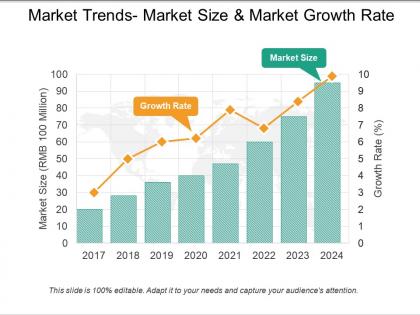
Market trends market size and market growth rate ppt infographics




Try Before you Buy Download Free Sample Product
 Impress Your
 Audience
 100%
100% Editable
 Save Hours
 of Time


Our Market Trends Market Size And Market Growth Rate Ppt Infographics get everyone engaged in finding answers. They help in getting heads together.
People who downloaded this PowerPoint presentation also viewed the following :
Market trends market size and market growth rate ppt infographics with all 5 slides:
Create a cult with our Market Trends Market Size And Market Growth Rate Ppt Infographics. Your ideas will become a craze.
FAQs for Market trends market size and market growth
Honestly, AI's completely flipping how we work - like, workflows are getting automated left and right. Sustainability isn't just trendy anymore, it's basically required if you want customers to care. Remote work? Yeah, that's not going anywhere, companies have accepted it's the new normal. Oh, and supply chains - everyone's scrambling to diversify after that whole pandemic mess. Can't blame them really. The creator economy is blowing up too, plus Gen Z shoppers are making brands panic and totally change their game. My take? Don't try chasing every shiny trend. Pick maybe 2-3 that actually matter for your space and really focus there.
Start by grabbing data from everywhere - sales records, customer behavior, social media stuff, competitor moves. Basically anything that matters to your market. Then let ML algorithms find patterns you'd miss (seriously, there's way too much data to process manually). Time series forecasting works great for catching trends early. The trick is mixing your internal numbers with outside market signals. Oh, and don't go crazy at first - pick one specific trend to predict and nail that approach before expanding. Once you prove it works, scaling up is way easier.
Here's the thing - people's buying habits basically control where markets go. Track what they're spending on and why their priorities change. That's your goldmine right there. Look at plant-based food - it went crazy popular once everyone got obsessed with being healthier. Way better than just staring at old sales numbers, honestly. You'll get much better predictions if you're watching how people actually feel about stuff. Social media tells you a lot (even the random complaints). Combine that with surveys and your usual data. Oh, and lifestyle shifts matter more than most people think.
Don't just check trends once and forget about it - that's how companies get totally blindsided. Set up regular competitive analysis and customer feedback loops so you're actually catching shifts as they happen. Most businesses only review this stuff quarterly, which honestly feels way too slow these days. Make your resource allocation more flexible and try running small pilot programs before going all-in on something new. Pick one trend that's clearly hitting your industry right now and do a 90-day test around it. You'll learn way more from experimenting than overthinking it.
Honestly, economic indicators are pretty much everything when it comes to reading market trends. GDP growth, unemployment, inflation - that stuff moves markets like crazy. You see how everyone freaks out when the Fed even mentions rate changes? It's wild. Employment data gives you early signals, while GDP confirms what already went down. I always track multiple indicators though - like, unemployment might look good but if consumer spending tanks, that tells a different story. Never bet on just one data point. Layer a few together and you'll get way better at spotting where things are actually headed.
Honestly, competitive analysis fills in the gaps your own data misses. You're only seeing your slice of things, but tracking 3-5 competitors monthly? Game changer. Watch their pricing, launches, marketing pivots - patterns emerge that show where the market's actually going. I've found you spot trends way faster this way since everyone's reacting to the same forces. Short sentences work. Plus it's validation - are you seeing real shifts or just internal weirdness? Pick competitors who matter and track their big moves each month. Trust me, it's like having multiple viewpoints instead of flying blind with just your own corner.
Honestly, most people get way too caught up in the data and totally miss the bigger picture stuff. Watch for shifts in consumer sentiment and regulatory changes - those can hit fast. Competitive moves matter too, obviously. Social trends are huge but everyone ignores them until it's too late. Track what's happening with industry leadership and how people actually perceive your brand. Oh, and emerging tech that could mess with your space. Here's what I'd do - pick 2 or 3 factors that actually affect your market and monitor them regularly. Don't just look at sentiment scores though. Read the actual social media posts and reviews yourself.
Honestly? Monthly checks are where it's at. Quarterly is the bare minimum but things shift so damn fast now. I'd do a quick monthly scan of your main metrics and what competitors are up to, then go deeper every quarter for the big industry stuff. The companies that get caught with their pants down are doing it like twice a year max. That's just not enough anymore - markets are way too volatile. Start with whatever you can actually stick to though. Better to nail monthly reviews than plan for weekly ones and burn out after two weeks.
So Bloomberg Terminal is amazing if you've got like $24k lying around (spoiler: most of us don't). Google Trends is actually clutch for catching early signals and costs nothing. TradingView's charts are solid, plus their community's pretty active. For social stuff, Hootsuite Insights works well - Brand24 too. Honestly? Start with Google Trends and TradingView since they won't murder your wallet. You can always add fancier tools later once you figure out what you actually need. I went overboard with subscriptions at first and regretted it.
Honestly, tech just completely destroys old market patterns by changing how people actually behave. Like when mobile payments took off - suddenly everyone's spending habits shifted overnight. You'll see traditional trends just... stop working. The trick is catching those moments when adoption starts ramping up fast, because that's when everything changes. I've noticed the companies that survive are the ones tracking both the tech curve AND how it's making customers act differently. Oh, and definitely keep an eye on your industry's early signals - you don't want to be the last one figuring this out.
Global events totally mess with markets - they're like hitting a reset button on everything. March 2020 was insane, right? Markets freak out first because nobody knows what's happening. Then you get this weird sorting where some sectors crash hard while others randomly take off. Political stuff can completely flip industries through new policies or trade deals. I always look at how similar things went down before, though honestly each crisis has its own weird quirks you can't see coming. The uncertainty is what kills everyone initially - investors just panic and sell everything.
Honestly, you've gotta watch more than just your usual numbers. Customer behavior changes and social media chatter will tell you what's coming before your sales do. Set up Google Alerts for industry stuff - I find random articles sometimes give the best heads up about trends. Your customer service people are gold mines too, they hear all the complaints and weird requests first. Also track what competitors are doing. Monthly meetings help, but actually talk about what you're seeing, not what you want to see. Oh and don't just focus on the obvious metrics.
Dude, social media is like having a direct line into people's brains - you can literally watch trends form in real time. TikTok especially is insane for this. Something goes viral on there and boom, two weeks later it's flying off shelves. The crazy part? These platforms don't just show you what's trending, they actually CREATE the trends through influencers and viral posts. I'd focus on whatever platforms your customers actually use (not all of them, that's exhausting). Track both the organic chatter and paid ads. You'll spot patterns way before they hit mainstream if you pay attention.
Dude, market trend analysis is seriously your secret weapon when you don't have a massive budget. You can spot what customers want before bigger companies catch on. Plus you'll know when to adjust pricing based on real market data instead of just guessing. Even tracking basic stuff like search trends or social media complaints gives you solid insights - honestly, most small businesses completely ignore this goldmine. Start simple though: pick one trend affecting your industry, watch it for a few weeks, then actually make a business decision from what you learned. Game changer.
Honestly, the biggest stuff to worry about is privacy and fairness. Don't grab people's data without asking, and watch out for creating analyses that screw over certain groups. Be upfront about what you did and where your method falls short - none of this cherry-picking data to prove what you already believed. You'll definitely feel pressure to oversell your findings (happens to everyone). Think about how someone might misuse your trend analysis later, especially for hiring or pricing decisions. Oh, and document your assumptions so people can actually check your work. Bias creeps in everywhere.
-
Amazing product with appealing content and design.
-
Great quality slides in rapid time.