

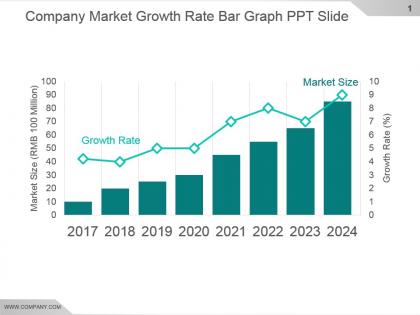
Company market growth rate bar graph ppt slide




Try Before you Buy Download Free Sample Product
 Impress Your
 Audience
 100%
100% Editable
 Save Hours
 of Time


Our Company Market Growth Rate Bar Graph Ppt Slide conjure up a beautiful blend. An array of colors to charm any beholder.
People who downloaded this PowerPoint presentation also viewed the following :
Company market growth rate bar graph ppt slide with all 5 slides:
Indicate your interest with our Company Market Growth Rate Bar Graph Ppt Slide. Convince folks of your intense concern.



FAQs for Company market growth rate bar
So your growth rate basically comes down to a bunch of stuff that's all tangled together. Product innovation is massive - are you actually solving problems better than everyone else? Marketing, pricing, distribution channels all play into it too. Then there's the external crap you can't control like economic conditions and industry shifts. Honestly, I'd focus on the things you can actually fix - product quality, customer experience, positioning. Way better than losing sleep over macro trends, you know? Timing and market demand matter but that's harder to predict anyway.
Track your revenue growth quarter-over-quarter and year-over-year first - that's your baseline. Then compare it against your market size and what competitors are doing. Industry reports help with this stuff, though they can be pricey. Break it down by product lines or regions too since that shows where you're actually growing vs just coasting. Honestly, the biggest thing is staying consistent with your data sources and timing. Otherwise you're comparing apples to oranges. Set up some kind of automated dashboard if you can - I tried doing it manually once and yeah, that lasted about two months before I completely forgot about it.
Look, competitive analysis is basically your sanity check when you're projecting market growth. Track your top 3-5 competitors and watch their quarterly numbers - are they crushing it or tanking? Their financial reports are honestly pure gold if you dig into them right. You'll see who's grabbing market share, dropping new products, or whatever. This stuff directly shows you how much room there actually is for growth. I mean, nobody wants to bank on some fantasy 15% growth rate when the whole sector's struggling. Monitor their pricing and positioning too - it paints the real picture vs your hopeful projections.
Honestly, segmentation is a game-changer for growth. You stop wasting money on people who don't care about your stuff and focus on the customers who actually convert. Way better than that whole "spray and pray" thing most people do. Your conversion rates will jump because you're speaking directly to what specific groups want. Plus customer lifetime value goes up too - makes sense, right? I'd start by looking at your data to see which segments are already bringing in the most cash, then just go harder on those. It's like... why fish with generic bait when you know what actually works?
Revenue growth rate is what I'd track first - it's the big one. CAC and CLV matter a ton since they show whether your growth actually makes money. If you're subscription-based, MRV is obviously key. Market share tells you how you stack up against competitors (execs always ask about this). Churn rate can't be ignored either - there's no point gaining customers if they're walking out the back door just as fast. Honestly, I'd pick maybe 3-4 metrics that fit your business model and stick with those. Otherwise you'll just drown in spreadsheets.
Look, stuff happening outside your business can totally wreck your growth plans. Interest rates and inflation mess with how much people spend. Currency changes? They'll hit your international sales hard. During recessions people get scared and stop buying - but when the economy's good they throw money around like crazy. Then you've got regulatory stuff that can flip your whole industry overnight. Trade policies too. Honestly, the smartest thing is just building flexibility into whatever you're planning so you can switch gears fast when things go sideways.
So here's the thing - innovation literally grows markets by creating demand that didn't exist before. Look at smartphones, right? They didn't just kill flip phones, they made us do stuff we never even thought about doing on a phone. Pretty crazy how that works. When you innovate well, you're growing the whole pie instead of just fighting over scraps. Plus it opens up new customer segments who couldn't afford or access whatever came before. The sweet spot is solving problems people don't realize they have yet - though honestly that's the hardest part to nail.
Product-market fit first, always. Can't scale if people don't actually want what you're selling - learned that the hard way. Once you've got that locked down, go hard on customer acquisition. Digital marketing that's actually targeted, referral programs, strategic partnerships. Content marketing is solid too, just takes forever to pay off (patience isn't my strong suit but whatever). Don't spread yourself thin with a million tactics. Double down on what's working and fix your onboarding process - it's probably messier than you think. Talk to customers constantly though. They'll give you better growth advice than any expensive consultant.
Consumer behavior shifts can totally make or break your growth - they mess with demand, spending power, and what people actually want. Look at how streaming killed cable practically overnight. When people suddenly care about sustainability or go full digital-first, you've got to move fast or get left in the dust. Companies that adapt quickly? They're stealing market share from the slow ones. Stay glued to your customer data and be ready to pivot when you see trends emerging. Track how people feel about stuff, their spending habits, all that feedback. Being agile is everything here.
Honestly? Most companies try scaling way too fast and their systems just can't handle it. You get pissed off customers, your team's working 80-hour weeks, quality goes to shit. Then there's this obsession with shiny new markets when they should just focus on what's already making money. Don't even get me started on startups burning cash for vanity metrics that impress investors but mean nothing long-term. My take - pick like 2 or 3 things max and actually do them well. Way better than juggling ten half-assed strategies that go nowhere.
Look, brand equity basically determines whether customers come to you or you're constantly chasing them down. Strong brands can charge more and expand way easier - customer acquisition gets cheaper too. Think of it like having a reputation that does half the work for you. I've seen stats showing high brand equity companies grow 2-3x faster than no-name competitors, which honestly makes sense when you think about it. Here's what I'd actually track though - watch your brand metrics next to growth numbers. If brand perception tanks, your growth will follow pretty quickly behind.
Yeah, there's definitely a connection between marketing spend and growth, but it's not always straightforward. More money usually means better brand awareness and more customers. Here's the thing though - you'll hit diminishing returns pretty fast. That first $10k might crush it, but your tenth $10k? Probably not gonna move the needle as much. Timing and where you spend matters too, not just the total amount. Honestly, I'd track your customer acquisition costs while watching growth metrics. That way you can catch when returns start dropping off and pivot before you're just burning cash.
Honestly, the right tech can totally transform your growth rate. You'll automate the boring stuff, get way better at serving customers, and actually understand your data. I've watched companies literally double what they can handle without going crazy on hiring - it's kind of insane. The key is freeing up your time from just surviving day-to-day so you can actually focus on growing. Digital tools also let you hit new markets way faster than before. My advice? Figure out what's slowing you down most right now and see if there's tech that can fix it first.
Honestly, expanding geographically is probably your best bet for serious growth. You're not competing for scraps in your current market - you're finding totally fresh customers who haven't even heard of you yet. Revenue diversification is huge too since you won't get crushed if one region tanks (been there!). Just don't go in blind though. Research what locals actually want first and figure out their regulations. Some markets are way trickier than they look. I'd probably start by identifying which areas have strong demand for whatever you're selling.
Look, your customers are literally handing you a growth playbook when they give feedback - you just gotta actually use it. Most companies collect all this input then it dies in some random spreadsheet (such a waste). When people tell you what's working or what sucks, that's pure gold for figuring out where to spend your time and money. Your existing customers have already tested your product, so they're basically free consultants telling you exactly what to fix or build next. Honestly, listening to them beats guessing what the market wants every single time.
-
Unique and attractive product design.
-
Understandable and informative presentation.