

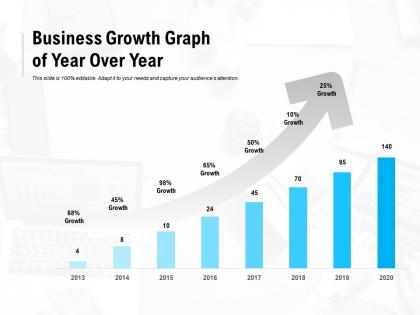
Business growth graph of year over year




Try Before you Buy Download Free Sample Product
 Impress Your
 Audience
 100%
100% Editable
 Save Hours
 of Time


Our Business Growth Graph Of Year Over Year are topically designed to provide an attractive backdrop to any subject. Use them to look like a presentation pro.
People who downloaded this PowerPoint presentation also viewed the following :
Business growth graph of year over year with all 2 slides:
Use our Business Growth Graph Of Year Over Year to effectively help you save your valuable time. They are readymade to fit into any presentation structure.

FAQs for Business growth graph of
Really depends on your industry, but some things hit everyone - market demand, competition, economic stuff. Then there's industry-specific things that matter way more. Like retail gets crushed by consumer spending while SaaS companies obsess over churn rates. Pricing power is massive right now with all this inflation craziness. Honestly, I'd figure out which 2-3 factors have historically moved your numbers the most. Track those every month religiously. Seasonal patterns can be sneaky too - we learned that the hard way last year. But once you nail down your key drivers, everything else becomes noise.
Pick metrics that actually move the needle for your business - revenue, customer count, whatever. Compare the same periods year over year (like Q3 to Q3), then do the basic math: ((new number - old number) / old number) × 100. Simple enough. But here's the thing - don't just celebrate the top-line growth. Dig deeper. More customers or just higher prices? If you're seasonal, this apples-to-apples comparison becomes even more critical. Honestly, set up some kind of monthly tracking system now so you're not frantically pulling numbers together later.
Look, market segmentation is basically your roadmap for consistent growth year over year. You get to see which customer groups actually bring in value and where the real opportunities are hiding. Honestly, trying to appeal to everyone just spreads you too thin - learned that one the hard way. Focus on segments that actually matter instead. You'll catch trends quicker, your messaging hits better, and you discover growth pockets you totally missed before. Just dig into your current customer data first. See which segments are growing fastest? That's where you double down.
Honestly, I'm always stalking industry Twitter - probably too much but whatever, it works. Set up Google Alerts for your key terms and watch what's trending in your analytics. Survey your customers regularly and do social listening to catch how they're changing. Here's the thing though - most companies wait until trends are obvious before jumping in. You want to spot them early while they're building up. Test small pilots first before going all-in on something new. Oh, and have monthly meetings where everyone shares what weird stuff they're noticing. Competitive analysis helps too.
So honestly, three things that really work: first, don't put all your eggs in one basket - diversify what brings in money. Customer retention is huge too (way cheaper than chasing new people constantly). Oh and track your numbers! I know it sounds super dry but you literally can't fix what you can't see. Cash reserves during good months will save your butt later when you want to try something new or hit a rough patch. The businesses that actually stick around? They plan for growth AND the weird stuff that comes out of nowhere. Pick one thing first though - don't try to do everything at once.
So YoY growth is basically what tells investors if you're actually winning or just spinning your wheels. Investors eat up those consistent upward trends - makes them feel like you've got your act together and can do it again. Plus it directly impacts your valuation, especially when you're crushing industry benchmarks. Weak numbers though? That's when things get uncomfortable real fast during funding talks. I'd honestly check this monthly so you can catch any dips before they become a problem. It's definitely one of those metrics that separates the serious players from everyone else.
Honestly, digital transformation is huge for YoY growth - it cuts costs through automation and gives you way better data for decisions. Customer experience improves massively (that's where I've seen the biggest wins). Your marketing gets more targeted, sales teams work better leads, and you can scale without hiring tons of people. New revenue streams open up too. Oh, and time-to-market speeds up like crazy. I'd start with whatever's your biggest operational headache right now and digitize that first. The streamlined operations alone will probably pay for itself.
Dude, honestly? Double down while everyone else is freaking out. Streamline your ops, renegotiate those contracts, and baby your existing customers - finding new ones costs way more when times are tough. Some of the biggest success stories happened because smart companies invested during recessions. Grab market share from competitors who are struggling, or maybe pivot to something more recession-proof. I know it sounds counterintuitive, but downturns are perfect for positioning yourself to dominate when things bounce back. Trust me on this one.
Honestly, just track these main ones: revenue growth, how many new customers you're getting, and your profit margins. Customer retention is huge too - way easier to keep people than chase new ones all the time. Oh, and definitely watch your cost per acquisition because that'll tell you if getting customers is becoming more expensive (which sucks). Average deal size matters too. These will show you pretty fast if things are heading in the right direction or if you need to panic and fix something.
Dude, customer feedback is literally your growth cheat code. It shows you what's actually working vs what's tanking your business. Double down on stuff people love, fix the annoying problems that make them leave, and you'll spot opportunities you totally missed before. Companies that skip this step? They're basically throwing darts blindfolded. Set up feedback loops - surveys, reviews, just talking to customers (crazy concept, right?). Then actually DO something with what they tell you. Track which changes boost your numbers. The patterns become super obvious once you start looking.
Dude, the biggest trap is chasing growth numbers without caring if you're actually making money. Sure, you'll hit those YoY targets but your margins get destroyed. Companies get weirdly obsessed with percentages and forget basic business health - it's wild how tunnel vision works. Don't compare numbers when your whole business model shifted, that's just setting yourself up. Seasonal stuff is tricky too, make sure you're looking at the right quarters. Oh and one-time events can totally mess with comparisons. Set targets based on what you can actually do, not what sounds cool to investors.
Honestly, your best bet is studying what competitors are doing right and finding the gaps they're missing. Check out their pricing, product launches, marketing stuff, and customer reviews - it's basically free research. The fastest-growing ones? Figure out their playbook and adapt it. But here's the thing - pay attention to what they suck at too. Those frustrated customers could be yours if you play it right. I'd set up Google alerts for competitor news and maybe peek at their social media every quarter or so. Start with your top 3 competitors this month and see what you learn.
Honestly, you can't just coast on what's already working - innovation keeps you from getting stuck while competitors pass you by. Blockbuster learned that the hard way, right? New ideas create fresh revenue and help you stay ahead when markets shift. Short bursts work better than waiting for some genius breakthrough moment. Budget time and money for trying stuff out, even weird little experiments. Otherwise you're just crossing your fingers that nothing changes (spoiler: it will).
Look, good marketing basically compounds over time - you keep growing your customer base while keeping existing ones happy. Content, SEO, referrals... those are your bread and butter because they build on themselves. Paid ads can work but man, they'll drain your budget quick if you're not careful. Here's what matters: track what actually brings in paying customers, not just clicks or likes. Then go all-in on those channels. Oh, and watch your acquisition costs like a hawk. You want better customers each year, not necessarily just more of them.
Honestly, you need way more than just your old numbers - though definitely pull 3-5 years of data first. Market trends matter huge here, plus what competitors are doing and any big moves you're planning. Build out conservative/realistic/optimistic scenarios because nobody has a crystal ball, right? Oh and please don't do that thing where growth magically shoots up like a hockey stick... I see that mistake constantly. Economic stuff and industry changes can totally wreck your projections, so test against those. Update quarterly too - don't just set it once and walk away thinking you're done.
No Reviews