

Market potential analysis powerpoint presentation slides





Try Before you Buy Download Free Sample Product
 Impress Your
 Audience
 100%
100% Editable
 Save Hours
 of Time


Analyze the potential of the market size using this market potential analysis PowerPoint presentation slides. Market potential is the entire size of the market for a product at a specific time. It is generally measured either by sales value or sales volume. This market segmentation PowerPoint template is a content ready complete deck and consists of 36 slides. All slides are completely customizable and can be changed in terms of fonts, color and diagram as per your requirement and needs. Use this market potential analysis to showcase the new product launch strategy and SWOT analysis of your company. This market trend analysis is covering many important slides like company overview, product categorization, industry analysis, new product launch strategy, company SWOT analysis, steps in determining market size, approaches to TAM, market segmentation, market trend analysis, competitive market analysis, etc. Showcase the current market trends by using this market segmentation PPT theme. Grab and download this market analysis PowerPoint deck and impress your clients. Groom your core group with our Market Potential Analysis Powerpoint Presentation Slides. Give them the grounding to forge ahead.
People who downloaded this PowerPoint presentation also viewed the following :
Content of this Powerpoint Presentation
Slide 1: This slide introduces Market Potential Analysis. State Your Company Name and begin.
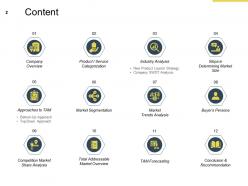
Slide 2: This slide shows Content of the presentation.
Slide 3: This is an Agenda slide. State your agendas here.
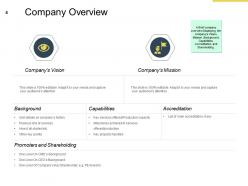
Slide 4: This slide presents Company Overview describing the company’s Vision, Mission ,Background, Capabilities, Accreditation, and Shareholding.
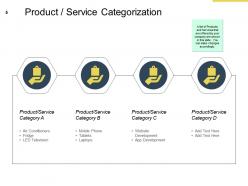
Slide 5: This slide displays Product / Service Categorization with 4 categories to present.
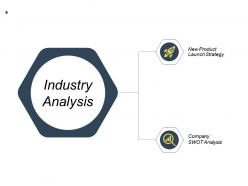
Slide 6: This slide represents Industry Analysis describing- New Product Launch Strategy, Company SWOT Analysis.
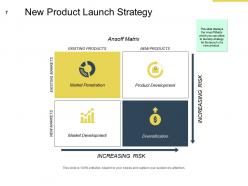
Slide 7: This slide showcases New Product Launch Strategy with the help of Ansoff matrix.
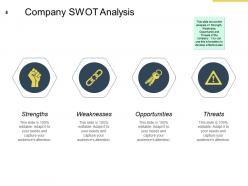
Slide 8: This slide shows Company SWOT Analysis. You can use this information to develop effective plan.
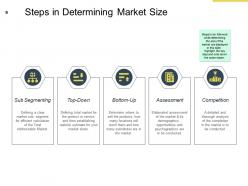
Slide 9: This slide presents Steps in Determining Market Size as- Sub Segmenting, Top-Down, Bottom-Up, Assessment, Competition.
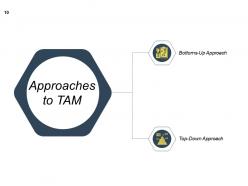
Slide 10: This slide displays Approaches to TAM as- Bottoms-Up Approach and Top-Down Approach.
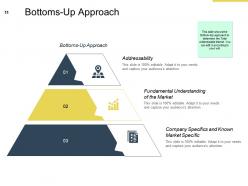
Slide 11: This slide shows the Bottom-Up approach to determine the Total Addressable Market. You can edit it as per requirements.
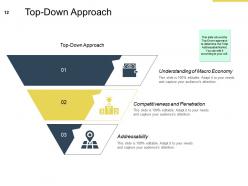
Slide 12: This slide shows the Top-Down approach to determine the Total Addressable Market. You can edit it according to your will.
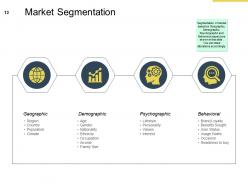
Slide 13: This slide presents Market Segmentation based on factors such as Demographic, geographic, psychographic and behavioral.
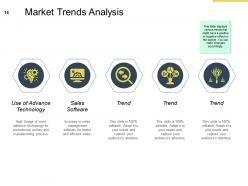
Slide 14: This slide displays Market Trends Analysis describing various trends that might have a positive or negative effect on the market.
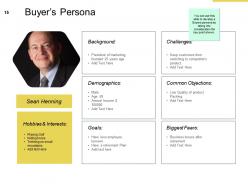
Slide 15: This slide represents Buyer’s Persona with- Hobbies & Interests, Background, Demographics, Goals, Challenges, Common Objections, Biggest Fears.
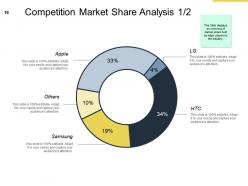
Slide 16: This slide showcases Competition Market Share Analysis with the help of donut pie chart.
Slide 17: This is another slide showcasing Competition Market Share Analysis with the help of line graph.
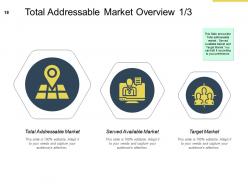
Slide 18: This slide shows Total Addressable Market Overview describing- Served Available Market, Target Market, Total Addressable Market.
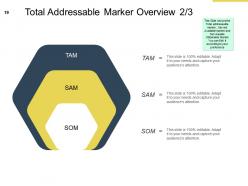
Slide 19: This is another slide presenting Total Addressable Market Overview.
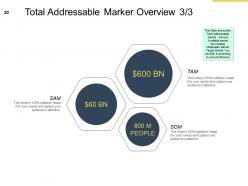
Slide 20: This is another slide with Total Addressable Marker Overview.
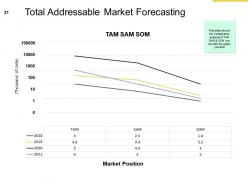
Slide 21: This slide displays Total Addressable Market Forecasting comparing TAM, SAM and SOM.
Slide 22: This slide is titled as Conclusion & Recommendations. Use this slide to conclude the meeting and display various recommendations.
Slide 23: This slide showcases Market potential Analysis Icons.
Slide 24: This slide is titled as Additional Slides for moving forward.
Slide 25: This is About Us slide to show company specifications etc.
Slide 26: This is Our Team slide with names and designation.
Slide 27: This is Our Mission slide with related imagery and text.
Slide 28: This is a Quotes slide to convey message, beliefs etc.
Slide 29: This slide is titled as Post It. Post your important notes here.
Slide 30: This is a Lego slide with text boxes.
Slide 31: This is a Bulb or Idea slide to state a idea or highlight information, specifications etc.
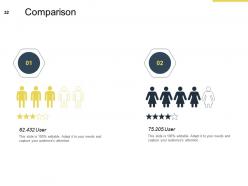
Slide 32: This is a Comparison slide to show comparison between commodities, entities etc.
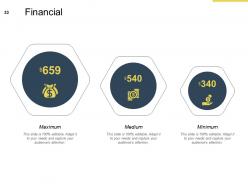
Slide 33: This is a Financial slide. Show your finance related stuff here.
Slide 34: This is Our Target slide. State your targets here.
Slide 35: This is a Puzzle slide with text boxes to show information.
Slide 36: This is a Thank You slide with address, contact numbers and email address.
Market potential analysis powerpoint presentation slides with all 36 slides:
You will come up with inspired designs due to our Market Potential Analysis Powerpoint Presentation Slides. It allows for intelligent innovations.












FAQs for Market potential analysis
Start with market size - is it big enough and actually growing? Figure out who your customers are and if they've got real money to spend on your solution. Competition research is a pain but you gotta do it - just focus on the direct competitors and what they're charging. Also check if there are any regulatory headaches you'll need to deal with. Distribution channels matter too, and honestly timing is everything. I've seen great ideas fail just because they launched too early. Get those basics nailed down first and you'll have a decent foundation to work from.
Think of demographic trends as your sneak peek into future demand. Birth rates dropping? Your baby product market just got way smaller. You'll want to track age shifts, income patterns, and how people actually live in your target groups. Population growth matters too, obviously. The trick is connecting these changes directly to why people would buy your stuff. I mean, there's no point tracking random demographics that don't affect your business. Use this data to predict both current market size and what's coming down the road. Pretty much saves you from nasty surprises later.
Dude, competitive analysis is basically your sanity check before jumping into any market. Look at who's already fighting for your customers and how they're doing it. Honestly, I've seen too many people skip this step and get absolutely crushed. Map out 5-7 main competitors - check their pricing, read their reviews, see where they're weak. That's where you'll find your opening. Without knowing what you're up against, you're just guessing. Plus customer reviews are gold - they'll tell you exactly what people hate about existing options.
Tech disruptions can totally mess with your market sizing - sometimes overnight. AI just created entire industries nobody saw coming. Blockchain too, honestly. But here's the thing - it works both ways. New tech opens doors while slamming others shut. Traditional forecasts? Pretty much useless when things move this fast. You need multiple scenarios, not just the rosy projections everyone loves. Track early signals instead of relying on old data. I learned this the hard way watching whole sectors get blindsided. Build in both the wins (new opportunities) and losses (what gets killed off).
There's a few ways to tackle this. Historical data analysis is your best bet if you've got the numbers - finds trends and seasonal stuff pretty easily. Surveys give you real customer feedback, but honestly? People lie about what they'll actually buy lol. For complex markets, econometric models are solid since they factor in pricing, competition, all that jazz. Regression analysis helps too - shows you what actually drives demand. I'd probably mix methods though. Start with whatever historical data you have, then back it up with some customer research. Don't rely on just one approach.
Honestly, the economy hits your local market harder than you'd think. People cut spending when inflation spikes or things get uncertain - I saw this big time during 2020's chaos. Your costs get wrecked too if you're using imported stuff because of currency swings and trade drama. Interest rates? They decide if customers can actually afford what you're selling or if other businesses expand. Short sentences, then longer ones work better here. GDP growth and unemployment numbers are worth tracking, though I know it sounds boring. But seriously, economic conditions trickle down fast to local opportunities.
Honestly, it really comes down to how much risk you can stomach and what barriers you're facing. Low competition + high potential? Jump right in or find a good local partner. Joint ventures are your best bet when regulations are absolutely insane - healthcare and finance, I'm talking about you. Emerging markets are tricky though. I'd test things out with pilot programs or licensing deals first so you don't blow through your budget on a maybe. Acquisitions work if you've got serious money and need market share yesterday. Oh, and match how fast you move to how solid your market research actually is - don't get ahead of yourself.
Look at transaction data from similar products - that's your goldmine right there. People lie on surveys all the time about what they'd buy, but purchase history doesn't. You'll see real price sensitivity, seasonal spikes, which channels actually work. Way more reliable than guessing. Short sentences work. Then you can spot emerging customer segments and predict how fast people will actually adopt your thing. I'd start with adjacent categories first since they're easier to find data for. Transaction patterns reveal the barriers people hit when buying too. Honestly beats theoretical market sizing every time.
Focus on TAM, SAM, and SOM first - those are your bread and butter metrics. TAM shows the entire market size, SAM is what you can realistically go after, and SOM is what you'll actually capture (this one matters way more than people think). Track your market growth rate too, plus customer acquisition costs and average deal size. Honestly, I've seen so many teams get obsessed with having a massive TAM when their SOM is tiny. Calculate these five and you're set for a decent market analysis.
Dude, regulations can flip your whole market overnight - either opens doors or kills opportunities completely. Look at GDPR creating this huge compliance software boom, or how weed legalization turned dealers into legit billionaires. Wild stuff. You've gotta watch what's coming in the pipeline, not just current rules. Market size, customer demand, who can even play - it all shifts. The companies that move early on regulatory changes usually grab the biggest piece of the pie. I mean, timing is literally everything with this stuff.
Honestly, social media analytics are a game changer for figuring out market potential. You can see what people actually think about your product category and catch trends way before everyone else does. The engagement numbers tell you which age groups or demographics are genuinely interested - beats the hell out of those old-school surveys that nobody fills out honestly anyway. I'd set up some listening tools to track the right keywords consistently. Oh, and don't forget to spy on your competitors' mentions too. You'll spot exactly where they're screwing up or crushing it with customers.
SWOT basically forces you to get real about what you're working with - your strengths, weaknesses, plus what's happening out there in the market. Honestly, I get most excited about the opportunities section because that's where you find the goldmine stuff competitors are sleeping on. But here's the thing - you gotta be harsh about your weak spots too, since they'll straight up block you from going after certain opportunities. Like, no point chasing a tech-heavy market if your team can barely handle email, you know? It's your gut check before jumping in.
Honestly, the biggest mistake is just wishful thinking about demand - we all do it. Don't rely on old data either, that's useless. Also saying "everyone" wants your product? Nah, be specific about who actually would buy it. Market size looks great on paper but what if it's already crowded as hell? I learned this the hard way lol. You can't just assume you'll magically steal customers from competitors or change how people behave. My take: be harsh with your assumptions. Actually talk to potential customers instead of just googling stuff.
Look, market segmentation is basically dividing your customers into groups that actually behave differently - different pain points, buying habits, what they'll pay. Way better than guessing about some giant faceless market. You can model realistic adoption rates for each segment instead of using those BS top-down numbers that never pan out anyway. Revenue projections get so much clearer when you're not pretending everyone acts the same. I'd start with maybe 3-4 segments and build separate demand models. Honestly wish more founders did this from day one.
Honestly, just start with Excel or Google Sheets - they'll handle way more than you think. R or Python are great if you want to get fancy with stats, but the learning curve is brutal. For data, IBISWorld and Statista are decent, Nielsen too depending on what you're analyzing. Oh and SurveyMonkey works fine for surveys, though Qualtrics is better if you can swing it. Here's the thing though - don't overthink it at first. Your CRM probably has tons of useful stuff already. I'd mess around with basic spreadsheets before dropping cash on expensive tools. You can get most of what you need without all the bells and whistles.
No Reviews