


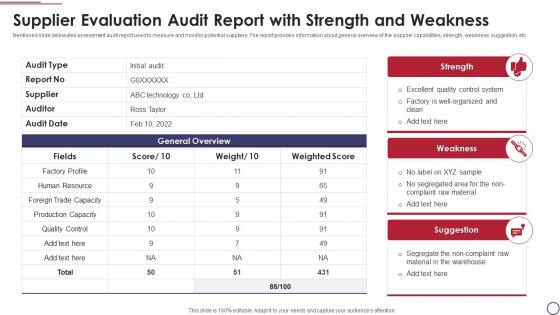
Supplier Evaluation Audit Report With Strength And Weakness




Try Before you Buy Download Free Sample Product
 Impress Your
 Audience
 100%
100% Editable
 Save Hours
 of Time


Mentioned slide delineates assessment audit report used to measure and monitor potential suppliers. The report provides information about general overview of the supplier capabilities, strength, weakness, suggestion, etc.
People who downloaded this PowerPoint presentation also viewed the following :
Supplier Evaluation Audit Report With Strength And Weakness with all 6 slides:
Use our Supplier Evaluation Audit Report With Strength And Weakness to effectively help you save your valuable time. They are readymade to fit into any presentation structure.





FAQs for Supplier Evaluation Audit Report With
Oh man, supplier audits - been there! First things first, check if they're financially solid because nothing sucks more than a supplier going under mid-contract. Look at their quality systems, production capacity, and whether they actually follow regulations. Their delivery history matters too - like, do they ghost you when problems pop up? Super annoying when that happens. Don't skip the boring stuff either: cybersecurity, sustainability practices, cultural fit. Honestly, make a scoring sheet ahead of time so you're not just picking whoever seems nicest during the presentation.
So basically, supplier audits let you peek behind the curtain and see what's really going on with your vendors. You'll spot risks, sketchy working conditions, or environmental issues that don't show up in their glossy sales materials. The documentation you get is gold for making actual sourcing decisions or showing stakeholders what you found. Honestly, some companies are way better at marketing than operations! Start with your riskiest suppliers first - that's where surprises can really hurt your business. It's about getting real visibility instead of just trusting whatever they tell you.
Think of risk assessment as your backup plan for when suppliers mess up - and trust me, they will. Start with the basics: check their finances, see if they're following regulations, look at where they're located (natural disasters are a real pain). I'd create a simple scoring system to rank suppliers by how sketchy they seem. The sketchy ones need way more babysitting - frequent check-ins, ironclad contracts, the works. Honestly, it's pretty boring work, but it beats scrambling when your main supplier randomly goes out of business on a Tuesday.
Honestly, tech makes supplier audits so much easier. You can automate all that data collection stuff - financial records, compliance certs, performance metrics. No more endless email chains chasing paperwork (which is the worst part imo). Digital tools let you standardize how everyone scores suppliers and instantly generate reports. Set up automated alerts too - they'll ping you when certifications expire or performance tanks. Oh, and you get real-time dashboards which is pretty cool. I'd start simple though - just digitize your current checklist first, then build from there.
Honestly, I'd focus on quality scores and on-time delivery first - those tell you everything about whether they can actually do the job. Cost performance is obvious but super important too. Don't sleep on tracking how fast they respond to emails though, because bad communication always turns into a nightmare later. Compliance stuff matters if you're in a regulated industry. Oh, and check their financial health so they don't randomly go under on you. But seriously, pick like 3-4 things max that actually matter for your business. Tracking everything just makes you crazy and you'll ignore it all anyway.
Honestly, most suppliers need auditing once a year, but it totally depends on how risky they are. Your critical suppliers? Hit them every 3-6 months. The reliable ones can probably go 18-24 months without you breathing down their necks. Think about it - your paper supplier doesn't need the same scrutiny as whoever makes your core product components. I'd group suppliers by risk level first, then build your schedule around that. Factor in their track record and any regulatory stuff you're dealing with. Makes way more sense than treating everyone the same.
Honestly, the worst part is always crappy documentation and supplier staff who don't want to cooperate. Language barriers make everything take twice as long too. They'll definitely try hiding compliance issues or rushing you past sketchy areas - I've seen it a million times. Send your audit checklist ahead of time so they can't claim they weren't prepared. Bring translators if you need them. Building relationships with their key people beforehand is huge - like, game-changing huge. Document everything as it happens and don't let them pressure you into skipping stuff. Oh, and always block out extra time for follow-up questions because you'll need it.
Build compliance checks right into your supplier setup from the start. Map out what regulations hit your industry - SOX, GDPR, whatever applies to you. Create checklists covering these during audits and make suppliers provide their certifications. Yeah, it's boring as hell, but way easier than scrambling later when something goes wrong. Document everything religiously. Set up regular reviews since rules change constantly. I learned this the hard way at my last job - compliance can't be an afterthought. Make it part of your scorecard system and you'll save yourself major headaches down the road.
Honestly, you gotta start with a solid audit plan - scope, criteria, timeline, the whole thing. Otherwise you'll get pulled in every direction. Check their quality systems and financials before you even show up. Here's the thing though - don't just look at their fancy documentation. I've seen companies with perfect procedures that nobody actually uses lol. Focus on what they're really doing day-to-day. Use some kind of scoring system so you can compare apples to apples. Oh, and definitely bring people from procurement, quality, ops - they'll all catch different stuff. Wrap up with clear next steps and follow-up dates.
Oh man, cultural stuff totally throws off supplier evaluations. Some places are super direct, others beat around the bush - I've watched audits crash and burn because people misread those signals. Time management expectations are wild too. Different cultures have completely different takes on hierarchy and what "quality" even means. What you think is sketchy behavior might just be how they do business there. Honestly? Get local auditors who actually get the culture. Or at least do your homework on business norms before you show up looking clueless.
So most bigger companies go with platforms like Ariba or Coupa for the full assessment thing. Excel templates work fine if you're smaller though - don't overthink it. Dun & Bradstreet's solid for tracking financial stuff, and EcoVadis handles sustainability metrics if that's your thing. Even SurveyMonkey works for basic questionnaires, honestly. Pick whatever fits your budget and complexity needs. I'd start with simple tools you already have, then upgrade later when your supplier list gets crazy and you need more features. No point paying for enterprise software when you've got like 10 suppliers.
Honestly, you'll want to set up a weighted scoring system that looks at cost AND quality together. Price per unit, delivery times, defect rates - all that stuff. Then weight them based on what actually matters for each supplier type. Here's the thing though - don't just pick whoever's cheapest (I've made that mistake before, trust me). Calculate the real total cost, including all the headaches like rework and delays. Oh, and relationship management costs too - some suppliers are just easier to work with. Start small with maybe 2-3 key suppliers to test your weighting. Once you've got it dialed in, then roll it out everywhere else.
Here's what works best - set up surveys for your internal teams and interview the procurement folks who actually deal with suppliers daily. Don't wait until something goes wrong to ask for input (learned that the hard way at my last job). Build feedback right into your scoring system from the start. Map out which stakeholders matter most based on how much they interact with suppliers. Finance will have different concerns than operations, so weight their perspectives accordingly. Oh, and timing matters - figure out when during your audit cycle each team's input will be most useful. Short feedback loops beat long ones every time.
So market conditions basically flip your whole supplier game on its head. When supply chains are messy, reliability beats cheap prices every time - you want suppliers with solid backup plans. Inflation hitting? Look for ones offering stable pricing or willing to lock in long-term deals. During recessions, honestly, I'd obsess over their financial health because having a key supplier tank on you is nightmare fuel. The trick is keeping your evaluation system flexible enough to switch up what matters most when things change. Makes sense?
Yeah, sustainability stuff is huge now - probably 10-25% of most supplier scorecards. Companies with ESG goals or heavy regulations basically won't work with you if your environmental/social practices suck. Carbon footprint, waste management, labor conditions... all that matters way more than it used to. Strong sustainability can actually help you win deals when everything else is close. Poor performance? You might get dropped entirely. Oh and make sure you're ready with actual metrics when they audit you, not just vague promises. It's wild how much this has changed in like the past few years.
-
Based on my personal experience, I would recommend other people to subscribe to SlideTeam. No one can be disappointed here!
-
I never had to worry about creating a business presentation from scratch. SlideTeam offered me professional, ready-made, and editable presentations that would have taken ages to design.