


Supplier evaluation matrix for tracking vendor management strategy results





Try Before you Buy Download Free Sample Product
 Impress Your
 Audience
 100%
100% Editable
 Save Hours
 of Time


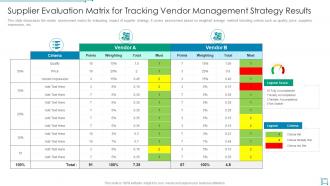
This slide showcases the vendor assessment matrix for evaluating impact of supplier strategy. It covers assessment based on weighted average method including criteria such as quality, price, suppliers impression, etc.
People who downloaded this PowerPoint presentation also viewed the following :
Supplier evaluation matrix for tracking vendor management strategy results with all 6 slides:
Use our Supplier Evaluation Matrix For Tracking Vendor Management Strategy Results to effectively help you save your valuable time. They are readymade to fit into any presentation structure.





FAQs for Supplier evaluation matrix for tracking vendor
Start with the obvious stuff - quality, pricing, delivery times, and whether they're financially solid. Communication matters way more than people think though. I've dealt with suppliers who ghost you for weeks and it's maddening. Check their tech capabilities and compliance too. Location's pretty key for risk management - don't put all your eggs in one geographic basket. Oh, and see if they can actually scale with you since your needs will probably change. Sustainability's becoming a bigger deal these days. Weight everything based on what you actually care about most.
Honestly, just figure out what actually matters to your business first. Maybe quality gets 40%, cost 30%, delivery 20%, and service 10% - whatever works. Make sure it all adds up to 100% though. I've watched teams waste entire meetings debating whether cost should be 25% or 30% (spoiler: the exact number isn't that critical as long as you're consistent). Rank your criteria from most to least important, then split up the percentages. Oh, and definitely get people from different departments involved. Procurement always wants to focus on cost while operations is obsessing over reliability.
Honestly, the automation part is a game changer - you can set up weighted scoring systems that pull data straight from your ERP instead of doing everything in Excel. Real-time dashboards show you all your supplier metrics at once. Some of the newer platforms even flag risks automatically or suggest suppliers you hadn't considered, which is pretty neat. Way less manual work and fewer calculation mistakes. I'd skip building anything custom though - just find procurement software that plays nice with whatever systems you're already using. You'll actually see patterns over time instead of just reacting to whatever crisis pops up.
Quarterly updates are usually a good starting point, but it really comes down to your industry. Tech and fashion move crazy fast - you might need monthly check-ins there. More stable sectors? Twice a year could work fine. Set calendar reminders, but also watch for major market shifts or supplier issues that'd require immediate updates. Performance changes and new regulations can totally mess with your criteria weighting. I'd honestly start quarterly and see how it feels - you can always adjust the timing based on what patterns you notice. Oh, and don't forget those trigger events for unexpected reviews.
Honestly, the hardest part is gonna be getting people on board - stakeholders hate change and your procurement team will groan about extra work (can't blame them really). Data's a nightmare too since suppliers give you garbage info half the time. Plus figuring out what criteria actually matters vs just looks good on paper? Ugh. Start with like 5-10 key suppliers first, nail down your scoring system, and make sure some exec has your back. Oh and don't even think about company-wide rollout until you've proven it works small scale.
Just give your soft factors numerical scores - like rate communication skills 1-10. Honestly, most people overthink this way too much. Make a simple rubric and stick to it consistently. Then weight everything based on what actually matters to your business. So if cultural fit is super important, maybe it's worth 30% of your total score vs cost at 40%. Mix those scores with your hard data like delivery times and pricing. Trust me, you don't want to end up with the cheapest vendor who's a nightmare to work with. Been there, done that. Calculate composite scores and you're golden.
Honestly, the biggest game-changer is having multiple people score suppliers independently - you'll be shocked how differently everyone sees the same vendor. Set up a scoring matrix beforehand with concrete stuff like delivery percentages and quality metrics, not fuzzy "good/bad" ratings. Data beats gut feelings every time. Make everyone justify their scores with real examples too, which sounds annoying but catches so much bias. I learned this the hard way when we almost picked a supplier just because their rep was super charming. Clear benchmarks upfront save you from those headaches later.
So basically, you're measuring totally different stuff depending on what you're buying. Manufacturing suppliers? You care about quality certs, whether they deliver on time, and consistent pricing - makes sense since you're dealing with actual products that can break or show up late. Service providers are the opposite though. Relationship skills matter way more, plus their expertise and how they actually deliver services. I mean, you can't really "inspect" a consultant's advice like you would steel quality, right? Manufacturing criteria are pretty standard across the board, but services need custom evaluation - honestly depends on what you're buying. Figure out what "failure" looks like for your situation first, then work backwards from there.
Look at their current ratio first - you want 1.5+ so they can actually pay their bills. Debt-to-equity shows how much they owe vs own, and honestly too much debt is a red flag for bankruptcy risk. Cash flow from operations is my personal favorite though because it's real money moving around, not just accounting tricks on paper. Days sales outstanding matters too if you can dig that up. Oh and definitely try to find out how they pay other vendors - that'll tell you a lot. Just ask for two years of financials and run these numbers yourself instead of taking their word for it.
With long-term partners, relationship stuff matters way more than just the basics. Trust, how well you communicate, whether they're flexible when things go sideways - that's what counts when you're stuck together for years. One-off suppliers? Just focus on price, speed, delivery quality since you'll probably never work with them again anyway. Also throw in some future-focused things like whether your strategies actually align and if they have room to grow. Honestly, the whole evaluation should reflect that partners are investments you're making, not just another vendor to haggle with.
Yeah, supplier diversity totally changes how you evaluate vendors. Instead of just cost-quality-delivery, you're adding stuff like diversity spend percentages and certifications (MBE, WBE, that whole thing). Community impact matters too. Honestly, some companies I've worked with put 10-20% of their scorecard weight on diversity alone - which is smart business if you ask me. Oh, and diverse suppliers often crush it on innovation since they bring different perspectives to the table. First step? Figure out what diversity actually means for your company, then bake those criteria right into your evaluation matrix.
So add some sustainability stuff to your scoring - like certifications, carbon footprint, labor practices, that whole deal. Weight it maybe 20-30% of your total score, though honestly that's gonna depend on how much your leadership actually cares about this stuff vs just wanting to check a box. Ask for real documentation too, not just their marketing fluff. Oh and make sure you're scoring all vendors the same way for these categories. Otherwise you can't really compare apples to apples, you know? Supply chain transparency is huge right now if you can get actual data on it.
Excel or Google Sheets are probably your best bet to start - super easy to set up scoring formulas and mess with the weightings however you want. If you need something fancier later, check out procurement platforms like Ariba, Coupa, or Jaggaer since they've got automated supplier scorecards built right in. Honestly though? I've watched way too many teams overthink this and waste months hunting for the "perfect" tool when a decent spreadsheet would've worked just fine. Pick whatever your team will actually stick with using. You can always upgrade to something that talks to your ERP system down the road if needed.
You definitely need input from your internal teams on this. Procurement, operations, quality control, end-users - they all see different sides of how suppliers actually perform versus what looks good in proposals. Their real-world experiences will show you what's working and what isn't. Honestly, I've seen too many companies skip this step and end up with matrices that sound great but don't reflect reality. Get people involved in building the criteria too. They'll actually use it if they helped create it. Oh, and don't just do this once - keep checking back with them regularly.
So supplier evaluation matrices are actually pretty clutch for catching problems early. You score suppliers on stuff like financial health, where they're located, whether they have backup plans - way beyond just price and quality. I learned this after getting burned by a supplier in hurricane country (oops). Short sentences help you spot those dangerous single points of failure. Build a diverse supplier base instead of putting all your eggs in one basket. The whole point is thinking about resilience, not just who's cheapest. You'll want contingency plans for your riskiest dependencies too.
-
Very well designed and informative templates.
-
Enough space for editing and adding your own content.