

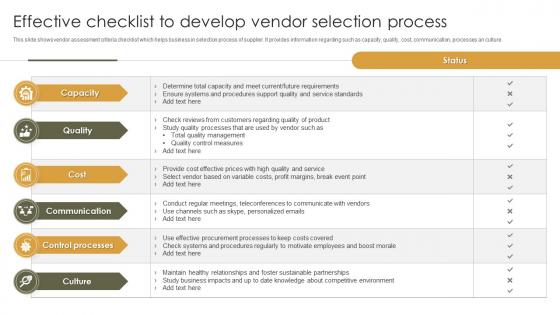
Effective Checklist To Develop Vendor Selection Process




Try Before you Buy Download Free Sample Product
 Impress Your
Audience
 100%
Editable
 Save Hours
of Time


This slide shows vendor assessment criteria checklist which helps business in selection process of supplier. It provides information regarding such as capacity, quality, cost, communication, processes an culture.
People who downloaded this PowerPoint presentation also viewed the following :
Effective Checklist To Develop Vendor Selection Process with all 6 slides:
Use our Effective Checklist To Develop Vendor Selection Process to effectively help you save your valuable time. They are readymade to fit into any presentation structure.






FAQs for Effective Checklist To Develop
Start with compliance stuff - that's where you'll get burned if you mess up. Check if they've worked with companies like yours before, trust me it makes a huge difference when they actually understand your space. Financial stability matters too, last thing you want is them folding halfway through. Oh and definitely look at their security certs and whether they can scale with you. I know it sounds boring but make a scorecard to compare them objectively. Otherwise you'll just pick whoever had the slickest sales pitch.
Check out their credit reports through Dun & Bradstreet first. Ask for their financial statements from the last couple years - cash flow and debt ratios tell you everything. References are clutch too; other clients will actually tell you if these guys pay late or ghost people. I always creep on their leadership team via LinkedIn because crazy turnover is never good. Oh, and start small with a pilot project to test the waters. Red flags? Dodging questions about money, recent layoffs, or sketchy supplier relationships. Trust your gut on this stuff.
Honestly, check their reputation first - it's way more telling than any sales pitch. Call their references (don't just read testimonials online). Ask about projects similar to yours and what went wrong, because something always does. The good vendors own up to problems and fix them fast. Bad ones... well, you'll be pulling your hair out. I'd say get 3-5 recent client contacts minimum. Their track record with handling messy situations is probably the best predictor of whether you'll actually sleep at night during your project.
Honestly, tech makes vendor stuff so much easier. Automated RFP platforms handle all the bidding chaos for you. AI tools can scan proposals and catch sketchy things you'd probably miss - which is honestly kind of scary how good they are now. Digital dashboards show everything at once, so spotting bad performers becomes obvious. Contract management software tracks everything in real time too. My advice? Don't try to digitize everything at once though. Pick one thing first, maybe contracts since that's usually the biggest headache, then expand from there. You'll save yourself a ton of stress.
So it basically comes down to three things: money, talking to people, and how much control you want. Yeah, local costs way more but you can actually reach them when something goes wrong. Plus no weird 3am calls. International vendors will save you a ton of cash though - I'm talking like 60-70% sometimes. But good luck coordinating anything across 12 time zones. Communication gets messy real quick. I've honestly watched projects crush it with offshore teams and others completely implode with local ones, so who knows. What matters more to you - staying on budget or being able to micromanage everything?
Dude, vendor compliance will absolutely make or break your project - I'm not even exaggerating. When they screw up regulatory stuff, guess who inherits that mess? You do. Fines, legal headaches, getting locked out of markets... I've watched this trainwreck happen way too many times. Check their certifications actually match your industry, not some random generic thing they wave around. Oh and make compliance part of your vendor scorecard right from the start - don't treat it like an afterthought. Trust me on this one.
Track four main things: quality scores, on-time delivery, cost performance, and how fast they respond when shit hits the fan. Honestly, responsiveness matters way more than people think - I've watched vendors with perfect stats completely ghost you during crises. Don't just look at one-time snapshots either. You need consistent tracking over months. Also measure if they're actually hitting your SLAs and requirements. Weight everything based on what's critical for your situation - like if speed matters more than cost for you. Start this tracking immediately so you're not scrambling come renewal time.
Don't just pick whoever seems cheapest - that always bites you later. Check their financials first, then dig into their security setup (especially if they're touching your data). Look at compliance certs, insurance, disaster recovery stuff. Honestly, most places have terrible cybersecurity so really grill them on that part. Make a simple scoring sheet to compare them fairly instead of going with your gut. Document why you chose them because your boss will definitely ask about it later, probably right when something goes wrong.
Start with the obvious stuff - experience, pricing, timeline. Who's actually doing the work? Sometimes they'll promise their top people then hand you off to interns (learned that the hard way). Get into their change process and how they communicate. What's their backup plan when things get messy? Definitely ask for recent references you can call - not just testimonials on their website. Here's what really matters though: give them a specific scenario from your project and see how they'd handle it. Way better than listening to them ramble about their "methodology."
Dude, seriously avoid anyone who won't show you past work or dodges when you ask about pricing. Major red flags there. Pushy sales tactics? Yeah, that's a hard no. My old boss got screwed over by some vendor who promised the world in two weeks - total disaster. Communication is everything too. If they're already flaky during sales, imagine how they'll be once they have your money. Oh and those "sign today" pressure tactics are such BS. Honestly, just listen to your instincts. Something feels weird? It probably is.
Oh man, vendor relationships get messy fast when cultures clash. Some people are brutally direct, others hint around everything - total nightmare for project specs. Plus their decision-making is all over the place. One vendor might need like five people to approve changing a button color, another guy just decides on the spot. Time zones are whatever, but their random holidays always catch me off guard. I learned to just ask upfront how they prefer to communicate and who actually calls the shots. Saves so much headache later when deadlines get tight.
Start talking to them regularly, not just when stuff goes sideways. Pay them on time - seriously, they all gossip about which clients are a pain. When you can, loop them into your planning so they're not scrambling last minute. Most people only call vendors when there's a fire to put out, which is why half these relationships implode. Oh, and document everything because memories get fuzzy. I learned this the hard way with our old supplier who swore we never discussed rush fees. Treat them more like actual partners and you'll get way better service.
Honestly, talking to their actual customers is way more valuable than any sales demo. I'd start by asking around your network - someone's probably dealt with these vendors before. You can also reach out to their current clients directly or check online reviews, though take those with a grain of salt. When vendors give you references, obviously they're picking their happiest customers, but it's still worth the call. The real goldmine is finding clients who've been with them for years. They'll tell you how these vendors actually handle problems when stuff hits the fan. Look for patterns too - if multiple people complain about slow response times or rigid contracts, that's your red flag right there.
For vendor evaluation software, I'd check out platforms like Coupa, SAP Ariba, or GEP SMART first - they handle everything from RFPs to scoring. Ivalua and Jaggaer are solid procurement tools too, but honestly? They're expensive unless you're doing this stuff constantly. Don't sleep on a good Excel template for smaller evaluations. Sometimes simple wins. RFPIO or Loopio work well if you need better vendor communication and comparison features. My advice: figure out your evaluation criteria first, then match the tool to your budget. No point buying enterprise software for a one-off project.
Make a scoring system that weighs cost against quality stuff - delivery speed, customer service, whatever matters most to you. Honestly, I've watched so many businesses pick the cheapest vendor and then completely lose their minds when everything falls apart. Check references and maybe try a small test run first? Short sentences help you think through this better. You want that sweet spot where you're not getting ripped off but also won't be kicking yourself later when quality issues hit. Don't just look at price tags - that's how you end up with headaches.
-
Loved the templates on SlideTeam, I believe I have found the go to place for my presentation needs!
-
Loved the collection. Editing the presentation was seamless with their templates.