


Vendor Supplier Performance Evaluation Form




Try Before you Buy Download Free Sample Product
 Impress Your
 Audience
 100%
100% Editable
 Save Hours
 of Time


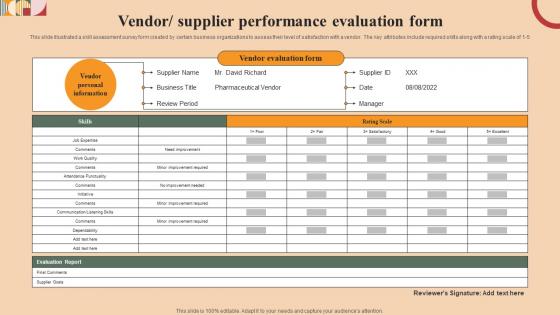
This slide illustrated a skill assessment survey form created by certain business organizations to assess their level of satisfaction with a vendor. The key attributes include required skills along with a rating scale of 1 5
People who downloaded this PowerPoint presentation also viewed the following :
Vendor Supplier Performance Evaluation Form with all 6 slides:
Use our Vendor Supplier Performance Evaluation Form to effectively help you save your valuable time. They are readymade to fit into any presentation structure.





FAQs for Vendor Supplier
So for vendor evaluation, I always hit four main things: their finances, tech skills, service quality, and pricing. Check if they're actually stable first - nobody wants a vendor disappearing mid-contract (been there, it sucks). Their track record matters more than fancy sales pitches. Make sure whatever they're selling actually plays nice with your current setup. Honestly, don't just pick whoever's cheapest. Hidden fees will bite you later, plus good support is worth paying for. Oh, and implementation timelines - some vendors promise the moon then take forever. I'd make a simple scoring sheet so you're not just going with whoever bought you the best lunch.
Actually call their references - don't just read the fluff they send you. I learned this the hard way once. Check how long they've been around and if they're financially solid. Their case studies matter too, but only if they're similar to your situation. Online reviews and BBB ratings are worth checking, plus those industry forums where people really vent about bad vendors. You'll also want to know about staff turnover since having your main contact bail mid-project sucks. Honestly, just make a simple scorecard so you can actually compare them properly.
Honestly, reviews are your best friend when picking vendors - way better than whatever they're selling you in meetings. Look for actual details, not just "amazing work!" garbage. I always check how they handle complaints too because that tells you everything about what happens when things go sideways. Focus on reviews from companies your size though. What works for some massive corporation might be totally wrong for you. Don't just read the stars either - dig into the stories. You'll start seeing patterns pretty quickly around who's reliable and who's all talk.
Honestly, build risk stuff right into your scorecard from day one. Check their financials, security setup, compliance track record - all the things that'll screw you over later. I've watched so many teams go with the cheap vendor only to panic when they get hacked or fold completely. Weight those risk factors next to cost and features when you're scoring. Oh, and create a basic questionnaire covering cybersecurity, financial health, regulatory stuff, disaster recovery - you know, the big hitters. Make it standard so you're actually comparing vendors fairly instead of just winging it each time.
Track these four things: quality stuff like defect rates, delivery performance (on-time rates and lead times), cost management, and how fast they respond to issues. Relationship quality matters too - sounds cheesy but you'll thank me when problems hit. Monthly scorecards work well so nobody gets blindsided at quarterly reviews. Innovation contributions are worth measuring if it applies to your category. Honestly, pick 3-5 metrics that actually impact your business instead of going overboard with tracking everything.
So basically you just assign points to different things like price, quality, delivery speed, customer service - whatever matters for your specific situation. Way better than going with whoever had the slickest PowerPoint, you know? You can weight the categories differently too, like if budget's tight, make price worth more points. Then just add everything up and boom - highest score wins. Honestly saved my butt last year when my boss questioned why we didn't go with the cheapest option. I just showed him the scoring breakdown and he totally got it. Makes the whole decision way less stressful.
Honestly, standardized questions are your friend here - dig into their actual experience with stuff like your project, not just generic capabilities. When you ask for examples and references, watch how many get all vague and dodgy lol. Definitely loop in your tech people during interviews so they can catch any BS or feasibility issues. Write everything down right after because trust me, you'll totally forget the little details that matter. Oh and ask about how they handle project management and communication - that's usually where things fall apart with vendors, not the technical stuff.
You should definitely automate the boring vendor stuff - scoring systems, digital RFP platforms, databases that track how vendors actually perform. Set up workflows to grab references and run financial checks automatically. Way better than those endless spreadsheets we all used to deal with (though honestly I still love a good spreadsheet sometimes). AI tools are pretty solid at catching patterns in responses or weird red flags you'd probably miss. Oh, and digitize your scorecards first - that's where you'll see the biggest time savings right away.
Ugh, the worst part is vendors giving you total fluff responses that sound smart but say absolutely nothing. Plus everyone gets starry-eyed over big brand names. Set up your scoring criteria before you start and actually stick to it - don't wing it. Give them real scenarios to work through instead of boring generic questions. Get a few different people involved in rating so it's not just your opinion. Oh and build in extra time for this whole mess because rushing a huge decision like this never ends well. Trust me on that one.
Honestly, just get all the conflicts out in the open right away. Have someone map out who knows who - old coworkers, financial stuff, personal friendships, all of it. I've watched this blow up when nobody realized someone's former colleague was in the running. Once you know the conflicts, those people can't evaluate - period. Set up clear rules for stepping aside and actually follow them. Your team gets too small? Pull in people from other departments who don't have skin in the game. Trust me, being upfront about this mess from day one saves you way more headaches than trying to work around it later.
Honestly, you've gotta check if your vendors actually follow industry standards - otherwise you're setting yourself up for a world of hurt. Bad vendors can tank your reputation or land you in legal trouble if they mess up. Those certifications like SOC 2 and ISO aren't just paperwork flexing; they show the company has their act together with security and processes. I learned this the hard way once. Make a simple checklist of what standards matter for your industry, then demand proof before you even waste time talking to them. If they can't produce certificates, move on.
Look, don't just go with whoever's cheapest upfront - that'll bite you later. Check the total cost over time, payment terms, all that stuff. If you're buying international, currency swings can mess with your budget big time. Market's looking shaky? Maybe skip the vendor with suspiciously low prices and go with someone more stable. Your cash flow matters too - some vendors are way more flexible about payments. I learned this the hard way once, tbh. Run the actual numbers on everything before you commit to anyone.
Start with Gartner or Forrester reports - they've got solid vendor scorecards for pretty much everything. Your industry's trade associations usually have performance data too. But honestly? The real gold comes from chatting with other companies who actually use these vendors. LinkedIn makes finding those contacts way easier than it used to be. Track the usual stuff - delivery times, quality scores, cost per unit - but make sure your KPIs match what everyone else measures. I'd build a simple dashboard comparing your vendor against industry averages. Makes spotting problems obvious and gives you ammunition when you need to push for better performance.
Honestly, watch how they handle the small stuff first - that'll tell you everything about what happens when things get messy later. Good vendors will actually tell you when problems come up instead of going radio silent (which drives me crazy). Make sure they can roll with changes to your process and aren't totally rigid with contracts. Also worth checking if they're financially solid - last thing you need is them folding halfway through a project. Oh, and see if they're keeping up with new tech and trends. Basically, you want someone who delivers what they promise and doesn't make everything a headache.
Honestly, start those stakeholder check-ins from day one and don't skip them. Weekly updates are your lifeline - cover what's working, what's broken, next moves. Trust me, people get super cranky when they're left guessing about vendor stuff. Set up some shared space where everyone can jump in with questions whenever. Pick one day (maybe Fridays?) and just make it your update day. Oh, and nail down how you'll actually talk to the vendors too - like response times and whether they prefer email or calls. I've watched this whole thing blow up when communication gets messy.
-
“The presentation template I got from you was a very useful one.My presentation went very well and the comments were positive.Thank you for the support. Kudos to the team!”
-
“Thank you to the SlideTeam. Your presentations look really skillful and have made my life so much easier.”