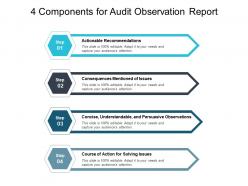
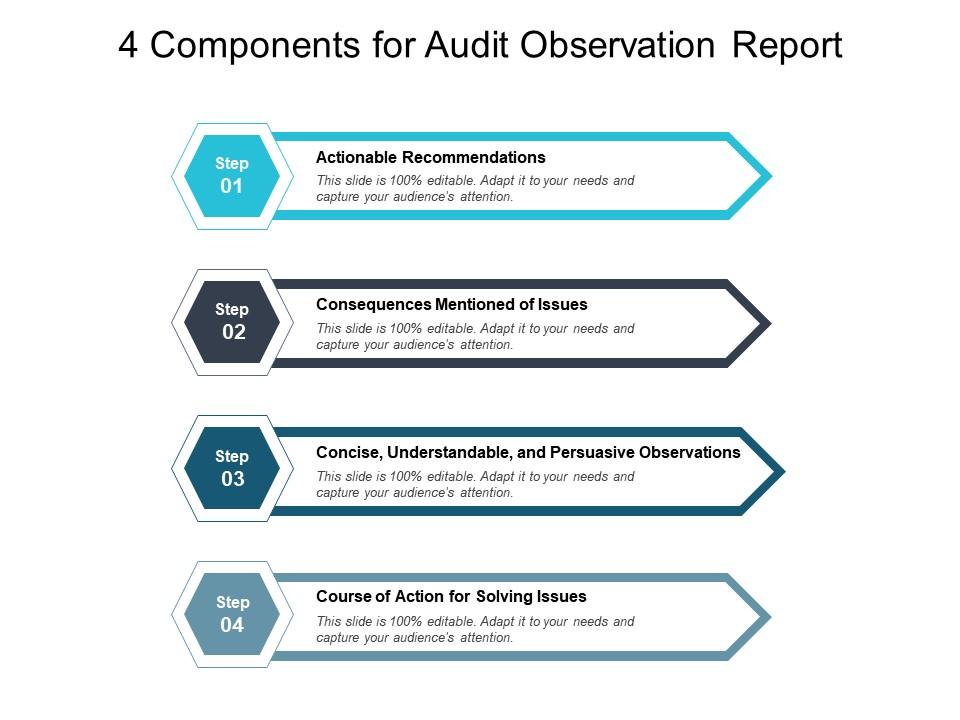
4 components for audit observation report
Try Before you Buy Download Free Sample Product
Audience
Editable
of Time
Epitomize excellence with our 4 Components For Audit Observation Report. Consistently function at your best.
People who downloaded this PowerPoint presentation also viewed the following :
4 components for audit observation report with all 5 slides:
Consistently function at your best with our 4 Components For Audit Observation Report. You will epitomize excellence.
FAQs for 4 components for
Your audit report needs five things: condition (what you found), criteria (what it should be), cause (why it went wrong), effect (the impact), and recommendation (how to fix it). Think of it like telling a story - you can't just say "this is broken" and leave it there. The condition and criteria are your starting point, but honestly, the cause and effect parts are what really sell why anyone should care. Oh, and make your recommendations super specific. None of that "improve controls" nonsense - that tells people nothing.
Structure is everything with audit reports - mess it up and you'll lose people immediately. Follow the classic flow: condition, criteria, cause, consequence, recommendation. What did you find? What standard should it meet? Why's there a gap? What are the risks? How do we fix it? I've seen way too many reports where the actual finding is buried on page three (seriously, who has time for that?). Management needs to quickly understand what's wrong and what to do next. Don't make them hunt for your point.
Your executive summary is basically the make-or-break section - it's what gets leadership to actually read past page one. Start with your biggest findings and main recommendations right up front. Some execs honestly won't dig deeper than that first page, so you've gotta make it count. Think elevator pitch: scope, major risks, organizational impact. Keep it tight but interesting enough that they'll actually care about what you found. Oh, and make sure you can back up everything with solid evidence in the detailed sections later - learned that one the hard way.
Drop the fancy audit speak and just say what you mean - "missing approval process" hits way harder than "internal controls deficiency." Tell a story with your findings: here's what's broken, here's why you should care, here's what blows up if you ignore it. Risk ratings are your friend because executives eat that stuff up. Keep the same structure for each finding so people aren't guessing what comes next. Write like you're explaining it to your smart cousin who doesn't do audits. Honestly, run it by someone outside your team first - if they're lost, leadership will be too.
So you need solid backup for whatever you found. Grab contracts, emails, policies - any documents that prove your point. Screenshots are honestly clutch, especially for tech stuff. Interview notes work too if you talked to people about it. Photos can be helpful depending on what you're dealing with. The main thing is making sure everything directly connects to what you're reporting. Your evidence should be rock solid enough that if someone else looked at the same pile of stuff, they'd come to the exact same conclusion you did.
Write recommendations that actually tell people what to do - none of that "improve controls" garbage that helps nobody. Spell out the exact steps, who's handling it, and when it should happen. Target the real problem, not just what you saw on the surface. I've seen so many auditors ask for massive overhauls when honestly a quick process fix would work fine. You'll just lose credibility that way. Each recommendation needs a clear outcome too. Management should know exactly what success looks like when they're done.
So basically, you want to tackle the scary stuff first - high-risk issues that could actually hurt the business. Minor compliance things? Those can wait honestly. Management has limited time and money, so show them what'll make the biggest difference. It's like the ER triage thing - you can't fix everything at once. When you rank findings by severity and how hard they'd be to implement, you're giving executives something they can actually work with and budget for. Plus it makes your report look way more credible because you get the business side, not just technical rule-breaking.
You gotta match your reports to whatever industry you're dealing with. Healthcare? Hit them with patient safety stuff and HIPAA references. Manufacturing wants efficiency metrics and safety protocols. Finance is honestly the worst - they're obsessed with regulatory acronyms and compliance speak, but that's what they expect. Figure out their specific pain points first. Then use language that actually makes sense to them. I'd dig through some industry audit guides or old reports from similar companies to nail the right tone. Each sector has its own weird vocabulary you need to pick up on.
Ugh, the worst thing you can do is be super vague about findings. Like, don't just say "controls are weak" - give them actual examples! I learned this the hard way when an auditee basically had no clue what I wanted them to fix. Skip the audit-speak too. Nobody knows what that means outside our bubble. Put the main issue upfront instead of burying it under tons of background info. Your recommendations should be doable - don't tell them to scrap everything and start over. That's just unrealistic. Oh, and try not to make it sound like you're personally coming for them. Before sending it off, read it like you're the one getting audited. Would you actually understand what needs fixing?
Quarterly updates work for most audit stuff, but high-risk findings? Check those monthly or you'll regret it later. I learned that the hard way at my last job - we let something slide and it bit us during the next audit. Lower-risk items can wait the full quarter though. Set realistic timelines upfront based on how complex the fix actually is. Some things take a week, others need like six months. Definitely set up alerts in whatever system you're using so things don't get forgotten. Start by sorting everything by risk level first, then figure out your review schedule from there.
You definitely want management responses - gives them a fair shot to address your findings before you blast them in the report. It's basic courtesy, honestly. Plus you can tell a lot about leadership by how they respond. Do they take it seriously? Are their fix plans actually realistic or just corporate BS? Auditors and stakeholders eat this stuff up too because it shows you weren't just playing gotcha. The key thing is pushing for real timelines and who's gonna own what. Don't let them get away with vague "we'll look into it" nonsense.
Honestly, visuals are a game-changer for audit reports. Nobody wants to slog through pages of dense text about control gaps - I've been there. Screenshots, flowcharts, and photos actually show the problem instead of just talking about it. Process maps highlighting issues? Super effective. Before/after comparisons really hit different too. Your stakeholders will get it way faster when they can see what went wrong. I usually try to throw in at least one visual per major finding. Makes the whole thing more convincing and way less boring to read through.
First thing - figure out which standards you're actually dealing with (SOX, ISO, whatever applies to your space). Map your report sections against those requirements so you don't miss the obvious stuff like risk assessments and control testing. Honestly, I'd keep a checklist because when you're buried in the details, it's super easy to forget something basic. Make sure your findings format matches what the standard wants for documentation. Oh, and evidence trails - don't skip those. Get someone else to review it before you submit though. Trust me, they'll spot things you missed.
Honestly, historical data is a game-changer for audit work. Pull trends from old audits and compare them to what you're seeing now - helps you spot if problems keep coming back or if they're brand new. I usually go back 3-5 years when I can get my hands on the data. It makes your recommendations way more convincing. You can show baselines, catch patterns, and prove whether management is actually getting better or just spinning their wheels. Pro tip: start a tracking spreadsheet now so you're not panicking later trying to find everything.
Look, you want observations that actually matter - stuff that hits your audit objectives or creates real material risk. Does it break policies, regulations, or standards? Could it hurt operations or cause financial/reputational damage? Those are your winners. I've watched too many auditors throw in every random finding they stumble across. Bad move - it just waters down your whole report. Stick to things management genuinely needs to fix. If something could actually harm the organization when ignored, include it. Otherwise? Skip it. Quick test: ask yourself if leadership would prioritize fixing this issue. If the answer's no, leave it out.
No Reviews