


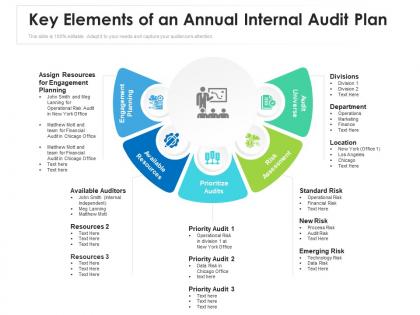
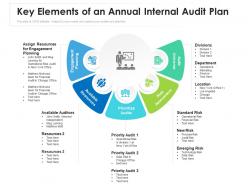
Key elements of an annual internal audit plan




Try Before you Buy Download Free Sample Product
 Impress Your
 Audience
 100%
100% Editable
 Save Hours
 of Time


Our Key Elements Of An Annual Internal Audit Plan are topically designed to provide an attractive backdrop to any subject. Use them to look like a presentation pro.
People who downloaded this PowerPoint presentation also viewed the following :
Key elements of an annual internal audit plan with all 2 slides:
Use our Key Elements Of An Annual Internal Audit Plan to effectively help you save your valuable time. They are readymade to fit into any presentation structure.
FAQs for Key elements of an annual
Start with a solid risk assessment - that's gonna be your roadmap for everything. Map out your key business processes and rank them by risk level, compliance needs, and how long it's been since the last audit. Management will definitely have their own priorities too (they always do). Build in buffer time because audits never go exactly as planned. Think about your team's bandwidth and whether you need specific expertise for certain areas. Oh, and definitely loop in department heads early on - makes everything way less painful and they're more likely to actually cooperate when audit time comes around.
Talk to your executives regularly about what's actually stressing them out, then build your audit plan around those real concerns. Don't just recycle the same compliance stuff every year - that's such a waste. Focus on things that could actually tank their big initiatives or hurt the business competitively. If they're pushing hard on digital transformation or some new revenue strategy, audit those supporting processes first. I'd do quarterly check-ins too since priorities change fast. Honestly, most audit teams miss this completely and wonder why leadership doesn't value their work.
Start with a basic risk matrix - score everything by likelihood and impact. That's your foundation. Then talk to senior management and department heads because they actually know where the problems are hiding. Also factor in regulatory stuff and old audit findings. A risk heat map helps visualize the whole mess, which honestly makes presentations way easier. Document your process too - someone will definitely question why you're not auditing their favorite department this year. Oh, and surveys work great if you can't get face-to-face time with everyone.
Don't just email people a draft and hope for the best - that's a rookie move. Set up actual face-to-face meetings with department heads, audit committee, senior management. Ask them what's keeping them awake at night, what they're worried about. I swear, half the audit plans I've seen bomb because someone created them locked away in an office somewhere. Open-ended questions work way better than yes/no stuff. Once you get their input, actually use it and show them how their concerns made it into the final plan. Circle back or they'll think you ignored them completely.
Honestly, you can't really do audits effectively anymore without decent tech tools. Data analytics will show you where the real risks are hiding, and automation handles all the boring repetitive stuff. Get some audit management software - it'll track your findings and help you spot patterns you'd totally miss otherwise. Since everything's going digital anyway, you need to understand those tech risks too. I'd start by figuring out which systems your company actually depends on day-to-day. That's probably where you'll find the biggest problems. Mix your usual audit areas with the newer stuff like cybersecurity. It's kind of a balancing act.
Take your last audit findings and really dig into them when planning next year. Where did you hit major issues or see the same problems pop up again? Those spots need more attention. Emerging risks are worth noting too - honestly, those always catch people off guard. But flip side, if some areas had solid controls consistently, maybe dial back the hours there and shift them to the messier zones. Just make sure you document why you're making these changes. That way when stakeholders ask, you can show you're actually responding to real data instead of just copy-pasting last year's approach.
So I'd check your completion rates first - are you actually finishing audits on time? Then see if management's following through on your recommendations within the deadlines you set. Cycle time matters too, from start to final report. Survey your stakeholders about satisfaction (though honestly, most people will never love having auditors around). Track whether you're hitting all the high-risk stuff you planned to cover. But here's the thing - the number of findings isn't everything. What really counts is catching problems before they blow up into major headaches for everyone.
Honestly, start with the boring stuff - you'll need like 60-70% for compliance because that's just reality. Map out all your regulatory requirements first since those aren't going anywhere. Then use whatever's left (maybe 30-40%) for the fun projects that actually help people. The real win is finding overlap - like when you're doing SOX work, see if you can also spot process improvements. Department heads are goldmines for this... ask them what's bugging them beyond just compliance headaches. Oh, and definitely look at last year's plan first. Why reinvent the wheel, right? Sometimes the best audit insights come from stuff that wasn't even on your original radar.
Risk assessment matrices are honestly a game changer - they stop you from auditing random stuff and focus on what actually matters. Get yourself an audit universe template to map everything out, plus some kind of resource tracker for hours and skills. Oh and audit management software has decent planning tools, but honestly? The free IIA Excel templates work great for smaller teams (learned that the hard way after we overspent on fancy software). Don't just copy last year's plan though. Start with your risk matrix first, then build backwards from there. Forces you to think systematically about what you're doing.
Honestly, save like 20-30% of your audit hours as "flex time" right from the start. Don't lock everything in stone for the whole year - trust me on this one. When COVID hit, half our planned audits suddenly made zero sense! Do quarterly reviews where you can shift priorities based on whatever's actually happening in the business. Keep your risk assessment fresh too, not just some dusty annual thing. The trick is getting leadership to understand that changing course isn't you screwing up - it's actually good risk management. Way better than stubbornly sticking to irrelevant audits.
Make it a strategic doc that shows clear risk priorities and resource allocation. Lead with an executive summary connecting key risks to your plan - boards eat that up. Honestly, throw in a simple visual timeline because dense text puts executives to sleep. Your risk methodology needs explaining, plus show you're hitting critical areas first. Don't just do a quick presentation - block out real Q&A time. Oh, and position yourself as someone who gets business priorities, not just another compliance checker. That's what separates the good auditors from the box-tickers.
So the audit plan is basically how the board keeps tabs on what's actually happening vs what management claims is happening. It spots where risks are lurking and tests if your controls work for real. Your audit committee should sign off on it every year, but honestly, you want it flexible enough to shift when surprise risks show up - which they always do. The whole thing feeds into board oversight by giving them independent proof that things are either running smooth or totally broken. Just make sure it lines up with your big strategic risks and whatever regulators are breathing down your neck about.
Honestly, the worst part is when everyone suddenly becomes "too busy" once audit time rolls around - like they didn't know it was coming! Resource constraints and scope creep will drive you crazy too. What helps is padding your timeline with extra buffer days and getting that audit scope locked down in writing before you start. Schedule stakeholders early and make them commit to specific times, otherwise you'll be chasing people forever. Stay flexible though - sometimes business stuff really can't wait. Oh, and keep talking to everyone regularly so there aren't any surprises. Planning ahead beats scrambling later, trust me on that one.
Honestly, just focus on the riskiest stuff first when you're stretched thin. Your team can only do so much - I'd rather see three solid audits than six half-assed ones. Use tech for the boring routine tests, maybe outsource the really specialized areas you don't have expertise in. Lower-risk stuff? Push those cycles out longer. Here's the thing though - be super upfront with leadership about what you can't cover. Show them exactly where you're making trade-offs. Half the time they don't realize how tight resources are until you spell it out. Then maybe they'll actually fight for more budget.
Honestly, external audits are gold for planning your internal work. They catch blind spots you totally missed. Their management letters? Pure roadmap material - those recommendations basically write your audit plan for you. I always compare their risk assessment with ours because why reinvent the wheel, right? Control weaknesses they flag make perfect follow-up targets. The key is not duplicating what they already covered. Focus your time on the high-risk stuff they identified instead of spinning your wheels on areas that are already handled.
-
Great product with highly impressive and engaging designs.