


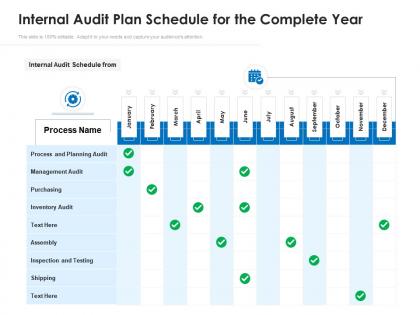
Internal audit plan schedule for the complete year




Try Before you Buy Download Free Sample Product
 Impress Your
 Audience
 100%
100% Editable
 Save Hours
 of Time


Our Internal Audit Plan Schedule For The Complete Year are topically designed to provide an attractive backdrop to any subject. Use them to look like a presentation pro.
People who downloaded this PowerPoint presentation also viewed the following :
Internal audit plan schedule for the complete year with all 2 slides:
Use our Internal Audit Plan Schedule For The Complete Year to effectively help you save your valuable time. They are readymade to fit into any presentation structure.

FAQs for Internal audit plan schedule for
Okay so for your audit schedule, definitely start with what you're actually auditing and why. Timeline's obvious - start/end dates, who's doing what, all that stuff. Risk assessment priorities are huge too. Oh and seriously, map out your stakeholders early and tell everyone what's going on - I learned this the hard way when people started freaking out mid-audit. Include your testing methods and how you'll report everything. Build in buffer time because I swear, audits always take longer than you think. Keep it realistic but flexible since weird stuff always pops up.
Honestly, just map out all your audit areas first and score them based on financial impact, regulatory stuff, and when they were last checked. Think ER triage - worst cases go first, you know? Score everything on control gaps, business changes, management freakouts, then rank accordingly. High-risk areas need annual visits. Lower risk can wait 2-3 years. Document your criteria though - leadership will definitely ask why you prioritized X over Y. Trust me on that one.
Your stakeholders are going to be key for nailing down that audit schedule. Senior management, audit committee, and department heads all have different perspectives on what's risky right now. Management knows the operational headaches and regulatory stuff coming down the pipeline. The audit committee typically gives final approval, so you want them on board early. Department heads? They'll tell you where things are actually breaking down day-to-day. I always document their input during planning - makes it way easier to defend your priorities later when someone inevitably asks why you didn't audit their pet project first.
Honestly, most companies just do them yearly but that's kinda lazy thinking. Your risk level should drive the schedule - high-risk stuff might need quarterly checks while boring stable processes can wait 18 months. Think about how messy your operations are, any big system changes, past problems that came up. Regulators have expectations too depending on your industry. The real trick is staying consistent and writing down why you chose certain frequencies. Auditors eat that documentation up, trust me. Map out everything you need to audit first, then assign timing based on actual risk instead of just slapping "annual" on everything.
Honestly? Start simple before you go crazy with the fancy stuff. Monday.com or Smartsheet work great for basic audit scheduling - I've watched teams overthink this and regret it later. AuditBoard's solid if you want something built specifically for auditors, plus it does risk assessment too. Those big GRC platforms like MetricStream are powerful but total overkill unless you're running a massive program. Even Excel works fine if your audit universe isn't too wild. Just figure out what you actually need first - risk scoring, resource management, whatever - then pick something that fits your budget. Don't overthink it.
Look at your company's strategic plan first - that's where the real risks live. Coffee chats with executives every quarter help tons because priorities change constantly (honestly, sometimes monthly). Focus your audits on whatever could actually tank those big objectives. Don't just repeat last year's schedule because it's easier. Risk-weight everything based on what matters to the business right now. The goal is proving you're strategically valuable, not just checking compliance boxes. If you're auditing stuff that doesn't connect to what keeps leadership awake at night, you're wasting everyone's time.
Honestly, start with completion rates and cycle times - those tell you if you're actually getting stuff done. Risk coverage is huge too, like what percentage of high-risk areas you hit each year. But here's the thing that drives me crazy - don't let findings just sit there forever. Track how fast issues get resolved or you'll look like that audit team everyone ignores. Stakeholder satisfaction surveys help, though people sometimes sugarcoat feedback. The real test? Whether you're catching material problems before they explode publicly. Pick maybe 3-4 metrics and check them monthly so you can catch trends early.
Honestly, just map your regulatory stuff directly to your audit schedule. Figure out what you're dealing with first - SOX, industry regs, whatever applies to you. Then build everything around those deadlines and how risky each area is. The high-risk stuff needs way more attention, which is kind of obvious but people mess this up constantly. Don't wait for regulators to show up - that's a nightmare you don't want. Document everything and jump on findings fast. I'd make a compliance calendar showing when each regulation gets its audit. Saves you from that "oh crap, we forgot about X" moment later.
Honestly, resource constraints are killer - your team's probably already swamped. Every department wants to go first OR last (depending what they're trying to hide, lol). Timing becomes this nightmare juggle between busy seasons and external audits. Risk assessments shift constantly too, so priorities from six months ago? Totally different now. Management will definitely throw "urgent" requests at you that mess up everything. I learned this the hard way - always build buffer time into your schedule. Getting executive buy-in early saves you from endless scope creep later.
Look at your last 2-3 audit reports first - that's where the gold is. Recurring problems? Those need way more attention next cycle. High-risk stuff that was a nightmare to audit probably means their processes are actually broken, so hit those more often. Honestly, the areas where controls were running smoothly might not need as much hand-holding next year. This whole approach beats just following some cookie-cutter schedule. You'll spot patterns pretty quickly once you map everything out. Way better than randomly picking what to focus on next.
Honestly, I always keep like 15-20% of my audit hours unallocated - saved my butt so many times when random stuff pops up. Risk-rank everything so you can bump the low-priority audits when management inevitably throws you a curveball. Oh, and those quick check-ins with stakeholders? Game changer. Stops the whole "surprise, we need this audited tomorrow" thing that used to drive me crazy. Some audits work better as ongoing monitoring instead of one-time reviews anyway - gives you way more flexibility. Always have backup plans ready and don't wait to tell people when schedules shift. Trust me on that one.
Oh absolutely, your audit schedule should flex when things change around you. New regs, system upgrades, mergers - all that stuff means you gotta shift priorities. I learned this the hard way at my last job when we kept auditing the same old processes while ignoring the actual risks. Build quarterly check-ins to see if you're still focused on what matters. Don't let your schedule become some dusty document nobody looks at. Make it responsive to what's actually happening in your business right now.
Honestly, you've got to hit people through multiple ways or they'll totally miss it. Email the department heads and stakeholders first - that's your baseline. But everyone's drowning in emails anyway, so also throw it on the company intranet or shared drive. I'd probably announce the big audits during leadership meetings too. Oh, and definitely send calendar invites for the actual dates so it blocks their time. Sounds like overkill but trust me, you need that redundancy. Hit them 2-3 different ways and something will stick.
So the IIA is definitely your best bet - their updates are super helpful for scheduling stuff. I'm always on audit LinkedIn (probably too much lol) but you actually catch good trends there. Professional publications help too, and webinars when you can swing it. Honestly though? Other auditors are where the real advice comes from. They get the same headaches you do. Set up some Google alerts for "internal audit scheduling" and related terms - new methods pop up pretty regularly. Conferences are worth it if your budget allows.
So basically, your internal audit schedule is like a roadmap for checking your company's controls. You'll hit high-risk stuff more often - maybe annually - while safer areas can wait 2-3 years between reviews. It's way better than just doing random checks whenever you feel like it (which honestly doesn't work). The whole point is making sure you cover everything important without going crazy. Just match it to your risk assessment so you're not wasting time on low-priority areas. Oh, and don't forget to actually stick to the schedule - I've seen too many companies create these perfect plans then ignore them completely.
-
Use of icon with content is very relateable, informative and appealing.
-
The content is very helpful from business point of view.