Annual Internal Audit Schedule Form

Rating:
90%
Annual Internal Audit Schedule Form
Slide 1 of 9
Favourites Favourites

Try Before you Buy Download Free Sample Product

Audience Impress Your
Audience
Editable 100%
Editable
Time Save Hours
of Time
The Biggest Sale is ending soon in
0
0
:
0
0
:
0
0
Rating:
90%
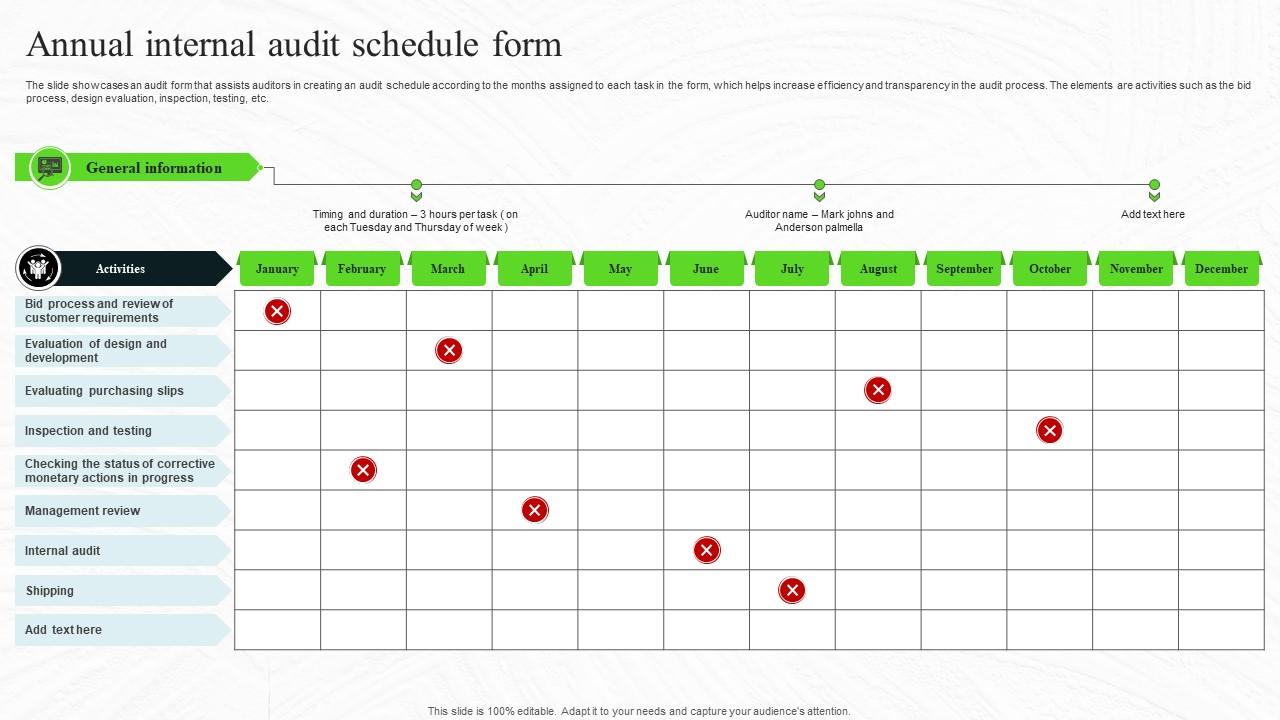
The slide showcases an audit form that assists auditors in creating an audit schedule according to the months assigned to each task in the form, which helps increase efficiency and transparency in the audit process. The elements are activities such as the bid process, design evaluation, inspection, testing, etc. Presenting our well structured Annual Internal Audit Schedule Form. The topics discussed in this slide are General Information, Design And Development, Evaluating Purchasing Slips. This is an instantly available PowerPoint presentation that can be edited conveniently. Download it right away and captivate your audience.

FAQs for Annual Internal

Map out all your audit areas first and rank them by risk - the scary stuff needs checking more often. Build realistic timeframes because rushed audits are pretty much useless. Factor in your team's actual availability, plus when you can actually get time with the people you need to interview. Always add buffer time for when things go sideways (and they will). Oh, and build in review points so you can adjust when priorities change - which happens constantly. I'd start with your absolutely-must-do audits and work backwards from there. Don't try to be too ambitious with the schedule initially.

Dude, just get some decent scheduling software already. Most tools will sync with your calendar and catch double-bookings before they happen. You can drag stuff around super easily, and it'll automatically ping everyone when things change. Way better than those awful spreadsheets we all used to suffer through - honestly don't know how we survived that mess. The compliance tracking is clutch too since you won't accidentally blow past deadlines. Pick whatever plays nice with your current setup. Even basic automation beats doing everything by hand.

Start with risk levels - higher risk stuff needs more frequent checks. Regulatory requirements are non-negotiable though, some industries just mandate certain frequencies. Previous findings matter a ton. Found major problems last time? Yeah, you're going back soon. Operational changes, new systems, staff turnover - all create fresh risks worth monitoring. Budget constraints are real too, even if nobody wants to talk about it. I mean, unlimited audits would be nice but that's not reality. Categorize everything as high, medium, low risk first. Then figure out your schedule from there. Makes the whole process way more manageable.

Look, regulatory deadlines are gonna control your whole audit timeline - there's no way around it. Public companies have those SEC filing deadlines for 10-Ks and 10-Qs, so you're working backwards from there. Your audit needs to be done weeks before those are due. Then you've got industry stuff layered on top - banking and healthcare have their own headaches to deal with. Some audits happen yearly, others every few years depending on what you're dealing with. Honestly, I always tell people to map out those regulatory dates first, then squeeze everything else around them. Nothing else matters if you miss those deadlines.

So risk assessment is basically how you figure out what to audit first. High-risk stuff - like key financial processes or areas that've had problems before - needs way more attention. Low-risk areas? Push those out further. Think of it like medical triage, but for audits. You've got limited time and resources, so focus where problems are most likely to hide. Score each area on things like how material it is, control strength, last review date. That gives you a solid base for scheduling. Honestly, I learned this the hard way when I wasted months on low-impact stuff while missing obvious red flags elsewhere.

Map your business goals to risk areas first - that's where you start. Revenue growth? Audit sales processes and customer data security. Cost cutting? Hit operational efficiency and vendor management. Honestly, just think about what's making your executives lose sleep - those should be your top priorities. Skip the "we haven't looked at this in 2 years" mentality. Build a simple scoring system that weighs strategic impact against risk level and how much work it'll actually take. Way better than just picking audits randomly.

Get that audit schedule out ASAP and spell out exactly what you need from everyone - like, don't leave room for confusion. Hit people through email AND meetings since some folks are better with face-to-face stuff. Honestly, I used to think people would just figure it out, but that's how you end up scrambling at the last minute. Flag your tight deadlines right away, and definitely pad your timeline because something always goes sideways. Oh, and set up those regular check-ins - they're lifesavers for catching problems early. Better to annoy people with too much communication than watch everything fall apart because someone missed something.

Just focus on the must-do stuff first and bump everything else down the line. Figure out what's actually critical vs what would just be nice to check off. System down or someone called out sick? Work with what you've got right now. Honestly, I've never seen an audit schedule that didn't need changes - they're more like rough drafts anyway. Write down what you're switching around and get the higher-ups to sign off fast. Next time though? Build in some cushion from the start, maybe 10-15% extra time. Trust me on this one.

Honestly, just pick 2-3 metrics that actually matter to you instead of going crazy with tracking everything. Completion rates are huge - like, are you even finishing these things on time? Then watch your issue detection rates to catch problems early. Compliance scores matter too, plus how long it takes between finding issues and fixing them. My old team was totally obsessed with these numbers but they actually tell you what's working. Don't forget stakeholder satisfaction - nobody talks about that enough. Risk coverage across different areas is solid to track too. Start small though, way easier to build from there.

Look, having a solid audit schedule isn't just busy work - it actually catches problems before they blow up on you. I'd start by figuring out your biggest risk areas and when regulators expect stuff. Then work backwards from those deadlines. You want regular check-ins throughout the year, not just scrambling at the last minute. Honestly, regulators appreciate when you're on top of things because it makes their lives easier too. The key is building a rhythm that keeps your team accountable without driving everyone crazy. Map out your compliance dates first, then space out meaningful audits around them.

Honestly, most audit teams I know use dedicated software like TeamMate or AuditBoard - they're pretty solid for tracking everything. If you're on a tight budget though, Monday.com or Asana work great too. I've actually seen people do amazing work with just Excel templates (gets chaotic with big audits, but whatever works). The main thing is picking something that actually fits how your team already operates. You want real-time updates on deadlines and who's doing what. My advice? Start simple with what you've got and upgrade later when things get more complicated.

Honestly, I'd check it monthly if possible, but quarterly works too. Organizations change so damn fast - new risks, shifting priorities, budget cuts. Your schedule has to roll with it or you'll waste time on the wrong stuff. Quarterly reviews are solid for catching scheduling conflicts before they bite you. Short bursts work better than long ones anyway. Set a calendar reminder for the first week of each quarter and actually stick to it. Treat it like you would any meeting you can't blow off. Trust me on this one.

Think of audit schedules as your business's health checkups - way better to catch problems early than deal with disasters later. Instead of that nightmare year-end crunch (ugh, never again), spread things out so your team can actually breathe and do quality work. Consistent timing helps you spot patterns and fix inefficiencies before they bite you. I'm honestly surprised more companies don't get this - schedule audits around your actual business rhythm, not just because some regulation says you have to. Your operations won't get totally disrupted, and you'll sleep better knowing things are running smooth.

Definitely get stakeholder input on your audit schedule - it makes everything so much easier. They'll spot conflicts you missed and tell you about busy periods that would be terrible timing. Also, people are way more cooperative when they've had input rather than just getting ambushed with dates. You'll get better insight on what needs to happen first vs. what can wait. I learned this the hard way on my first big audit when I didn't ask anyone and ended up scheduling during their busiest quarter. Trust me, involving them upfront saves you tons of headaches later and helps you plan realistic timelines.

Ugh, resource issues are brutal - your auditors get yanked into other stuff or call out sick right when deadlines hit. Scope creep will destroy you too. What should be a quick review somehow turns into this monster project that wrecks everything. Then you've got auditees who don't have their docs ready, or the person you need to interview is MIA. It's like herding cats honestly. Oh, and communication breakdowns happen constantly. Build in extra time from the start and always have backup people lined up for the big audits.

Ratings and Reviews

90% of 100
Review Form
Write a review
Most Relevant Reviews
  1. 100%

    by Cyrus Ellis

    Best way of representation of the topic.
  2. 80%

    by O'Kelly Phillips

    Slideteam offers pocket-friendly products. As a college student this is a really necessary thing to look at while paying for something.

2 Item(s)

per page: