


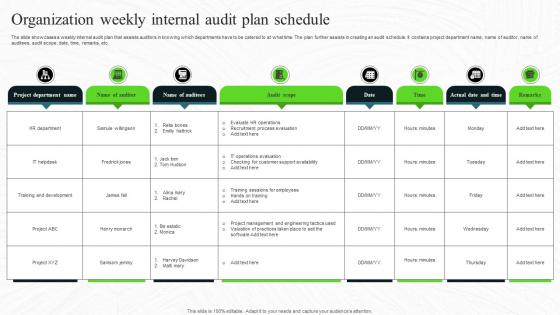
Organization Weekly Internal Audit Plan Schedule




Try Before you Buy Download Free Sample Product
 Impress Your
 Audience
 100%
100% Editable
 Save Hours
 of Time


The slide showcases a weekly internal audit plan that assists auditors in knowing which departments have to be catered to at what time. The plan further assists in creating an audit schedule. It contains project department name, name of auditor, name of auditees, audit scope, date, time, remarks, etc.
People who downloaded this PowerPoint presentation also viewed the following :
Organization Weekly Internal Audit Plan Schedule with all 9 slides:
Use our Organization Weekly Internal Audit Plan Schedule to effectively help you save your valuable time. They are readymade to fit into any presentation structure.








FAQs for Organization Weekly Internal
Okay so for your audit schedule, start with the obvious stuff - what you're auditing, when, and who's doing it. Timeline needs actual dates, not just "Q2" or whatever. Hit your riskiest areas first since those matter most. Include scope boundaries so people don't freak out thinking you're auditing everything. Resource allocation is key too - figure out who you need and when. Honestly, stakeholder notifications are huge because surprise audits make everyone hate you. Add some buffer time because these things always run long. Don't forget methodology details and what deliverables you'll actually produce. Oh, and check if there's any regulatory stuff you have to follow.
Look, most places do them yearly at minimum. But it really comes down to your risk level - high-risk stuff might need quarterly checks while stable processes can maybe go 18 months (though that's pushing it). Think about regulatory changes, past problems, how critical each process is. Rotating schedules work well too - hit different departments throughout the year so you're not drowning everyone at once. Honestly, the trick is mapping your key processes by risk level first, then building something you can actually follow through on. Nobody wins if you create this ambitious plan that falls apart by month three.
Start with the riskiest stuff - whatever could really mess up your company goes first. Regulatory deadlines are non-negotiable, so those have to fit in somehow. Check when areas were last looked at too; some go stale if ignored for years. New systems or process changes create fresh risks that need attention. Honestly, sometimes you just have to audit whatever the CEO is worried about, even if it doesn't seem that risky. Management requests carry weight whether we like it or not. Map all this against your actual bandwidth and timeline - no point planning something impossible.
Honestly, automated scheduling software will save your sanity - no more endless email chains with departments. Set up recurring cycles, automatic reminders, the whole deal. Risk assessment data helps you figure out which areas need attention first, and you can shuffle things around as needed. Mobile access is clutch too since you're probably never at your desk anyway. Oh, and make sure whatever tool you pick plays nice with your current audit system or you'll just create more headaches for yourself.
So basically, risk assessment is what drives your whole audit schedule. You figure out which parts of the business are sketchy or could blow up if something goes wrong - think fraud stuff, compliance issues, critical processes. Those get audited way more often. Low-risk areas? Honestly, they can sit on the back burner. The tricky part is you've got to keep updating your risk map because things change constantly. I'd start by figuring out your company's biggest threats, then build your audit calendar around those first. It's really just smart resource allocation when you think about it.
Don't just dump a finished schedule on them - get stakeholders involved from the start. Host planning sessions where you actually ask about their risks, projects, and what keeps them up at night. People support what they help create, you know? Explain why you picked each audit and tie it back to stuff they actually care about. Build in wiggle room for when something unexpected pops up (because it always does). The whole point is making them feel like partners instead of just... people who get told what's happening. Trust me, it makes everything smoother.
Don't cram everything into impossible deadlines - your team will hate you and the work will suck. That January schedule you made? Yeah, it's gonna change, so build in flexibility. I learned this the hard way when we had three major audits back-to-back with zero breathing room. Talk to department heads first about when they're swamped. Stop auditing the same boring low-risk stuff annually just because it's tradition. Buffer time is your friend - maybe 15-20% extra for when things inevitably go sideways. Trust me on this one.
Start with a basic spreadsheet to track findings - status, who owns what, due dates, all that stuff. Update it during your regular meetings. Honestly, getting people to actually use the damn thing is the hardest part! Look for patterns too - same departments screwing up over and over? Things getting done on time? I'd do monthly check-ins with whoever owns the findings and push back on anything taking forever. You can always get fancier later, but don't overthink it at the start.
Get that audit schedule out to everyone at least a month ahead - department heads, stakeholders, audit committee, the whole crew. Timing and scope need to be super clear, plus what prep work they'll need to do. Honestly, I've watched so many audits crash and burn just because someone didn't get the memo. Dates change? Tell people immediately. For the big audits, maybe do quick kickoff meetings. Oh, and set up a shared calendar thing so people can actually see what's coming and aren't scrambling last minute to get ready.
Look, when priorities suddenly change or new risks show up, flexibility means you're not stuck auditing outdated stuff. Got a data breach? Bump that cybersecurity audit to the front. Something routine can wait when urgent issues pop up. Honestly, rigid schedules are pretty useless these days - business moves way too fast. Build in some buffer time from the start and make sure leadership knows the plan might shift. Oh, and definitely keep people updated when you do make changes, otherwise they'll think you're just winging it.
So first thing - grab all your regulatory deadlines and work backwards from there. SOX needs annual financial controls testing, no wiggle room there. ISO audits are usually yearly too but depends on your specific certification. Then you've got industry stuff like HIPAA or PCI-DSS with their own random timing requirements. Honestly, keeping track of all this is a pain. Check your audit committee charter too since they probably set minimum frequencies. The trick is mapping everything out early so you're not panicking at the last minute trying to squeeze audits in.
So instead of just doing those big annual audits, try mixing in some automated stuff that runs year-round. Pick one risky area first - maybe something that's burned you before - and set up dashboards to track it constantly. Then when audit time comes, you're not starting from scratch. You already know where the problems are hiding. Honestly saves so much time and stress. The data analytics will flag weird patterns, then you can focus your actual audit work on investigating those red flags instead of hunting blindly through everything. Way more efficient than the old-school approach.
Start by figuring out what your company actually cares about - map your audits to those big strategic goals. If they're obsessing over digital transformation, hit IT and cybersecurity hard instead of wasting time on random operational stuff. Talk to senior leadership and department heads regularly (this sounds boring but trust me, it's crucial). Build in some wiggle room so you can shift gears when new risks pop up. Oh, and review your whole plan every quarter - things change fast and you don't want to be auditing outdated priorities. Honestly, most teams overthink this.
Honestly, it's all about size and complexity. Small companies can get away with annual audits of their main stuff. But bigger organizations? They're basically running audits constantly - different teams cycling through divisions all year long. More departments means more ways things can go sideways, you know? Public companies have to deal with SOX compliance too, which is a whole other headache. The tricky part is when systems are all connected - one failure can cascade everywhere. My advice? Don't just copy some standard schedule. Figure out where your actual risks are and audit based on that.
Track a few things to see if your audit schedule's actually working. Coverage percentage first - are you hitting those high-risk areas on time? Monitor how long it takes from planning to final report. Get satisfaction scores from auditees too (even though nobody loves being audited, honestly). Check what types of issues you're finding - mostly big problems or small stuff? That shows if you're focusing right. Also track whether people actually follow through on your recommendations. Pull these metrics quarterly and you'll spot patterns pretty quick. The follow-up completion rates are usually the most telling, in my experience.
-
Presentation Design is very nice, good work with the content as well.
-
Their designing team is so expert in making tailored templates. They craft the exact thing I have in my mind…..really happy.