

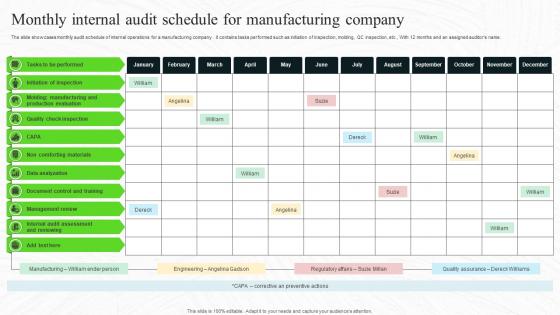
Monthly Internal Audit Schedule For Manufacturing Company




Try Before you Buy Download Free Sample Product
 Impress Your
 Audience
 100%
100% Editable
 Save Hours
 of Time


The slide showcases monthly audit schedule of internal operations for a manufacturing company. it contains tasks performed such as initiation of inspection, molding, QC inspection, etc., With 12 months and an assigned auditors name.
People who downloaded this PowerPoint presentation also viewed the following :
Monthly Internal Audit Schedule For Manufacturing Company with all 9 slides:
Use our Monthly Internal Audit Schedule For Manufacturing Company to effectively help you save your valuable time. They are readymade to fit into any presentation structure.








FAQs for Monthly Internal Audit Schedule
Start with what processes you're auditing and when - dates, frequency, who's doing what. Don't forget to check dependencies though. Like seriously, scheduling procurement audits during year-end chaos is just asking for trouble. Build in follow-up time for old findings too. Risk levels help you figure out what needs attention first. The whole thing should flex with your business - maybe something urgent pops up mid-year and you need to shuffle things around. Keep it as a living doc you can actually update instead of some rigid calendar that becomes useless after February.
I'd say aim for yearly audits as your baseline, but it really depends on what you're dealing with. Finance and IT stuff? Yeah, you probably need quarterly checks - those areas are just too risky to ignore. More stable operations can stretch it to 18-24 months without much worry. Look at how often your processes change, what regulators require, and what previous audits turned up. That'll help you figure out timing. Honestly, a 3-year rolling plan works great since it covers everything systematically. Map out your key processes first and rank their risk levels - gives you a decent starting point for scheduling everything.
Look at financial materiality first - where's the biggest money at risk? Then check regulatory stuff and when you last audited each area. Heat maps are honestly game-changers for visualizing this mess. Don't forget operational changes or weird flags from past audits either. I'd score each area on likelihood vs impact to build your priority matrix. Time-based rotation works well too - hitting everything over 3-5 years keeps you covered. Management concerns matter more than people think. Start by mapping your key risks, then let the data tell you where to focus first.
Yeah, regulatory changes totally mess up your audit schedule right away. New privacy laws, SOX updates, whatever - you've gotta move affected areas up for earlier review or create whole new audit sections. Your risk assessment becomes pretty useless until you figure out the compliance gaps. I watched one team completely redo their Q3 and Q4 plans when regulations changed mid-year. Total chaos. The smart move? Build buffer time into your annual schedule upfront. That way when changes hit (and they always do), you're not pulling your hair out trying to cram everything in.
Honestly, audit management software is a lifesaver for this stuff. It'll auto-generate your schedules based on risk levels and send reminders so you don't have to chase people down constantly. Real-time updates across all audits instead of digging through endless Excel files - thank god. Most platforms sync with your calendar too, which is clutch when you're managing multiple audits at once. I mean, you could try making spreadsheets work but why torture yourself? Dedicated audit software handles deadline tracking and keeps everyone in the loop automatically. Way less headache overall.
First thing - list out every department you've got. Then rate them by risk level. Finance and IT? Those need way more attention than, say, HR or facilities. Create a rotation so everyone gets audited at least once per cycle, but honestly the hardest part is not overloading your team. Don't forget about processes that cross departments - those are sneaky and easy to miss. Document why you're hitting certain areas more often so your boss doesn't think you're playing favorites. It's all about finding that sweet spot between being thorough and not burning out your auditors.
Get your ops managers involved - they catch stuff we miss sitting in audit land. Mix hard data (financials, incident reports) with actual conversations. Honestly, the best info comes from just chatting with people informally. Update your risk registers quarterly minimum because things change crazy fast. Oh, and don't forget to check what's happening outside your company - new regs, industry drama, whatever. The whole thing works way better when it's not just the audit team doing everything solo.
Yeah, definitely adjust your audit schedule when crazy stuff happens. Nobody predicted 2020, and sticking to your original plan would've been pointless. Major disruptions change everything - your risk priorities, what's even possible to audit, the whole landscape really. First thing: figure out which audits actually matter now given the new situation. Remote audits might work for some stuff. Others you'll probably need to push back. Don't stress about postponing lower-priority ones - honestly, leadership will get it if you explain the reasoning. Just document what you're changing and why. Way better to stay relevant than follow some outdated schedule that doesn't make sense anymore.
Track your audit completion rates and how long each audit takes - that's your bread and butter. Coverage ratios matter too since you need to hit those high-risk areas on schedule. I'd definitely watch stakeholder satisfaction scores and what percentage of audits actually find material issues (shows if you're looking in the right places). Resource utilization is key so your team isn't burned out or sitting around. Oh, and issue resolution timeframes - forgot that one. Pull these monthly and tweak your approach based on the patterns you're seeing.
Honestly, talking to stakeholders early saves you so much headache later. Send them a draft schedule first - department heads know their busy seasons and when key people are out. They'll actually work with you instead of being annoyed about surprise audits disrupting everything. Plus you get the real scoop on what areas actually matter, not just what looks critical in some spreadsheet. I learned this the hard way once when I scheduled during their month-end close... total disaster. Just ask for feedback before you lock anything in.
Oh man, the timeline thing gets everyone - you'll think you can squeeze in way more audits than actually possible. Then you're constantly moving stuff around all year. Super annoying. Talk to the business units first though! They might have crazy busy periods or new systems going live that you don't even know about. I learned this the hard way lol. Map out when each department is chill, then plan backwards from there. And honestly? Build in buffer time because something always comes up or previous audits need follow-up work.
Look, you've gotta tie your audit schedule directly to what keeps leadership up at night. Figure out their big strategic goals first - digital transformation, cost cuts, whatever they're obsessing over this year. Then audit the stuff that could totally torpedo those plans. Most audit teams just copy-paste last year's schedule, which is honestly pretty lazy. Get your audit committee involved when you're planning this out - they'll help you stay on track. The whole point is catching problems before they blow up in everyone's face. Way better than scrambling to clean up messes after the fact.
Honestly, you'll need to get really good at analyzing risk and figuring out which audits matter most. Project management skills are clutch too since you're always juggling deadlines and resources. Communication though - that's where it gets interesting because everyone thinks their department deserves priority (spoiler: they're all wrong). Know your industry regulations inside and out, or you'll be creating unrealistic schedules. Oh, and flexibility is everything. Audit plans get thrown out the window constantly, so don't get too attached to your beautiful spreadsheets. I'd focus on whatever feels shakiest first.
Look at your past audit feedback like it's telling you exactly what to fix. Areas with big problems? Bump up the frequency - maybe IT security goes from yearly to every six months. Clean departments can get audited less often, which honestly saves everyone time and money. Also, timing matters more than people think. Auditors get cranky during your busy season, so avoid that mess if possible. Your schedule shouldn't be set in stone - it needs to shift based on what's actually risky, not what looks good on paper.
Think of continuous monitoring as your radar for when plans need to change. You're tracking key metrics constantly, so when fraud indicators suddenly jump in one department or new regulations drop (which honestly happens way too often), you catch it right away. Instead of sticking to your original audit schedule, you can shift priorities on the spot. Set up automated alerts for your biggest risk areas - that way you're not scrambling to react after problems blow up. It beats waiting until next year's planning cycle to address stuff that's happening now.
-
Every time I ask for something out-of-the-box from them and they never fail in delivering that. No words for their excellence!
-
Loved the templates on SlideTeam, I believe I have found the go to place for my presentation needs!