


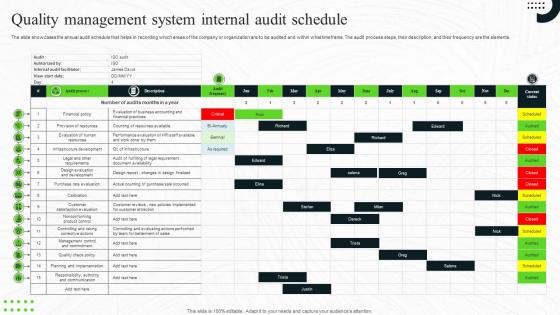
Quality Management System Internal Audit Schedule




Try Before you Buy Download Free Sample Product
 Impress Your
 Audience
 100%
100% Editable
 Save Hours
 of Time


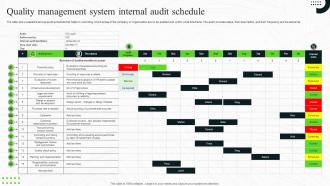
The slide showcases the annual audit schedule that helps in recording which areas of the company or organization are to be audited and within what timeframe. The audit process steps, their description, and their frequency are the elements.
People who downloaded this PowerPoint presentation also viewed the following :
Quality Management System Internal Audit Schedule with all 9 slides:
Use our Quality Management System Internal Audit Schedule to effectively help you save your valuable time. They are readymade to fit into any presentation structure.








FAQs for Quality Management System
So for your internal audit schedule, definitely start with scope, objectives, and timeline - nail down those specific dates. Risk assessment is huge here, I can't stress that enough since most people skip it. Team assignments and resource planning come next. Build in stakeholder notifications and what deliverables you're expecting. Here's the thing though - always add buffer time because stuff inevitably goes sideways. Map your highest-risk areas first, then work backwards from there. Oh, and don't forget follow-up procedures or you'll be scrambling later.
Look at each department's risk level first - that's your starting point. Finance and IT security? Those need quarterly checks, maybe every six months if you're lucky. Operations too, honestly. Lower-risk stuff can wait for annual reviews. Previous problems are a dead giveaway though - if accounting keeps screwing up their reconciliations, they're getting more visits whether they like it or not. Your industry matters too. Healthcare and banking have stricter rules, so factor that in. Map out everyone's risk profile, then build a schedule your team can actually handle. No point creating something impossible.
Think of risk assessment as your game plan for figuring out what to audit first. I score each area based on stuff like money involved, compliance issues, when we last looked at it - you know, the obvious red flags. Higher scores jump to the front of the line. Makes way more sense than just winging it, honestly. This way you're actually putting your time where it matters most instead of auditing random departments. Oh, and do the scoring once a year, then map out your quarterly priorities from there. Saves you from constantly second-guessing yourself later.
Dude, get some audit management software - it'll save your sanity. You can track everything in real-time instead of drowning in spreadsheets. Set up automatic alerts so deadlines don't sneak up on you anymore. The best part? Your whole team can see what's happening without those endless "where are we at" meetings. Cloud-based stuff works great since everyone can jump in from anywhere. Oh, and when things inevitably get delayed, the system updates timelines automatically. Way better than manually changing dates in Excel all day.
Get them involved from day one - seriously, this makes or breaks everything. Fire off a quick survey about their busy seasons and when they'd prefer audits. People actually cooperate when you ask their opinion first, weird how that works. Draft up your schedule but don't set it in stone yet. Send it around for feedback so they feel like they helped build it. Oh and definitely do those quarterly check-ins to stay connected. Be super transparent about why you're scheduling things when you are. A simple one-pager explaining your reasoning goes a long way with stakeholders.
Okay so first thing - you've gotta quickly look at what's actually critical right now. Maybe that cybersecurity audit just jumped to the top if there's been some breach or whatever. Shoot messages to all the stakeholders right away about what's changing and why. Document everything too because people will ask later. Can you push off some of the lower-risk stuff? Or maybe pull people from other projects? The whole point is staying flexible while still covering your biggest risks. Update that risk assessment, get the bosses on board with your new plan, and honestly don't stress about completely flipping the schedule if you need to.
Track your completion rates first - are you actually finishing audits on time? Then look at how long each one takes and if you're hitting all the risk areas you planned to cover. Management response is huge though - if they're not acting on your recommendations, what's the point? I also check if we're catching problems early instead of after they blow up. Honestly, asking stakeholders if the timing feels right is underrated. Oh, and cycle time matters more than I used to think. Review everything quarterly and tweak based on what you see.
So basically, different industries have totally different audit schedules based on what regulators want. Financial companies? They're stuck doing SOX audits every quarter - such a pain. Healthcare has to do HIPAA reviews once a year, and manufacturing deals with ISO stuff that's usually twice a year. Honestly, I always forget how many moving parts there are until someone asks me about it. Each regulator wants you checking different risk areas on their timeline. What I'd do is write down all your regulatory deadlines first, then work backwards to plan everything else. That way you won't be scrambling at the last minute trying to get ready.
Start with your riskiest areas and biggest strategic moves - that's where you'll get the most bang for your buck. If you're going global, hit those compliance and ops audits in new regions first. Senior leadership input is huge here - ask what's actually worrying them, not just what looks good on paper. Skip the "we audit accounting every January because we always have" mentality. Been down that road and it's pointless. Set up quarterly touchpoints to shift things around as priorities change. Oh, and actually listen when strategies pivot mid-year - your audit plan should flex with it.
Honestly, just tell them ASAP when you know something's changed - don't sit on it hoping it'll magically fix itself. Quick email works: what changed, why, and your new timeline. People get way more pissed about surprises than actual delays, trust me. Oh and definitely mention how it affects their stuff and any other moving parts they need to know about. They'll actually respect the heads up even if the news sucks. If it's a big change or hits multiple audit areas, hop on a call instead of playing email tag forever.
Dude, you absolutely need those follow-up audits. Otherwise management just ignores half the stuff you found - I've watched this happen so many times it's ridiculous. Schedule them maybe 3-6 months out so there's enough time to actually fix things but not so long that everyone forgets. They're great for checking if your corrective actions actually worked or if the same problems keep popping up. Shows stakeholders you're serious too, not just writing reports that sit in a drawer somewhere. Honestly, without follow-ups you're just hoping people did what they promised.
So basically, you need to put together a formal document with specific dates, who's doing what audits, and which departments get reviewed. Share it with leadership, department heads, and your audit committee - don't be that person who keeps it locked away somewhere. I've honestly seen too many places mess this up. Document any changes you make and why. Oh, and make sure you're hitting all the major risk areas throughout your cycle. Just post it where everyone can actually find it and keep updating regularly so nobody gets blindsided.
Oh man, the worst thing you can do is pack your schedule too tight with zero wiggle room. Trust me on this one - Q4 turned into total chaos for us last year! Stuff ALWAYS takes longer than expected, and people get sick or go on vacation at the worst times. Don't save your riskiest audits for December when everyone's already burned out and scrambling. That's just asking for trouble. Start with the regulatory stuff first since those deadlines are non-negotiable, then work backwards. And definitely loop in department heads before you finalize anything - learned that lesson the hard way too. Buffer time is your best friend here.
Track what keeps popping up in your audits - those patterns are gold. Finance team failing the same controls every year? They need way more attention than departments that sail through reviews. I'd bump up areas where management dragged their feet on fixes too. Build a quick scoring system weighing recent results, open issues, and new risks. Honestly, this beats the hell out of just cycling through departments randomly. Your audit history should drive next year's schedule. Why waste time on squeaky-clean areas when you know where the real problems live?
Honestly, rolling schedules are so much better than being locked into fixed dates. You can actually respond when stuff changes - and trust me, it always does. Like if some major system goes live unexpectedly, you don't have to waste time auditing that boring low-risk thing you planned for April. Just pivot. Plus you can spread the work out more naturally instead of jamming everything into quarters because someone decided that's how calendars work. I'd start with your non-negotiables for the year, then leave room for whatever fires pop up. Way more realistic.
-
The templates you provide are great! They have saved me tons of time and made my presentations come alive. Thank you for this awesome product. Keep up the good work!
-
Attractive design and informative presentation.