


Scope of an internal auditor in the company overview of internal audit planning checklist




Try Before you Buy Download Free Sample Product
 Impress Your
 Audience
 100%
100% Editable
 Save Hours
 of Time


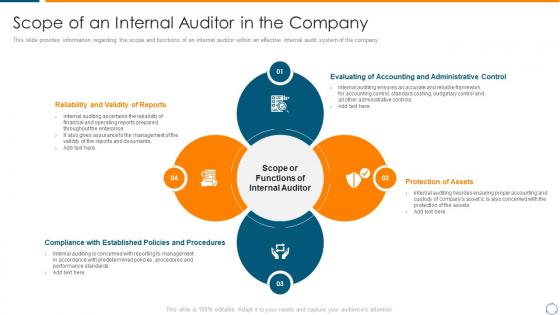
This slide provides information regarding the scope and functions of an internal auditor within an effective internal audit system of the company.
People who downloaded this PowerPoint presentation also viewed the following :
Scope of an internal auditor in the company overview of internal audit planning checklist with all 6 slides:
Use our Scope Of An Internal Auditor In The Company Overview Of Internal Audit Planning Checklist to effectively help you save your valuable time. They are readymade to fit into any presentation structure.





FAQs for Scope of an internal auditor in the company overview of internal
So you need to nail down your audit objectives first, then figure out what processes you're actually looking at. Timeframe and resources are huge - don't bite off more than you can chew. High-risk stuff gets the deep dive treatment, obviously. You'll want to spell out which locations or departments are in scope versus out. Oh, and check if there are any regulatory things or management requests that might blow up your scope. Honestly, the biggest thing is documenting everything clearly upfront. Trust me on this - stakeholders will 100% try to add more work halfway through without giving you extra time or people.
Look, audit scope totally depends on your industry's specific headaches. Banking? You're drowning in credit risk, compliance, and anti-money laundering stuff. Healthcare obsesses over patient data privacy and billing accuracy. Manufacturing gets buried in supply chain risks and safety protocols - seriously, their compliance matrices are insane. Tech companies live and breathe cybersecurity and data governance. The trick is figuring out what your executives actually lose sleep over, then build your audit plan around those nightmare scenarios. Map it to your industry regs and biggest business risks. That's honestly where you'll get the most bang for your buck.
So first thing - figure out how risky and important this project actually is to the company. Budget size matters too. Check what controls they've got running already and any compliance stuff you'll need to hit. Tight deadlines are always a red flag because that's when people start taking shortcuts (learned that one the hard way). Experience level of the team is huge - newbies plus new tech usually equals problems waiting to happen. I'd map out the biggest risk areas first, then build your scope around those. Don't try to audit everything if your resources are limited.
Start with whatever's keeping your execs awake - cyber threats, compliance headaches, operational mess-ups. That's where your audit focus needs to be. I've watched audit teams get buried in paperwork audits while the company's burning down elsewhere. Reference your strategic plan directly in your audit scope, like actually name it. Talk to leadership regularly about what's shifting on their radar. Oh and don't treat this like some set-in-stone document you write once a year. Things change fast, so your audit priorities should too. The low-hanging fruit can wait if bigger risks are lurking.
Honestly, risk assessment is like your cheat sheet for figuring out what to audit first. You don't have endless time, so use it to spot the sketchy stuff - fraud risks, compliance issues, processes that are total disasters. I always think of it as making a "what keeps me up at night" list and ranking everything. Without it, you're basically throwing darts blindfolded and might end up wasting weeks on boring low-risk stuff while the real fires are burning elsewhere. Update it yearly, then let that guide your whole audit plan.
Oh absolutely, stakeholders are constantly weighing in on what you should audit. During risk assessments, they'll bring up their concerns and whatever new risks they're worried about. Board members and executives love pushing for audits that match their strategic stuff or compliance needs. You'll hear from them in audit committee meetings, through management requests - honestly everyone thinks they know what needs auditing lol. Regulatory feedback is another big one. The trick is balancing what they want with your own independent risk assessment. Just document how their input influenced your plan so you can explain it later.
So for tech stuff, you really want risk-based approaches that can actually keep up with how fast everything moves. COSO and COBIT are solid frameworks. But honestly? The real trick is staying agile about it. Skip those huge annual audit plans - they're dead before you even finish them. Continuous monitoring is way better. Data analytics and automated testing are lifesavers here since they let you scope based on actual transaction patterns and what systems are really doing. Map your critical data flows first, then focus on the highest-risk areas that could mess with operations.
Honestly? I'd say every six months if you can manage it, though most people do it annually. Business moves so damn fast these days - new risks, regulation changes, your priorities shifting left and right. Don't get stuck following some rigid plan you made in January, you know? Stay flexible. If something big hits - cyber attack, major rule changes, whatever - just update it right away instead of waiting. Oh, and actually set those calendar reminders now or you'll totally forget. Trust me on that one.
Ugh, don't make your scope too massive or you'll be all over the place with zero depth. Been there! Also, spell out exactly what you're testing - vague descriptions mean everyone expects something different. Resource planning is huge too... I've seen teams promise the moon then scramble when deadlines hit. Oh, and get management sign-off on boundaries first. Trust me on this one. Document what's included AND what isn't, because scope creep is real and will destroy your timeline if you're not careful about it.
So here's the deal - regulations totally drive your audit scope whether you like it or not. SOX, data privacy, whatever industry rules you're stuck with (banking regs are the absolute worst). Skip these and you're screwed, so they get priority in your audit plan. Map out what applies to your company first. Then you can worry about the fun operational stuff. Most of this regulatory nonsense needs checking at least once a year. It's annoying but you'll sleep better knowing you're covered on the mandatory boxes.
Honestly, just write everything down first - what you're auditing, what's off limits, deadlines, the whole thing. Nobody reads emails but send the scope document anyway so you're covered. Then do a proper kickoff meeting where you actually walk through it all. People need to hear this stuff, not just skim it later. Give them real timelines, not some bullshit optimistic ones. Let them ask questions upfront because trust me, they'll have complaints either way. Getting everyone on the same page before you start poking around saves you so much drama when you hand over the final report.
COSO and IIA Standards are honestly your best friends here - they'll give you the foundation for proper audit scoping. Risk assessment matrices are clutch for figuring out what actually needs attention vs what just seems urgent. Three Lines of Defense helps you see where your audit fits (though everyone explains it slightly differently). Process mapping with flowcharts makes everything way clearer when you're trying to wrap your head around complex procedures. Start risk-based, then drill down to the controls that match your org's real weak spots.
So basically, any time your org chart gets shuffled - new subsidiaries, department mergers, whatever - your audit scope has to shift too. Risk areas totally change when reporting lines move around. I've watched auditors completely whiff on this because they were working off ancient scope docs (ouch). First thing is mapping out the new structure, then figuring out where risks migrated or popped up. Your audit universe needs updating to match current business units. Oh and processes too, obviously. Schedule that scope review within 90 days of major changes or you'll be auditing ghosts.
Okay so definitely get super specific about what's in AND what's out of scope. Define your objectives first, then list the exact processes, systems, and timeframes you're hitting. Honestly, the exclusions part is almost more important - spell out what you're NOT doing because that's where people get confused later. Document why you're skipping certain areas and any constraints you're working with. Get everyone to actually sign off before you start though, not just nod along in meetings. Otherwise you'll be halfway through and someone's like "wait, I thought you were covering X too." Good scope docs = no awkward scope creep conversations.
Honestly, you can't audit everything so don't even try. Map out all your potential areas first, then rank by risk level and dollar amounts - that's where you hit first. I'd focus on doing fewer audits but making them really solid instead of spreading yourself too thin. Data analytics can help you cover more ground without killing your budget (total game changer if you haven't tried it yet). For scheduling, rotate your high-risk stuff annually and save low-risk areas for every few years. Create a multi-year plan that actually makes sense for your team's bandwidth. Trust me, being realistic about capacity beats overpromising every time.
-
Excellent products for quick understanding.
-
Great designs, Easily Editable.