


Internal Audit Control Process Flow Chart




Try Before you Buy Download Free Sample Product
 Impress Your
 Audience
 100%
100% Editable
 Save Hours
 of Time


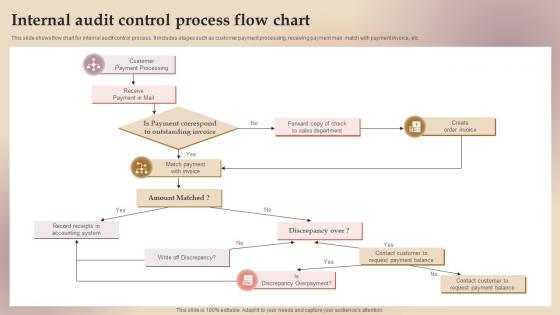
This slide shows flow chart for internal audit control process. It includes stages such as customer payment processing, receiving payment mail, match with payment invoice, etc.
People who downloaded this PowerPoint presentation also viewed the following :
Internal Audit Control Process Flow Chart with all 6 slides:
Use our Internal Audit Control Process Flow Chart to effectively help you save your valuable time. They are readymade to fit into any presentation structure.





FAQs for Internal Audit Control
So there are basically four stages to internal auditing. First you've got planning - that's where you figure out risks and decide what to audit. Then fieldwork, which is honestly the fun part because you're digging around, testing controls, gathering evidence. Reporting comes next - you tell management what you found and what they should fix. Follow-up is last but super important since you need to check if anyone actually did what you recommended. I'd map out where your current audits sit in this process. Makes it way easier to figure out where to put your people and time.
Look at your risk assessment first - that's where the money is. High-risk stuff gets top priority, obviously. Then check what hasn't been touched in a while and what your team can actually handle. Think ER triage but for audits. What's gonna hurt the most if it goes sideways? Regulatory stuff can't be ignored either, and if management is breathing down your neck about something specific, well... you know how that goes. Don't bite off more than you can chew - I've seen too many audits turn into disasters because someone got ambitious. Document everything so nobody can claim they didn't know what was covered.
So risk assessment is like your game plan for the whole audit process - it tells you where to spend your time instead of just wandering around hoping to find problems. You look at what could actually hurt the company (money, compliance stuff, areas that haven't been checked in forever) and tackle those first. Kind of like medical triage but way more boring, obviously. Without it, you're just guessing and probably missing the real issues. I'd start with whatever risk register your company has, plus any big changes that happened recently. That'll give you a solid foundation for building out your audit schedule.
Honestly, start by picking one regulation and getting really good at it - don't try to boil the ocean right away. Subscribe to those boring regulatory newsletters so you won't get blindsided by changes. Document everything like your life depends on it, and create checklists for each regulation you're dealing with. Your legal and compliance folks are basically walking encyclopedias, so buddy up with them early. Regular training sessions might feel like a drag, but they'll save your butt later. Oh, and always run your findings past subject matter experts before you submit anything - learned that one the hard way!
So there's risk-based auditing where you hit the sketchy stuff first. Process walkthroughs are pretty cool - you basically stalk a transaction from beginning to end. Sampling lets you test some data and assume the rest follows suit. Control testing checks if what management claims actually happens (spoiler: sometimes it doesn't). Most days you're doing document reviews, interviews, and data crunching. Some teams do random pop-ins or continuous monitoring too. It's honestly like being a detective but way more boring spreadsheets. Figure out your company's risk tolerance first though - that'll tell you which methods actually matter.
-
Really like the color and design of the presentation.
-
One word for SlideTeam–Versatile!