


Internal Audit Checklist For Order To Cash Flow Process





Try Before you Buy Download Free Sample Product
 Impress Your
 Audience
 100%
100% Editable
 Save Hours
 of Time


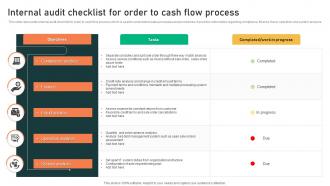
This slide represents internal audit checklist for order to cash flow process which is used to understand sales processes and procedures. It provides information regarding compliance, finance, fraud, operation and system analysis.
People who downloaded this PowerPoint presentation also viewed the following :
Internal Audit Checklist For Order To Cash Flow Process with all 6 slides:
Use our Internal Audit Checklist For Order To Cash Flow Process to effectively help you save your valuable time. They are readymade to fit into any presentation structure.





FAQs for Internal Audit Checklist For Order To
Your checklist needs solid objectives right off the bat, plus detailed steps for each area you're auditing. Make sure you've got the compliance stuff you're testing against spelled out clearly. Risk criteria and sample sizes matter too - don't wing those. Honestly, the follow-up procedures are where most audits die, so nail that part down. Include spots for evidence, timelines, and who's doing what. Oh, and test it in the real world first. I've seen too many checklists that look perfect but completely fall apart when you're actually trying to use them in some cramped office somewhere.
Look, an internal audit checklist is basically your safety net so you don't miss any compliance stuff. It maps out all the regulatory requirements step by step - kind of like following a recipe where you get the same results each time. Your documentation stays organized too, which regulators actually appreciate when they come knocking. Plus it keeps your team up to speed when rules change (and they always do, ugh). The checklist helps prevent those "oh crap, we forgot about that requirement" moments. I'd check yours every quarter or so to make sure you're catching the latest industry changes.
So here's the deal - risk assessment basically drives your whole audit checklist. First, figure out which areas could actually mess up your business. Then build your checklist around those problem spots. Why waste time on low-risk stuff when you could be digging into the real threats? Honestly, I've seen too many people spread themselves thin checking everything equally. Your risk assessment shows you which controls need testing, what evidence matters, and how deep to go. Run that assessment first, then let it shape your entire checklist approach.
At minimum, do it yearly. But quarterly is way better, especially for stuff that changes a lot or high-risk areas. Also update them right away when regulations change or you find gaps during audits - learned that one the hard way. Using old checklists is honestly worse than not having them at all because you miss critical stuff. Oh, and set a calendar reminder now while you're thinking about it. Even just 30 minutes every few months can save you from major headaches later.
Start with cash management and revenue recognition - that's where the messy stuff usually hides. Accounts receivable and payable too. Internal controls are next, especially around financial reporting and expense management. The compliance stuff is honestly such a drag but you can't skip it - regulatory requirements, authorization procedures, all that fun paperwork. Oh, and definitely check any old audit findings that are still hanging around. Industry-specific risks matter too depending on what you're dealing with. Just tackle the high-impact areas first so you're not scrambling later when something major pops up.
Honestly, digital audit platforms are a game changer for streamlining checklists. They automate the boring repetitive stuff and track everything in real-time. No more spreadsheet nightmares! Mobile apps let your team update things from wherever they are - super handy. Data analytics will actually spot weird patterns before you'd even notice them, which is pretty sweet. Don't pick some overly complicated system that'll make everyone hate you though. Find something that actually works with how your team operates. I'd start with just one tool and see how it goes before going crazy with the tech upgrades.
Don't get trapped following your checklist like it's some sacred rulebook. Box-ticking without actually paying attention? That's how you miss the big stuff staring right at you. I've literally watched people walk past glaring issues because they were so glued to their list. Keep yours updated too - old checklists are basically useless when rules change every five minutes. Generic templates suck, so customize it for whatever you're actually auditing. Oh and here's the thing - no checklist catches everything. Trust your gut when something feels off and ask follow-up questions. After each audit, jot down what you missed so you can fix your list next time.
Honestly, think of it like a GPS for your business processes - it shows you exactly where things are falling apart. You'll catch bottlenecks and redundant steps pretty quickly. Plus those awkward moments where someone takes forever to do simple tasks? The checklist spots that without you having to call anyone out directly. Start with whatever's eating up the most time - that's where you'll actually see results. The cool part is using what you find to cut out unnecessary steps and smooth everything out. Way better than just guessing what's broken, you know?
Honestly, getting input from stakeholders is probably the smartest thing you can do when building that checklist. Department heads and process owners know exactly where things break down - not just what the manual says should work. Management will tell you about compliance stuff they're worried about, but the frontline people? They'll show you gaps you never would've spotted. IT folks are clutch for this too since they see all the weird stuff that happens behind the scenes. I'd start by just asking around about what keeps people up at night, then build your audit focus from there. Way better than some cookie-cutter approach.
Track your completion rates and how fast audits cycle through. Most important though? See if findings actually get fixed within deadlines - I've watched too many audit reports just collect dust on someone's desk. Check feedback from the people getting audited too, because if your checklist is a nightmare to use, it won't stick. Repeat findings are huge red flags. Same problems keep surfacing? Your follow-up process probably needs work. Oh, and measure how quickly teams spot issues - that tells you if they're really engaged or just going through motions.
Look, you really can't use a one-size-fits-all approach here. Healthcare means obsessing over HIPAA and patient safety stuff. Manufacturing? Equipment safety and quality control are your bread and butter. Banking is all regulatory compliance and fraud prevention - those guys are paranoid for good reason. Honestly, figure out what makes your industry's executives lose sleep. That's where your biggest risks are hiding. Start with whatever regulatory bodies govern your sector and work backwards from their requirements. Industry associations usually have decent templates too if you can find them. Just grab a generic template and swap out the useless stuff for controls that actually make sense for your business.
Dude, you're gonna miss so much stuff without a checklist - control issues, compliance problems, fraud red flags. Different auditors will focus on random things and skip important steps. I've been there and it sucks spending half your time wondering what to do next instead of actually working. Plus good luck explaining your findings to management without proper documentation. Honestly, just make a basic template now. Doesn't have to be perfect - mine started pretty rough but I kept tweaking it. Trust me, having some structure beats winging it every single time.
Honestly, checklists are game-changers for this stuff. When you make people sign off on tasks with dates, suddenly nobody can play dumb about their responsibilities. The documentation speaks for itself - either you did it or you didn't. Each department has to actually own their processes instead of just talking about them. People definitely step up when they know everything's being tracked and recorded. I've seen teams completely turn around once they started using standardized checklists. Worth trying if you're dealing with finger-pointing drama.
Oh definitely check out IIA first - they've got solid courses on audit methodology stuff. Ask your manager about training budget though, that's key. I picked up so much just by snooping through other departments' checklists honestly, seeing what actually worked in practice. Your company might have internal programs too, or they'll pay for external workshops. Online webinars are decent if you're stuck at home. Most audit software comes with training modules built in, which is convenient. Industry publications help too but can be dry as hell. Start with IIA's course catalog once you know your budget.
Ugh, cultural differences will totally derail your audit rollout if you're not careful. Germany's direct style? Completely bombs in Japan where hierarchy matters way more. You'll have to tweak everything - the language, approval flows, even how people document stuff. We tried our blunt American questioning in Southeast Asia and it was such a disaster lol. Build in flexibility for each region but don't let your core controls get watered down. Seriously though, talk to your regional teams first before launching anything. They'll save you from looking like an idiot.
-
Helpful product design for delivering presentation.
-
Much better than the original! Thanks for the quick turnaround.