


Order To Cash Flow Process Showcasing Customer Journey





Try Before you Buy Download Free Sample Product
 Impress Your
 Audience
 100%
100% Editable
 Save Hours
 of Time


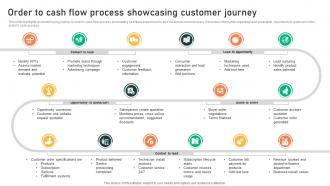
This slide highlights customer buying journey in order to cash flow process showcasing seamless experience for end customers and end users. It provides information regarding lead generation, opportunity to quote and order, order to cash process.
People who downloaded this PowerPoint presentation also viewed the following :
Order To Cash Flow Process Showcasing Customer Journey with all 6 slides:
Use our Order To Cash Flow Process Showcasing Customer Journey to effectively help you save your valuable time. They are readymade to fit into any presentation structure.





FAQs for Order To Cash Flow Process
So O2C breaks down into five main parts: order management (capturing/validating orders), credit management (making sure customers can pay), fulfillment (the picking/packing/shipping stuff), billing, and collections. Here's the thing - they're all connected. Credit approval kicks off fulfillment, fulfillment triggers billing, and so on. It's like dominoes, honestly. One stage gets jammed up and everything after it starts backing up too. My advice? Start by automating those handoff points between stages first. That's where most of the delays actually happen, and you'll see the biggest impact there.
So basically you can automate most of your O2C stuff with the right tools. I'd start with invoice automation - those systems fire off invoices right after orders complete, then stack payment platforms that handle different payment types. The CRM integration thing is actually huge for tracking where everything sits. Payment reminders happen automatically too which is nice. Oh and honestly? The ROI is insane once you get it dialed in. I always tell people to hit the worst bottlenecks first - like manual data entry or hunting down late payments. Those are your biggest headaches anyway. Then you can expand from there.
So CRM gives you this complete picture of each customer through your whole order-to-cash process. Your sales team can see order history, payment patterns, preferences - all right there when they're processing stuff. Here's what I love about it: you can actually catch payment red flags early by checking how customers behaved before. When your CRM connects to billing and collections (which honestly took us forever to set up right), it handles follow-ups automatically and helps you focus on your most valuable accounts first. If you haven't already, definitely start by linking your CRM to invoicing.
Data silos are probably your worst enemy here - sales, finance, and fulfillment teams just can't communicate properly. Manual processes kill productivity too. Invoice disputes? They'll drag on for months without solid workflows. Map out your current process first to spot the biggest disasters. Then automate invoice generation and payment reminders - saves tons of time. Credit policies need to be crystal clear upfront, not figured out later when problems hit. Oh, and customer communication matters way more than people think. Poor communication directly causes payment delays. Focus on system integration so departments actually work together instead of against each other.
Look, the faster you process orders, the quicker cash hits your account. Simple math there. Map out your current timeline first - where are things getting stuck? Messy order processing = delayed invoices = money sitting in limbo longer than it should. Clean up your inventory tracking too, because wrong orders create disputes that can drag on for weeks (learned that one the hard way). You'll see the biggest impact if you tackle your worst bottlenecks first. Good visibility into order status makes everything smoother.
Honestly, start with DSO - that's your bread and butter for seeing how fast you're actually getting paid. Order accuracy is clutch too since catching those fulfillment screws early saves you headaches later. Invoice-to-payment time can literally make or break your cash flow, so definitely track that one. Credit approval cycle time matters, plus how quickly you resolve disputes. Don't go crazy though - maybe 5-7 metrics tops or you'll drown in spreadsheets. Cash conversion cycle gives you the big picture view of everything working together. Focus on DSO and order accuracy first since they'll give you quick wins.
Honestly, payment terms are huge for customer relationships. Flexible options make people want to work with you again - rigid ones? They'll find someone else. I learned this the hard way with a client who bounced because our terms were too strict. You want customers seeing you as a partner, not some bill collector breathing down their necks. That said, don't go crazy generous or you'll mess up your cash flow. Try 30-day NET for regulars, maybe throw in early payment discounts for newbies. Ask your customers what'd actually help them - you might be surprised what simple changes make the biggest difference.
Honestly, automating invoicing is a total game-changer for your O2C cycle. Manual data entry becomes a thing of the past, which means way fewer errors and invoices actually get sent out the same day instead of languishing on someone's desk for a week. The integration with your ERP pulls all the right pricing and customer info automatically - no more awkward calls about wrong amounts or missing PO numbers. Your AR team can finally do what they're actually good at: chasing payments and building relationships. I'd definitely start with your biggest customers first since that's where you'll notice the difference immediately.
Look, credit management is like having a bouncer for your money. Before shipping anything, you check if customers can actually pay - run credit checks, set limits, figure out payment terms. Skip this step and you'll spend forever chasing unpaid bills instead of growing your business. Your cash flow gets wrecked when people don't pay. I learned this the hard way! Monitor existing customers too, not just new ones. Trust me, doing the homework upfront beats dealing with collections nightmares later. It's what keeps your whole order-to-cash process from crashing.
Honestly, regulations are like speed bumps for your whole order-to-cash flow. Documentation becomes huge for tax stuff and AML checks when onboarding customers. Invoice formats get super specific depending on your industry - and don't get me started on e-invoicing mandates, those are brutal to implement. Your credit team has to juggle more financial regs now. Collections gets trickier with all the debt recovery rules too. Build this compliance stuff into your process early though, not as an afterthought. Trust me, the penalties aren't worth trying to retrofit everything later when auditors come knocking.
Honestly, automation is your best friend here - get invoicing and payment reminders running automatically. Also automate credit checks if you can. Make sure everyone's following the same process (this part's huge), and definitely connect your CRM to billing so people aren't entering stuff twice. I've watched companies literally cut their cycle time in half just from that. Real-time dashboards help you catch problems early - track DSO and overdue accounts. Oh, and train your whole team on the entire process, not just their little slice. Start by mapping what you're doing now and find the biggest headaches first.
Look, good forecasting is basically your crystal ball for demand - you'll know what's coming so inventory stays tight and you won't get caught with stockouts that mess up orders. Your fulfillment team stops scrambling around like crazy. Cash flow becomes way more predictable too since you can see when receivables are gonna hit. Honestly, fewer rush orders just makes everyone happier, especially customers. Your finance people can actually plan ahead instead of putting out fires constantly. Oh and definitely track your forecast accuracy each month - that's how you know if you're getting better at this whole thing.
So basically, you want to use analytics throughout your whole O2C workflow. Start with pricing - dig into what customers actually do and how the market's moving. Order processing gets way smoother when you can predict delays or inventory problems ahead of time. Credit decisions? Game changer when you're actually looking at payment patterns instead of just guessing. I swear this step alone will save you tons of grief down the road. Collections work better too - prioritize who's likely to pay and adjust your approach accordingly. Oh, and set up some dashboards so you can actually see where things are getting stuck in real-time.
Yeah, returns will totally mess up your O2C if you're not on top of them. Messy return processes mean your cash flow gets delayed - credits take forever and customers get pissed waiting for their money back. I've watched teams waste hours manually tracking returned stuff and hunting down approvals (such a pain). The trick is streamlining everything - automate those credit memos, set clear return windows, make your return authorization flow just as smooth as regular orders. Actually improves customer happiness while protecting your cash conversion cycle. Win-win situation.
Honestly, start by mapping out where customers get frustrated right now - that's your biggest win. Three things matter most: let people actually see what's happening with their orders (real-time updates, self-service portals, whatever works), automate the boring stuff like confirmations and invoicing so nothing gets stuck, and make sure your whole team is on the same page. Nobody wants to hear different stories from sales vs billing, you know? Speed up those routine processes first. Oh, and don't leave people guessing about their order status - that's when they start calling and emailing constantly.
-
Thank you for offering such helpful pre-designed templates. They are really beneficial to me in my job.
-
I discovered this website through a google search, the services matched my needs perfectly and the pricing was very reasonable. I was thrilled with the product and the customer service. I will definitely use their slides again for my presentations and recommend them to other colleagues.