

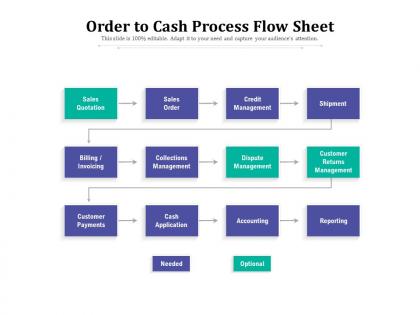
Order to cash process flow sheet




Try Before you Buy Download Free Sample Product
 Impress Your
 Audience
 100%
100% Editable
 Save Hours
 of Time


Our Order To Cash Process Flow Sheet are topically designed to provide an attractive backdrop to any subject. Use them to look like a presentation pro.
People who downloaded this PowerPoint presentation also viewed the following :
Order to cash process flow sheet with all 2 slides:
Use our Order To Cash Process Flow Sheet to effectively help you save your valuable time. They are readymade to fit into any presentation structure.
FAQs for Order to cash
So O2C basically has five steps that connect to each other. First you capture and validate orders, then fulfillment (picking, packing, shipping stuff out). After that comes invoicing and payment collection, which feeds into your AR cash application. Each step kicks off the next one - can't ship without confirming the order first, can't bill without proof it shipped, you know? Think of it like dominoes falling. Honestly, the trickiest part is when one stage breaks down because it screws up everything downstream. You'll want your CRM, ERP, and billing systems talking to each other smoothly or cash flow gets weird fast.
Start with the boring stuff that eats up your time - order validation, inventory checks, payment processing. That's where automation really pays off. Getting your CRM, inventory system, and billing to actually work together is a game changer too. No more copying data between spreadsheets (seriously, such a time sink). Set up different workflows for different order types, and definitely get real-time inventory tracking going. My advice? Figure out what's slowing you down most first, then automate that before worrying about the smaller headaches.
So basically, tech does all the grunt work your team hates - no more endless data entry. ERP systems handle orders, invoicing gets automated, and AI matches payments without anyone babysitting it. RPA bots are honestly incredible for stuff like credit checks and validating orders. EDI connects you with customers seamlessly. Integration platforms tie everything together (which sounds boring but it's actually clutch). You can set workflows to flag problems to the right people automatically. Nothing gets missed and your cash flow doesn't tank. Way better than the old spreadsheet nightmare.
Honestly, getting sales and finance to actually talk makes such a huge difference for cash flow. You'll catch payment red flags way earlier instead of wondering why that invoice is 60 days overdue. Finance can give sales the real scoop on which customers are slow payers, and sales can warn about sketchy accounts before they even invoice. The payment terms thing is big too - finance helps structure deals that don't leave you waiting forever to get paid. I'd start with just a quick 15-minute weekly meeting where they share intel on customers and payment patterns. Sounds boring but it works.
Ugh, invoice headaches are the worst! Data accuracy kills me every time - wrong prices, messed up customer info, missing product details. Everything just stops. Timing's another nightmare when invoices go out too early or way too late. Honestly? Manual processes are what really screw you over. So many bottlenecks and dumb mistakes that could've been avoided. Don't even get me started on compliance - trying to meet different regulations for each region is like solving a puzzle blindfolded. Automate whatever you can and definitely set up some validation checks before sending anything out. Trust me on this one.
Look at your past order data and payment patterns - that's where the gold is. Machine learning can catch seasonal stuff and customer habits you'd never notice manually. Pull info from every step: order volumes, how long fulfillment takes, invoicing, collections. The whole thing. Connect your ERP, CRM, and accounting systems first (bit of a pain but worth it), then build dashboards tracking conversion rates from quotes to actual orders. You'll predict cash crunches weeks ahead and nail your inventory planning. Honestly beats the hell out of staring at spreadsheets hoping you spot trends.
Your CRM is basically the heart of your whole Order to Cash thing - it gives you everything about each customer in one place. Payment history, preferences, all that stuff. Super useful for spotting trouble customers who always pay late, so you can be smart about credit terms upfront. Processing orders becomes way faster too since you're not hunting for customer info. Oh, and definitely get it talking to your billing system first - that's where you'll actually feel the difference. Once it's all connected properly, quote generation and credit decisions get so much smoother. Trust me on this one.
Honestly, payment terms are like a balancing act. Net 15 gets you paid fast but might stress out customers. Net 60? More relaxed for them, terrible for your cash flow. I've noticed customers totally game the system - they'll place big orders right after month-end if they know you're giving them 60 days. Pretty smart actually. The trick is finding terms that don't freak out good customers while keeping money coming in steadily. Look at your payment data by term length. You might be surprised what's actually working versus what you think is working.
First thing - set up clear return policies and timelines so everyone knows what's what. Speed matters here because nobody likes waiting around for their money back. Get return authorization numbers going and automate whatever you can. Your team should validate returned stuff and push credits through in 24-48 hours max. I'd definitely track why people are returning things too - sometimes you'll spot weird patterns that point to bigger problems. Oh, and set approval limits for big dollar credits so someone's actually eyeballing those. Don't forget to clean up your AR aging reports after processing everything.
Build compliance right into your O2C process from day one - don't try to add it later. Automated checks for customer data, pricing, and credit limits at every handoff will save you headaches. Make sure sales, finance, and ops all know the regs that hit your industry (SOX, GDPR, whatever). Document everything, yeah it's tedious but auditors love paper trails. Regular audits catch problems early. Honestly, the companies that treat compliance like part of normal workflow instead of some annoying add-on are the ones that never get burned.
Start with DSO and cycle time - those two will show you where things are getting stuck. DSO tracks how long your cash sits tied up after sales, while cycle time covers the whole process from order to payment. Cash collection effectiveness is huge too (shows what percentage you're actually collecting). Invoice accuracy matters because errors just piss everyone off and slow things down. Perfect order rate tells you how many go through smoothly. Honestly, there are tons of metrics you could track, but those five give you the clearest picture. Focus on DSO and cycle time first though - they'll point you straight to your biggest bottlenecks.
Okay so basically when you hook up your eCommerce platform to your ERP system, orders flow straight through without anyone touching them. Customer buys something online? Boom - inventory gets checked, payment processes, shipping kicks off automatically. No more copying data between systems (thank god). Your team stops doing duplicate work and way fewer things get screwed up in the handoffs. Orders move faster too since there's no waiting around for someone to manually enter stuff. Plus you can actually see what's happening in real-time instead of guessing. I'd map out where you're doing the most manual work first - that's where you'll see the biggest time savings.
Honestly, start with same-day invoicing instead of waiting till month-end - that alone makes a huge difference. Tighten up your credit policies too. I'd set up automated payment reminders and maybe throw in some early payment discounts to get people moving faster. Electronic invoicing is a game changer btw - I've watched companies drop their DSO by like 15-20% just from that plus staying on top of overdue accounts. The whole trick is getting ahead of it instead of scrambling later. Measure where you're at now, then pick maybe 2-3 things to tackle first. Don't go crazy trying to fix everything or your team will hate you.
Yeah, so basically every industry has its own quirks that mess with your Order to Cash timing. Manufacturing's got these super long payment terms and approval chains. Tech companies want everything automated and lightning fast. Healthcare is honestly the worst - so many compliance hoops to jump through that everything crawls. Financial services pile on extra paperwork for regulations, which drags things out. Retail's interesting though - they move quick with short terms but handle crazy volumes. You should probably map what you're doing now against what others in your space are doing. That'll show you where you're off track.
Look, customer feedback is honestly your best reality check for the whole Order to Cash thing. You might think your invoicing is flawless, but if customers keep getting confused about payment terms? That's telling you something important. Their complaints about slow processing or billing screwups show you exactly where the bottlenecks are - stuff you'd probably never catch internally. I always tell people to set up actual feedback loops, not just complaint boxes that nobody reads. Group the feedback by themes and hit the biggest problems first. It's like having customers do your troubleshooting for you, which is pretty genius when you think about it.
-
Commendable slides with attractive designs. Extremely pleased with the fact that they are easy to modify. Great work!
-
Unique and attractive product design.
-
Perfect template with attractive color combination.
-
The Designed Graphic are very professional and classic.