


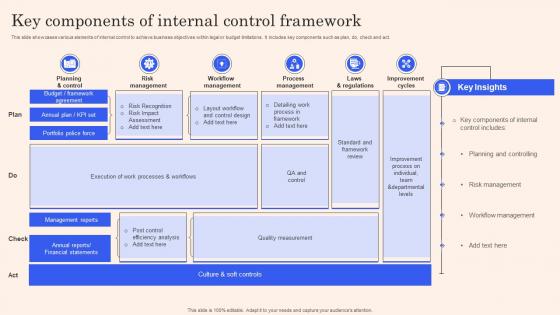
Key Components Of Internal Control Framework




Try Before you Buy Download Free Sample Product
 Impress Your
 Audience
 100%
100% Editable
 Save Hours
 of Time


This slide showcases various elements of internal control to achieve business objectives within legal or budget limitations. It includes key components such as plan, do, check and act.
People who downloaded this PowerPoint presentation also viewed the following :
Key Components Of Internal Control Framework with all 6 slides:
Use our Key Components Of Internal Control Framework to effectively help you save your valuable time. They are readymade to fit into any presentation structure.





FAQs for Key Components Of
So there's five main pieces to this whole thing. Control environment is basically your company's vibe and culture. Risk assessment means figuring out what could blow up. Then you've got control activities - that's your actual policies and procedures doing the work. Information flows through communication systems (obviously). Monitoring just means checking if stuff's actually working like it should. Honestly, the house analogy thing is kinda overused but whatever - think of environment as foundation, activities as your security system. Where I'd start? Just look around and see which area feels the most broken right now.
Internal controls are way more focused than risk management - they're about your day-to-day stuff like approval processes and making sure your financial reports don't have errors. Risk management is the whole strategy of figuring out what could go wrong across your entire business. I always think of it like this: risk management is spotting the storm clouds, internal controls are grabbing your umbrella. The trick is making sure your controls actually support what you're trying to accomplish with risk management overall. Otherwise you're just doing busy work.
Think of governance as your foundation - everything else crumbles without it. Your board and leadership set the tone, decide what risks they'll take, and create the structure that makes controls actually function. Honestly, I've seen too many companies just slap controls everywhere hoping something works. Spoiler alert: it doesn't. Strong governance means people are accountable and resources go where they should. Communication flows properly too. Here's the thing - get leadership on board first. Controls without that backing? Pretty much worthless. You'll save yourself major headaches by starting there.
Tech can totally automate your monitoring and cut way down on manual screw-ups. Set up alerts that ping you when controls fail instead of finding out months later during reviews - trust me, that's a game changer. The data analytics stuff is pretty wild too, it'll spot patterns you'd never catch on your own. I mean, we tried doing it manually for years and missed so much. Workflow automation handles the repetitive control steps so your team doesn't have to remember everything. Map out your critical controls first and see where automation would save you the biggest headaches.
Honestly, the hardest part is usually money and getting people on board. Staff think controls are just busywork that slows everything down - can't really blame them sometimes. You absolutely need leadership backing you up or you're screwed. Documentation is a nightmare because nobody wants to write procedures. Compliance feels like drowning in requirements, and don't get me started on trying to make different systems work together. Start with your biggest risks first though. Explain why each control actually matters instead of just telling people what to do. Makes a huge difference.
Think of an internal control framework as your company's compliance safety net. It creates systematic processes so you're actually meeting legal requirements instead of just hoping you are. You'll be able to spot compliance risks early and document everything properly - regulators eat that stuff up. The monitoring built into these frameworks catches problems before they turn into violations, which honestly saves you so much stress later. It also gets everyone on the same page about how to handle different regulations. I'd start by figuring out what compliance gaps you have right now.
Honestly, most people mess this up by treating it like a once-a-year thing. You need three main pieces: daily monitoring stuff, separate evaluations, and tracking your gaps. Build monitoring into your regular workflow - automated reports, management check-ins, feedback from your team. The separate assessments are what everyone skips, but they're huge for catching blind spots. Document whatever control issues you find and track how you're fixing them. I'd start with your most critical controls first - don't try to boil the ocean. Make it part of how you actually run things, not some compliance theater.
Okay so here's what works - set up quarterly check-ins and do a big annual review. Watch for stuff that signals change is coming: new regulations, tech shifts, market weirdness. Honestly, most companies I've worked with treat controls like a microwave - install once and never think about it again, which is how they get screwed. You gotta stay connected to what's happening in your space. Make updates part of your normal routine instead of panicking when things blow up. Oh and actually put reminders in your calendar or you'll forget (guilty of this myself).
Look at both the numbers and the softer stuff. Track deficiencies you're catching, how fast you fix them, compliance rates - the usual suspects. Also timing on approvals and error rates. But honestly? The culture piece matters way more than people think. Survey your team about awareness, check if management actually walks the walk. Are you catching problems early or just playing defense for auditors? That's your real measure right there. Oh, and don't ignore how embedded everything feels day-to-day - sometimes the best controls are the ones nobody notices because they're just how things work.
Think of internal controls like having multiple people double-check your work - nobody can handle an entire transaction solo, plus you've got regular reconciliations catching mistakes early. Authorization workflows mean someone has to sign off on big decisions (which honestly saves your butt more than you'd think). Cash handling and revenue recognition are where you'll want the tightest controls first. Yeah, it creates more paperwork, but it's way better than discovering fraud months later. The approval processes might slow things down slightly, but they stop unauthorized transactions from slipping through.
Honestly, your controls are worthless if your team doesn't get them. I've seen so many audit disasters where people just didn't know what they were supposed to do - it's painful. Map out which controls touch each role first. Then train them on the "why," not just the steps. People actually follow procedures when they understand the point behind them. They'll also catch weird stuff before it becomes a problem. Quick tangent - I swear half of compliance issues could be avoided with decent training upfront. Keep it simple though. Nobody wants to sit through some boring presentation about processes.
Honestly, most people do it annually but that's kinda outdated now. Big stuff like new regulations or system changes? Review immediately. Quarterly check-ins work better for catching smaller problems early. Don't wait around being reactive - that's how you miss risks that'll screw you over later. The whole "we'll get to it next quarter" thing never works, trust me. Set actual calendar reminders and make someone responsible for it. Otherwise it just becomes another task that keeps getting pushed off while problems pile up.
So internal audit is basically your independent watchdog - they check if your controls are actually working or just look good on paper. Management builds the controls, but internal audit tests them and finds the gaps. They'll walk through your processes, test stuff, and report back to the audit committee before small issues blow up. Think of them as QA for risk management, honestly. When they ask for documentation or want to test something, just cooperate. I've seen companies ignore their recommendations and later regret it when regulators show up asking the same questions.
Look, forget trying to control everything - just hit your biggest weak spots first. Map out where stuff actually breaks (not where it might theoretically break someday). Automate the boring approval stuff so your team isn't drowning in paperwork. The trick is making controls feel natural, like they belong in the workflow already. If people are constantly fighting your system, you've overdone it. Honestly? Most companies have way too many pointless controls. Check quarterly and dump anything that's just there for show.
Dude, bad internal controls will tank your stakeholder trust so fast. Investors start questioning your numbers, customers freak about their data, and regulators come knocking. Your own employees can feel something's off too - honestly, they usually know before anyone else. Stock takes a hit, credit ratings drop, the whole thing snowballs. Trust me, once that trust breaks, you're looking at years to get it back. I'd say check your controls every few months and patch holes quick. Way easier than dealing with the aftermath later.
-
I never had to worry about creating a business presentation from scratch. SlideTeam offered me professional, ready-made, and editable presentations that would have taken ages to design.
-
I discovered some really original and instructive business slides here. I found that they suited me well.