

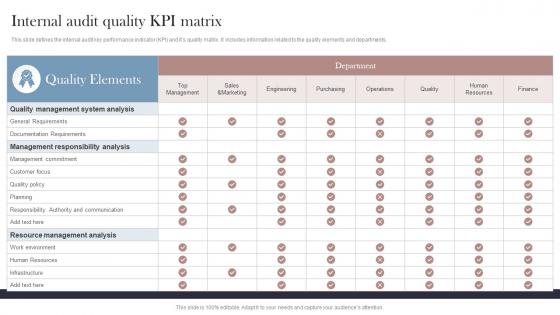
Internal Audit Quality KPI Matrix




Try Before you Buy Download Free Sample Product
 Impress Your
 Audience
 100%
100% Editable
 Save Hours
 of Time


This slide defines the internal audit key performance indicator KPI and its quality matrix. It includes information related to the quality elements and departments.
People who downloaded this PowerPoint presentation also viewed the following :
Internal Audit Quality KPI Matrix with all 6 slides:
Use our Internal Audit Quality KPI Matrix to effectively help you save your valuable time. They are readymade to fit into any presentation structure.





FAQs for Internal Audit
Competence and independence are your biggest drivers here. Make sure your auditors actually know their stuff and that management isn't just pretending to support you. Risk assessment is huge too - focus on what actually threatens your org instead of auditing the same safe stuff year after year (I swear some teams are stuck in 2010). You need solid methodologies and standards, obviously. But here's the thing - your communication skills matter just as much because brilliant findings mean nothing if nobody listens. Oh, and check if your audit charter gives you real authority first. That's like... step zero honestly.
So there's a few ways to tackle this. Track the basics first - how fast you're closing audit cycles, getting findings resolved, maybe some satisfaction surveys. But honestly, the real question is whether you're actually preventing problems or just playing cleanup crew after stuff goes wrong. Are people actually using your recommendations? Repeat findings going down over time is a good sign you're making progress. Oh and benchmark against industry standards when you can - external assessments every couple years don't hurt either. Really depends what risks your company cares about most though.
Independence is what makes audit findings actually matter. Your team needs to report straight to the board or audit committee - not management. Otherwise you're stuck auditing your own boss, which is super awkward and pointless. This setup lets you ask hard questions without worrying about getting fired. Stakeholders trust your results more too since they know management didn't pressure you. Honestly, I've seen audits become total jokes when this gets messed up. Just make sure your charter spells out these reporting lines clearly from day one.
Look, data analytics totally changes the game for internal audits. You can ditch the old sampling method and actually look at everything - catches fraud patterns and compliance issues you'd never spot otherwise. Automation handles all the boring routine stuff, which honestly saves you so much time. Focus gets shifted to the actually risky areas instead of drowning in paperwork. My advice? Start super small with just one or two tools first. Let your team get comfortable before you go crazy with complex analysis. Trust me, trying to do everything at once never works out well.
Start with IIA standards as your baseline, then build self-assessments right into your regular workflow. Checklists for each phase help tons. Have senior people review work papers consistently - that's where you catch the real issues. Getting your team on board is honestly the hardest part since nobody wants more oversight. Frame it as improvement, not punishment. External reviews every 3-5 years are required anyway, so might as well prepare for them. Track stuff like cycle times and how satisfied your clients actually are. Oh, and document everything you find. Create feedback loops so you're learning from mistakes instead of just going through the motions.
Culture totally makes or breaks internal audits, no joke. People actually cooperate and share real info when there's transparency and accountability baked in. But those "shoot the messenger" environments? Audits become useless because everyone's just covering their ass. Leadership backing makes a huge difference too - when execs visibly support audit findings and act on them, people start taking it seriously. I've seen this play out so many times. If your audits suck, honestly look at the culture first before blaming the process.
Honestly? Budget fights and finding decent talent are your biggest headaches. Management always wants everything yesterday, even the complicated stuff that actually takes time to review properly. The independence issue gets weird when you're auditing your boss's buddy - office politics are unavoidable, unfortunately. Tech moves so fast that half the audit team is always behind, and don't even get me started on keeping up with new regulations. Building solid relationships early on really matters though. Also invest in training your people - sounds boring but it actually saves your sanity later.
Keep up with IIA standards and whatever regs hit your industry - that's basic stuff. Training sounds awful but regulations change constantly, so you'll need it. Document everything and stick to your company's compliance rules no matter what. Your compliance and legal teams are actually super helpful for staying on top of updates, so get friendly with them. CIA or CISA certifications are worth it depending on what you're doing. Oh, and set up some kind of system to track regulatory changes - otherwise you'll be scrambling to update procedures later.
Definitely focus on ongoing training - audit standards, risk stuff, new tech. That classroom knowledge only goes so far though. Mentoring works great, pairing your seasoned people with newbies. Cross-functional rotations are game changers too. I've watched auditors completely transform after doing a stint in ops or finance. It's wild how much better they get at connecting dots. Support them getting certifications like CIA or CISA if it makes sense. Just don't dump everything into one annual training session - spread it out so it actually sticks.
Look, stakeholder expectations totally control your audit quality - they're literally setting the standard for what counts as "good enough." Smart board members who want real risk insights? You'll find yourself going way deeper and adding actual strategic value. But if management just wants those compliance boxes checked... yeah, that's probably what you'll end up doing instead. The audit committee's knowledge level makes a huge difference here. Sophisticated stakeholders push for proactive, future-focused audits. Others are fine with basic findings and calling it a day. My advice? Get ahead of this by educating them upfront about what quality internal audit looks like and the real value it brings.
Honestly, start with the IIA's Quality Assessment Manual - it's basically the bible for this stuff and covers audit methodology plus stakeholder feedback. CBOK benchmarking tools are solid too for comparing against other teams. I've had good luck with balanced scorecards that track efficiency, effectiveness, and how happy stakeholders actually are. Don't go crazy though - stick to maybe 2-3 frameworks or you'll burn out from assessment overload (trust me on this one). The IIA manual is your best bet to start, then see what holes you need to fill from there.
Honestly, ditch the audit-speak completely. Write like you're explaining it to your boss over coffee. I learned this the hard way - spent hours on a report once that got ignored because it was full of compliance mumbo-jumbo. Talk about business impact instead. What's it costing them? How do we fix it? Give them realistic timelines, not some pie-in-the-sky nonsense. Then here's the key part everyone forgets: don't just email the report and vanish. Set up follow-ups. Check how implementation's going. Half the time they'll hit snags and need help troubleshooting.
Focus on the basics first - completion rates, how fast you close findings, and stakeholder satisfaction surveys. Those surveys are honestly gold because they tell you if people actually want to work with you or just tolerate audits. Also track whether you're hitting high-risk areas and if management actually implements your recommendations (otherwise what's the point?). The value-add stuff matters too - process improvements, cost savings your team finds. Oh, and audit report quality obviously. I'd start with maybe 3 metrics that actually matter to your company, then add more once you've got those down. Don't go overboard initially.
Look, when you weave risk management into your audits, everything just clicks better. You're not randomly checking stuff anymore - you're hitting the spots where real problems could blow up. Way more efficient use of your time, honestly. Management actually listens because your findings connect to things they're already worried about. The credibility factor alone is huge. Quick tip that worked for me: grab your org's risk register and line it up with your audit plan. Boom - instant roadmap for where to focus. You'll see the impact right away, and your audits will feel way more purposeful instead of just going through the motions.
Look, a solid internal audit team is basically your board's eyes and ears. They catch problems before they blow up - fraud, compliance mess-ups, operational disasters. Without them? You're flying blind, honestly. Good auditors give your board real data to work with when they're setting risk policies and making big decisions. Plus regulators love seeing strong audit functions - builds credibility with everyone. I've seen companies skimp on this stuff and regret it later. Your whole governance structure falls apart if the audit team can't do their job properly or isn't independent enough.
-
A library of engaging, customizable and content-ready templates.
-
SlideTeam, Please don’t stop sharing discount coupons! I love your occasional discounts and tend to buy your products around that corner.