

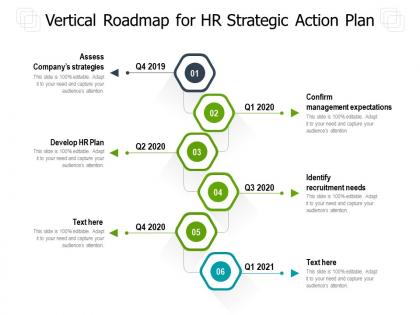
Vertical roadmap for hr strategic action plan




Try Before you Buy Download Free Sample Product
 Impress Your
 Audience
 100%
100% Editable
 Save Hours
 of Time


Reach your HR goals by employing Vertical Roadmap For HR Strategic Action Plan slideshow. The steps to create a strategic HR plan can be highlighted easily by using the HR transformation roadmap PowerPoint slideshow. You can also display human resources functions like job analysis and job design, training and development, performance management, etc with the help of this PPT theme. Highlight the important HR policies that you need to have such as handbook policies, recruiting, termination policies, etc by taking advantage of human resource planning PowerPoint templates. Create plans to manage human capital using this content-ready HR strategy roadmap presentation deck. You can mention the major key functions areas of HR such as hiring, performance appraisal, development, and compensation with this content-ready PowerPoint slide design. Download our ready-to-use HR action plan PowerPoint slide design to build hiring plans efficiently.
People who downloaded this PowerPoint presentation also viewed the following :
Vertical roadmap for hr strategic action plan with all 2 slides:
Use our Vertical Roadmap For HR Strategic Action Plan to effectively help you save your valuable time. They are readymade to fit into any presentation structure.
FAQs for Vertical roadmap for hr
Key components of an effective HR strategy roadmap include talent acquisition and retention strategies, performance management systems, learning and development programs, compensation frameworks, and succession planning initiatives. These elements work together by aligning workforce capabilities with business objectives, streamlining operational efficiency, and enhancing employee engagement, with many organizations finding that integrated roadmaps deliver competitive advantage and sustainable growth.
Organizations align HR strategy with business objectives by establishing clear workforce planning that supports revenue goals, implementing talent acquisition strategies that target skills needed for growth, and developing performance metrics that directly measure contribution to business outcomes. Through strategic workforce development, companies streamline operational efficiency, enhance competitive positioning, and accelerate goal achievement, with many finding that integrated HR-business alignment ultimately delivers measurable improvements in both employee engagement and bottom-line results.
Technology serves as the backbone of modern HR strategy roadmaps, enabling data-driven decision making, automated recruitment processes, performance analytics, and employee self-service platforms. These digital tools streamline talent acquisition, enhance workforce planning, and deliver personalized employee experiences, with organizations across healthcare, finance, and retail finding that strategic technology integration ultimately reduces operational costs while significantly improving HR service delivery and competitive positioning.
Measuring HR strategy roadmap success involves tracking key performance indicators like employee retention rates, engagement scores, time-to-hire metrics, performance improvement percentages, and cost-per-hire reductions. These measurements enable organizations to assess strategic alignment, operational efficiency, and talent management effectiveness, with many companies finding that regular quarterly reviews and data-driven adjustments ultimately deliver enhanced workforce productivity and competitive advantage.
Common challenges include resistance to change, insufficient stakeholder buy-in, unclear communication, inadequate resource allocation, and lack of measurable objectives. These implementation hurdles often emerge when organizations underestimate the cultural shift required, with many companies finding that successful roadmaps require consistent leadership commitment, comprehensive training programs, and phased rollouts that allow for adaptation while maintaining strategic momentum.
Organizations ensure stakeholder buy-in for their HR strategy by clearly communicating strategic alignment with business objectives, involving key leaders in development processes, and demonstrating measurable ROI through metrics and pilot programs. Companies across manufacturing, healthcare, and financial services find that presenting concrete data on talent retention, productivity gains, and cost savings, while addressing specific departmental concerns, ultimately builds consensus and secures executive support for implementation.
Key metrics should include employee engagement scores, retention rates, time-to-fill positions, training completion rates, and performance evaluation outcomes. These metrics enable organizations to streamline talent management, enhance workforce productivity, and measure strategic alignment, with many companies finding that tracking these indicators delivers improved operational efficiency and competitive advantage in talent acquisition.
Diversity and inclusion initiatives integrate into HR strategy through targeted recruitment practices, bias-free performance evaluations, inclusive leadership development, equitable compensation frameworks, and comprehensive cultural training programs. These strategic approaches enhance employee engagement, expand talent pools, and drive innovation, with many organizations finding that structured D&I integration ultimately delivers stronger team performance and competitive market advantage.
Current trends influencing HR strategy development include remote work optimization, AI-powered talent analytics, employee experience personalization, skills-based hiring, and wellness-focused retention programs. These approaches streamline workforce management by enhancing flexibility, improving decision-making through data insights, and creating more adaptive organizational cultures, with many companies finding that strategic HR integration ultimately delivers competitive advantage and operational efficiency.
Organizations should prioritize HR goals by assessing current talent gaps, aligning initiatives with strategic business objectives, evaluating resource requirements, and considering implementation timelines. Many companies find success by addressing foundational areas like workforce planning and performance management first, then advancing to strategic initiatives such as leadership development and employee engagement programs, ultimately delivering enhanced organizational capabilities and competitive advantage.
Employee feedback informs HR strategy roadmaps by identifying skill gaps, revealing retention challenges, highlighting training needs, and uncovering workplace culture issues that impact productivity. Through regular surveys, exit interviews, and performance discussions, organizations can prioritize strategic initiatives like leadership development, compensation adjustments, and engagement programs, ultimately creating data-driven HR strategies that enhance employee satisfaction and organizational performance.
Continuous learning can be embedded through personalized development paths, mentorship programs, cross-functional rotations, digital learning platforms, and performance-linked skill assessments. These approaches streamline talent development by identifying skill gaps early, accelerating career progression, and enhancing employee retention, with many organizations finding that strategic learning initiatives ultimately deliver improved productivity and competitive advantage in talent acquisition.
HR strategy roadmaps can be adapted through flexible workforce planning, real-time analytics integration, scenario-based contingency planning, agile performance management systems, and continuous skills gap assessments. These approaches enable organizations to pivot quickly during market shifts, with companies in sectors like technology and retail finding that dynamic talent strategies, responsive compensation models, and adaptive training programs ultimately deliver competitive advantage and operational resilience.
Globalization significantly impacts HR strategy roadmaps by requiring standardized policies across regions, localized talent acquisition approaches, cross-cultural training programs, and compliance with diverse labor regulations. Multinational companies increasingly find that strategic integration of global frameworks with local market nuances enables streamlined operations, enhanced employee experiences across geographies, and ultimately delivers competitive advantage in international talent markets.
HR professionals increasingly serve as strategic business partners, data analysts, change management leaders, employee experience architects, and digital transformation facilitators in roadmap development. Through workforce analytics, talent forecasting, and organizational design expertise, they align human capital strategies with business objectives, ultimately enabling companies to anticipate skills gaps, drive cultural transformation, and maintain competitive advantage in rapidly evolving markets.
No Reviews