


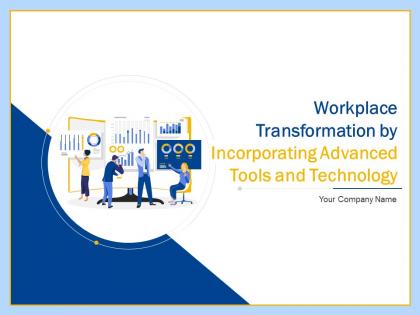
Workplace transformation by incorporating advanced tools and technology complete deck




Try Before you Buy Download Free Sample Product
 Impress Your
 Audience
 100%
100% Editable
 Save Hours
 of Time


Our Workplace Transformation By Incorporating Advanced Tools And Technology Complete Deck are topically designed to provide an attractive backdrop to any subject. Use them to look like a presentation pro.
People who downloaded this PowerPoint presentation also viewed the following :
Workplace transformation by incorporating advanced tools and technology complete deck with all 44 slides:
Use our Workplace Transformation By Incorporating Advanced Tools And Technology Complete Deck to effectively help you save your valuable time. They are readymade to fit into any presentation structure.










FAQs for Workplace transformation by incorporating advanced tools and
Key drivers of workplace transformation include digital technology adoption, hybrid work models, employee experience expectations, automation integration, and sustainability initiatives. These factors collectively reshape organizational structures by enhancing operational efficiency, attracting top talent, and reducing overhead costs, with many companies finding that strategic workplace evolution delivers competitive advantage in an increasingly dynamic business landscape.
Organizations can effectively measure workplace transformation impact through employee engagement surveys, productivity metrics, retention rates, collaboration tools usage data, and financial performance indicators. These measurements enable leadership teams to track progress across departments, identify areas requiring adjustment, and demonstrate ROI to stakeholders, with many companies finding that comprehensive analytics ultimately deliver clearer strategic insights and sustained competitive advantage.
Technology serves as the primary enabler of workplace transformation by automating routine tasks, enhancing collaboration through digital platforms, and providing data-driven insights for strategic decision-making. These technological solutions streamline operations, enable remote work capabilities, and improve employee experiences, with many organizations finding that integrated digital tools ultimately deliver increased productivity and competitive advantage in an increasingly dynamic business environment.
Companies ensure employee buy-in through transparent communication about transformation goals, comprehensive training programs, and involving staff in planning decisions. By addressing concerns proactively, recognizing early adopters, and demonstrating quick wins, organizations create ownership and reduce resistance, with many finding that employee-led change initiatives ultimately deliver stronger engagement and faster adoption rates.
Common pitfalls include inadequate change management, insufficient employee communication, rushed implementation timelines, neglecting training programs, and underestimating resistance to new processes. Organizations across sectors like healthcare, manufacturing, and financial services find that addressing these challenges early through comprehensive planning, stakeholder engagement, and phased rollouts ultimately delivers smoother transitions and higher adoption rates.
Remote and hybrid work models integrate into workplace transformation strategies through digital infrastructure upgrades, flexible policy frameworks, performance management evolution, and cultural adaptation initiatives. These approaches enable organizations to enhance talent retention, reduce operational costs, and expand geographic reach, with many companies finding that strategic hybrid implementations deliver improved employee satisfaction while maintaining productivity and competitive advantage.
Workplace design directly impacts employee productivity through strategic layout optimization, ergonomic furniture selection, natural lighting integration, collaborative space creation, and noise management systems. Well-designed environments enhance focus, reduce distractions, and foster collaboration, with many organizations finding that thoughtful workspace planning delivers improved employee satisfaction, reduced absenteeism, and ultimately measurable increases in overall operational efficiency and competitive advantage.
Workplace transformation enhances corporate culture by modernizing physical spaces, implementing flexible work arrangements, upgrading technology infrastructure, and redesigning organizational processes to support collaboration and innovation. These strategic changes foster greater employee engagement through improved work-life balance, enhanced communication tools, and empowered decision-making, ultimately delivering higher productivity and retention rates across organizations.
Leaders can foster innovation during workplace transformation by encouraging experimentation, creating cross-functional teams, establishing innovation labs, providing dedicated time for creative projects, and implementing feedback loops for rapid iteration. These strategies streamline change management by reducing resistance, enhancing employee engagement, and accelerating solution development, with many organizations finding that empowered teams deliver breakthrough innovations and competitive advantages.
Workplace transformation influences talent acquisition and retention by creating flexible work environments, enhancing employee experiences through technology, and offering remote or hybrid options that attract top candidates. Organizations implementing comprehensive workplace changes, particularly in tech and financial services, report improved employee satisfaction, reduced turnover costs, and competitive advantages in recruiting skilled professionals who prioritize modern work arrangements.
Best practices for communicating workplace changes include transparent messaging, multi-channel communication, regular updates, feedback mechanisms, and leadership visibility throughout the transformation process. Organizations increasingly find that combining town halls, digital platforms, and direct supervisor conversations creates comprehensive coverage, while acknowledging employee concerns and providing clear timelines ultimately delivers smoother transitions and higher adoption rates.
Organizations leverage data analytics for workplace transformation by analyzing employee engagement surveys, space utilization metrics, productivity patterns, collaboration data, and operational workflows. Through predictive analytics and real-time dashboards, companies identify inefficiencies, optimize resource allocation, and design data-driven workplace strategies, with many finding that analytics-informed transformations deliver measurable improvements in employee satisfaction and operational efficiency.
Diversity and inclusion serve as fundamental catalysts for workplace transformation by fostering innovation, enhancing decision-making processes, improving employee engagement, and expanding market reach. These strategic initiatives enable organizations to leverage varied perspectives and experiences, ultimately delivering stronger financial performance, better customer experiences, and competitive advantage in increasingly diverse markets.
Businesses can align workplace transformation with sustainability goals by implementing energy-efficient technologies, adopting flexible work arrangements to reduce commuting, digitizing processes to minimize paper usage, and creating green office spaces with sustainable materials. These initiatives streamline operations while reducing environmental impact, with many organizations finding that sustainable workplace practices deliver cost savings, enhance employee satisfaction, and strengthen their competitive advantage in an increasingly environmentally-conscious market.
Workplace transformation enhances organizational agility by creating flexible structures, streamlined processes, adaptive technologies, and empowered decision-making capabilities. These changes enable companies to respond faster to market shifts, pivot business strategies more effectively, and maintain competitive advantage, with many organizations finding that transformed workplaces deliver significantly improved resilience and operational efficiency.
-
Helpful product design for delivering presentation.
-
Unique design & color.
-
I discovered this website through a google search, the services matched my needs perfectly and the pricing was very reasonable. I was thrilled with the product and the customer service. I will definitely use their slides again for my presentations and recommend them to other colleagues.