


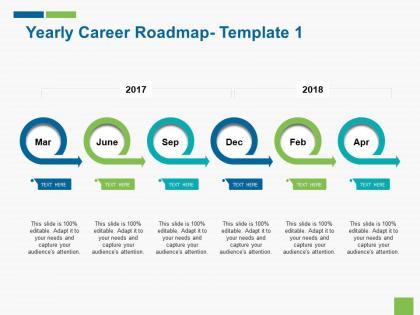
Yearly career roadmap template 1 ppt icon background images




Try Before you Buy Download Free Sample Product
 Impress Your
 Audience
 100%
100% Editable
 Save Hours
 of Time


Boost the insecure with our Yearly Career Roadmap Template 1 Ppt Icon Background Images. Assure them that their fears have been addressed.
People who downloaded this PowerPoint presentation also viewed the following :
Yearly career roadmap template 1 ppt icon background images with all 5 slides:
Convey your thoughts with complete clarity. Our Yearly Career Roadmap Template 1 Ppt Icon Background Images avoid all confusion.


FAQs for Yearly career roadmap template 1 ppt
A yearly career roadmap template should include skill development targets, performance review cycles, networking goals, certification achievements, and project leadership opportunities. These milestones work together by creating measurable progress markers, aligning professional growth with organizational needs, and establishing clear timelines, with many professionals finding that structured milestone tracking accelerates career advancement and enhances strategic positioning.
Aligning personal values with career goals involves identifying core principles, assessing current role satisfaction, and mapping opportunities that reflect both professional ambitions and personal beliefs. Through strategic self-assessment and targeted goal-setting, professionals can create roadmaps that integrate meaningful work with career advancement, ultimately delivering greater job satisfaction and sustainable success.
Effective career objective strategies include conducting skills gap analysis, setting SMART goals with specific timelines, seeking mentorship from industry leaders, pursuing relevant certifications, and regularly reviewing progress quarterly. These approaches enable professionals to balance immediate skill development with strategic career positioning, with many finding that combining structured planning with adaptive flexibility delivers measurable advancement and sustained competitive advantage in evolving markets.
Professionals can incorporate skill development by identifying industry-relevant competencies, setting quarterly learning milestones, allocating dedicated time for training, and aligning new skills with career advancement goals. Through strategic planning, employees enhance their marketability, accelerate promotion timelines, and increase earning potential, with many organizations finding that structured skill development ultimately delivers improved performance and competitive advantage.
Mentorship provides strategic guidance, industry insights, skill development recommendations, networking opportunities, and objective feedback that significantly enhances yearly career planning. Through regular mentor interactions, professionals gain clarity on realistic goal-setting, identify potential career pivots, and receive accountability support, with many finding that mentor-guided roadmaps accelerate advancement and help navigate complex organizational dynamics more effectively.
Assessing current skills involves conducting honest self-evaluations, gathering feedback from colleagues and supervisors, reviewing performance metrics, and identifying knowledge gaps through industry benchmarking. This comprehensive analysis enables professionals to map existing competencies against desired career trajectories, ultimately creating targeted development plans that bridge skill gaps and accelerate career progression in increasingly competitive markets.
Tools for visualizing yearly career roadmaps include Visio, Lucidchart, Canva, Trello, and specialized platforms like MindMeister, enabling professionals to create dynamic, trackable career progression maps. These platforms streamline goal-setting through interactive timelines, milestone tracking, and progress visualization, with many organizations finding that digital roadmapping tools enhance employee engagement, strategic planning, and ultimately deliver clearer career development pathways.
Career roadmaps should be reviewed quarterly and updated annually, with additional adjustments following major life changes, industry shifts, or goal achievements. Many professionals find that regular quarterly check-ins enable course corrections while maintaining momentum, ultimately delivering better alignment between evolving market demands and personal career progression, with annual updates ensuring strategic relevance.
Common pitfalls include setting unrealistic timelines, focusing only on promotions rather than skill development, ignoring market trends, and creating rigid plans without flexibility for opportunities. These oversights can derail progress by creating frustration, missed learning opportunities, and inadequate preparation for industry changes, with many professionals finding that balanced roadmaps combining ambitious goals with adaptable milestones deliver sustainable career advancement.
Professionals can adapt their career roadmaps by regularly conducting industry analysis, updating skill requirements, reassessing market opportunities, and incorporating emerging technologies into their development plans. This strategic approach enables career pivots, enhances marketability, and maintains competitive advantage, with many professionals finding that quarterly roadmap reviews help them stay ahead of industry shifts and capitalize on new growth areas.
**INPUT**: What metrics can be used to measure progress on a career roadmap? **OUTPUT**: Career roadmap metrics include skill acquisition rates, goal completion percentages, salary progression, promotion timelines, and professional network expansion. These measurements enable professionals to track advancement systematically, while organizations in consulting, technology, and finance increasingly use performance dashboards and competency assessments to streamline career development conversations and enhance talent retention strategies.
Networking opportunities can be integrated through strategic relationship-building activities, industry event participation, mentorship programs, professional association involvement, and internal cross-departmental collaborations. Organizations increasingly recognize that systematic networking drives career advancement by expanding visibility, uncovering hidden opportunities, and building strategic alliances, with many professionals finding that structured networking ultimately accelerates promotions and opens doors to leadership roles.
Critical components of a contingency plan include alternative career paths, skill diversification strategies, financial safety nets, network expansion plans, and regular market assessment protocols. These elements enable professionals to pivot effectively during industry disruptions, economic downturns, or unexpected opportunities, with many finding that proactive contingency planning ultimately delivers greater career resilience and accelerated professional growth.
Professionals can leverage feedback by actively soliciting input from supervisors, peers, and mentors, identifying specific skill gaps and performance areas, and creating targeted development plans based on these insights. Through regular feedback cycles, many professionals streamline their career progression by focusing resources on high-impact improvements, ultimately enhancing their marketability and accelerating advancement opportunities.
Work-life balance plays a crucial role in yearly career roadmap planning by helping professionals set realistic goals, establish sustainable growth trajectories, and align career advancement with personal priorities and family commitments. This strategic approach enables individuals to pursue promotions, skill development, and networking opportunities while maintaining productivity, preventing burnout, and ultimately delivering long-term career success and personal fulfillment.
No Reviews