

0314 5s principles powerpoint presentation




Try Before you Buy Download Free Sample Product
 Impress Your
 Audience
 100%
100% Editable
 Save Hours
 of Time


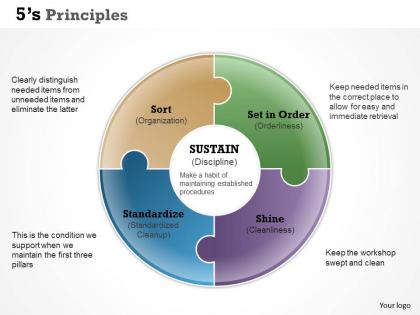
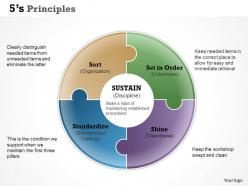
Consider how lean terminology intends to improve productivity by clarifying the operational structure, executing and managing the work environment with our 0314 5s principles PowerPoint presentation. This PowerPoint slide of 5S put emphasis persistent improvement culture, to reduce waste and maintains a work field that is systematic, risk free and clean and also this method can be implemented in globalized companies, ranging from manufacturing units to offices, small businesses to large multinational companies. This PPT layout represents five steps toward operational and process excellence which are sort, set in order, shine, standardize and sustain. This presentation theme will help us to remove all the steps in a process which are not required, arrange all necessary items or steps so that they can be easily selected for use, set the new standards for cleanliness or better process output so that problem can easily identified, standardize the best practices and consolidate the 5S principle methodology into the production management system. Spend some time with our 0314 5s Principles Powerpoint Presentation. The gains will soon be self evident.
People who downloaded this PowerPoint presentation also viewed the following :
0314 5s principles powerpoint presentation with all 5 slides:
Our 0314 5s Principles Powerpoint Presentation have the ear of your audience. They will enable acceptance of your ideas.
FAQs for 0314 5s
The 5S methodology includes Sort (eliminating unnecessary items), Set in Order (organizing essential items), Shine (cleaning and maintaining workspaces), Standardize (establishing consistent procedures), and Sustain (maintaining long-term adherence). These principles streamline operations by reducing waste, improving efficiency, and enhancing safety, with many manufacturing and healthcare organizations finding that systematic implementation delivers faster workflows, reduced costs, and ultimately competitive operational advantage.
Implementing 5S principles improves workplace efficiency by organizing workspaces systematically, eliminating waste, and standardizing processes across operations. Through Sort, Set in Order, Shine, Standardize, and Sustain methodologies, organizations streamline workflows, reduce search times, and enhance productivity, with manufacturing facilities and healthcare institutions finding that structured environments ultimately deliver faster task completion and improved operational performance.
Visual management serves as the backbone of 5S implementation by making workplace standards, processes, and deviations immediately apparent through color coding, signage, floor markings, and shadow boards. These visual cues enable employees to quickly identify proper locations, detect abnormalities, and maintain consistency across operations, with manufacturing facilities and healthcare environments finding that visual systems significantly reduce errors while enhancing operational efficiency.
Businesses measure 5S success through workplace organization audits, productivity metrics like reduced search time and equipment downtime, safety incident tracking, and employee satisfaction surveys. Manufacturing companies and healthcare facilities often find that systematic measurement using 5S scorecards, before-and-after photos, and operational efficiency data ultimately delivers improved workflow transparency, cost reduction, and sustained organizational discipline across departments.
Organizations face challenges including employee resistance to change, inadequate training on 5S methodologies, inconsistent leadership support, difficulty sustaining improvements over time, and resource constraints during implementation phases. These obstacles often emerge in manufacturing, healthcare, and office environments, but organizations that address cultural barriers through comprehensive training and consistent management commitment ultimately achieve streamlined operations and enhanced workplace efficiency.
5S contributes to employee morale and engagement by creating organized, efficient workspaces that reduce frustration, enhance safety, and foster pride in work environments. These principles enable workers to locate tools quickly, minimize workplace hazards, and participate in continuous improvement initiatives, with many manufacturing and healthcare organizations finding that structured 5S programs ultimately deliver higher job satisfaction and increased productivity.
**INPUT**: How does 5S align with lean manufacturing principles? **OUTPUT**: 5S aligns perfectly with lean manufacturing by eliminating waste, standardizing processes, and creating visual management systems that support continuous improvement. Through workplace organization and systematic maintenance, manufacturers streamline operations, reduce defects, and enhance productivity, with many finding that 5S serves as the foundation for broader lean transformations.
Effective 5S training strategies include hands-on workshops with real workplace examples, visual learning through before-and-after demonstrations, peer mentoring programs, gradual phase implementation, and interactive team exercises. These approaches enhance comprehension by combining theoretical knowledge with practical application, enabling teams to experience immediate improvements in organization and efficiency, while fostering collaborative ownership that sustains long-term 5S success.
5S principles can absolutely be applied in non-manufacturing environments like offices, hospitals, retail stores, and service organizations through workplace organization, digital file management, and standardized processes. These methodologies streamline operations by eliminating waste, improving efficiency, and enhancing employee productivity across diverse sectors, with many healthcare facilities and financial institutions finding that systematic organization ultimately delivers faster service delivery and improved customer experiences.
Technology enhances 5S application through digital inventory management systems, IoT sensors for real-time monitoring, mobile apps for standardized checklists, and automated workflow tracking. These tools streamline sorting processes, enable visual workplace dashboards, and provide data analytics for continuous improvement, with manufacturing and healthcare facilities finding that digital 5S solutions reduce waste while improving operational efficiency.
During the 'Shine' phase, organizations should establish comprehensive cleaning schedules, assign specific cleaning responsibilities to team members, identify root causes of dirt and contamination, and implement preventive maintenance protocols. These systematic cleaning practices enhance equipment reliability, improve workplace safety, and boost employee morale, with many manufacturing and healthcare facilities finding that consistent shine protocols ultimately reduce operational costs and maintain higher quality standards.
Teams sustain 5S efforts through regular audits, continuous training programs, leadership commitment, and embedding practices into daily workflows and performance metrics. By establishing accountability systems, celebrating improvements, and making 5S part of organizational culture rather than a one-time initiative, companies create lasting operational efficiency and workplace standards that drive competitive advantage.
Common misconceptions about 5S methodologies include believing it's only about cleaning, that it's a one-time initiative, that it applies only to manufacturing, and that it doesn't require management support. These misunderstandings limit organizations from realizing 5S's strategic value in streamlining operations, reducing waste, and enhancing productivity across diverse sectors like healthcare, retail, and financial services, ultimately delivering sustained competitive advantage.
Manufacturing companies like Toyota and Ford have revolutionized production efficiency through 5S, while healthcare institutions, banks, and retail organizations have streamlined operations by organizing workspaces, reducing waste, and standardizing processes. These strategic implementations deliver faster service delivery, reduced operational costs, and enhanced customer experiences, with many organizations finding that 5S principles ultimately create sustainable competitive advantages across diverse industry landscapes.
5S audits should be conducted weekly for initial implementation, monthly for established systems, and quarterly for mature organizations, with daily spot-checks maintaining continuous improvement. Many manufacturing and healthcare facilities find that regular auditing schedules enhance workplace efficiency, reduce waste, and sustain organizational discipline, ultimately delivering consistent operational excellence and competitive advantage.
-
Awesome use of colors and designs in product templates.
-
Graphics are very appealing to eyes.