

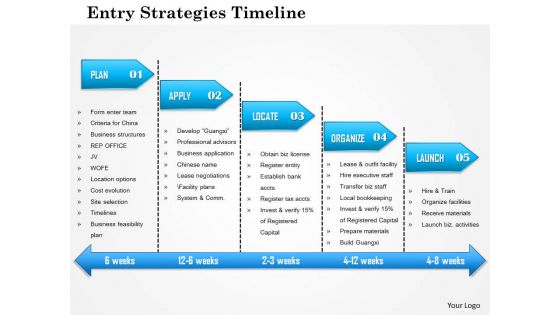
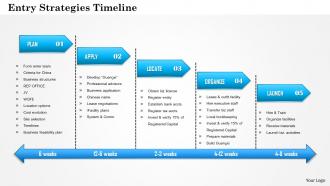
1114 entry strategies timeline powerpoint presentation





Try Before you Buy Download Free Sample Product
 Impress Your
 Audience
 100%
100% Editable
 Save Hours
 of Time


Are you interested in knowing about the entry strategy required for the successful business? If yes, then you are on the right place. To meet your demand, we have come up with entry strategies timeline presentation templates focusing on core concept of strategy in depth. Our roadmap timeline PPT slides describe how you will compete successfully in the business and how to attract and satisfy your customers to achieve your goal. In addition, our PowerPoint templates describe the business model that simply explains how to be successful. Best part is this that our presentation graphics point out the key areas to be focused upon and describes the hurdles to the growth of business. Above and all you can download these presentation visuals and can make present excellent presentations before the target audience and leave your mark. Our experts are available to help you. Don’t wait any longer. Just click on the PowerPoint graphics and decipher your knowledge. Contracts are assured with our 1114 Entry Strategies Timeline Powerpoint Presentation. Your expertise will be acknowledged.
People who downloaded this PowerPoint presentation also viewed the following :
1114 entry strategies timeline powerpoint presentation with all 5 slides:
Our 1114 Entry Strategies Timeline Powerpoint Presentation enable comprehensive examination. Analyze each detail to the fullest.


FAQs for 1114 entry strategies
Honestly, start with your budget and team size - that'll narrow things down fast. Check out the regulations in your target market because some places are just bureaucratic nightmares. Cultural fit matters more than people think. How much risk can you actually stomach? Direct investment gives you control but costs way more upfront than partnerships or licensing. Speed vs. control is always the big trade-off. Also think about whether you're testing the waters or going all-in long-term. I'd literally make a list of these factors and see which strategies make sense for your specific situation.
Honestly, cultural stuff can totally make or break your market entry - I've seen it happen so many times. Like, aggressive sales tactics work fine in the US, but try that in Japan where relationship-building is everything? You'll crash and burn. Pricing, partnerships, marketing messages - all of it needs to match what locals actually value. Sometimes what feels cutting-edge to you comes across as straight-up offensive to them. Do your homework on the culture first, then stay flexible enough to pivot your whole approach. Don't just copy-paste your strategy everywhere and hope it works.
Dude, you absolutely need market research before jumping in anywhere. Start with secondary stuff online, then dig deeper with primary research. Figure out who your customers actually are, what competitors are doing, and if there's any regulatory nonsense you'll hit. Honestly, I've watched so many companies skip this step and just face-plant spectacularly. The data helps you pick your approach - go direct, find local partners, buy someone out, whatever makes sense. Without it? You're basically throwing money at a wall and hoping something sticks. Don't be that guy.
Partnerships are honestly your best bet for breaking into new markets. You're basically getting a shortcut to local knowledge, existing customers, and all the regulatory stuff that would take you forever to figure out solo. Split the costs, split the risks. Way smarter than going in blind. The trick is finding someone whose strengths actually fill your gaps - not someone who does the same thing you do. Like, if you suck at distribution but they've got that locked down, perfect match. Figure out what you're missing first, then hunt for partners who are strong exactly where you're weak.
Look, direct investment is risky as hell - you could lose everything if it tanks. Political stuff can screw you over big time, especially somewhere unstable. Currency swings will mess with your profits too. Without a local partner, you're basically flying blind on cultural stuff that can make or break deals. Honestly, the learning curve is brutal. My buddy learned this the hard way in Southeast Asia last year. Do your homework on the political situation first and figure out how you'll bail if things go south.
So consumer stuff is all about casting a wide net - digital ads, getting into stores, building brand recognition. B2B is the opposite (and way more of a headache tbh). You're dealing with longer sales cycles and way fewer decision-makers who actually matter. Focus on relationships instead: direct sales calls, networking at industry events, partnerships with other companies. Thought leadership content helps too. Oh, and definitely figure out who's actually writing the checks at your target companies first. That'll tell you whether you need to go broad or go deep with specific people.
Okay so first thing - figure out the business registration stuff, licensing, taxes, all that boring foundation work. Employment laws are critical if you're hiring there. Trust me, compliance issues snowball fast when you ignore them upfront. Look into industry rules too, plus data privacy (GDPR's a pain in Europe). Some countries restrict foreign investment in certain sectors. Oh and consumer protection varies like crazy between places - what flies in one country might get you sued in another. Honestly? Find a local lawyer early on. Cheaper than cleaning up disasters later.
Honestly, digital tools are a lifesaver for testing stuff without going broke. Social media shows you if people actually want what you're selling. Run some targeted ads to see which customers bite. Landing pages are clutch for testing your messaging before you go all-in. Here's the thing though - analytics will humble you real quick. What you think works and what actually works? Yeah, totally different stories. Shopify or marketplace selling gets you started fast without massive upfront costs. My advice? Pick 2-3 tools max and actually master them. Don't chase every new platform - I've been down that rabbit hole and it's exhausting.
Honestly, pilot programs are lifesavers. Test your idea in just one city or with a specific customer group first - don't go crazy and launch everywhere at once. You'll figure out if people actually want what you're selling, whether your pricing works, and what distribution headaches you'll face. Way better than finding out the hard way after you've blown your entire budget. The data you collect is gold for tweaking your strategy. If it tanks? No big deal, you can bail without losing everything. I've seen too many companies skip this step and regret it later.
Look, it really comes down to how hard your competitors will fight back. Strong players with loyal customers? You'll need to go aggressive - maybe buy someone out or dump serious cash into standing out. Timing matters too though. Sometimes competitors are just sitting there being lazy, or there's an obvious hole in what they offer. That's when you can take your time with partnerships or whatever. The trick is reading the room first - like, how pissed will they be when you show up? Then match your speed and investment to that.
Track your revenue growth and market share first - those are the obvious ones. Customer acquisition costs matter too, but honestly retention rates tell you way more about whether people actually like what you're offering. Brand awareness is huge in new markets. Oh and don't sleep on the operational stuff - how well your distribution channels work, partnership performance, all that behind-the-scenes execution. Time-to-profitability keeps you grounded too. I'd set up monthly tracking so you can bail on what's not working fast.
Honestly, you can't just slap your same pitch onto a new market and hope it works. Research what actually bugs people there first - their specific problems, how they talk about stuff, cultural things that matter to them. Then rewrite everything around solving *their* issues, not just rattling off your features. I've watched so many companies face-plant because they figured "hey, it worked in Ohio, why not Germany?" Test with local groups before you launch. Maybe partner with someone who already has credibility there. The goal is making it feel like you actually get their world, not like some random outsider pushing foreign solutions.
Look, when you're starting out, you're basically in survival mode - doing whatever works to get your foot in the door. Partnerships, small pilots, scrappy online-only stuff. But once you actually prove there's demand? That's when you can throw real money at it. Direct sales, local teams, maybe even buying competitors. I've watched companies go from purely digital to opening storefronts once they hit their numbers. The "throw everything at the wall" phase naturally becomes way more strategic. Just don't get married to your original plan - let what you learn about the market drive those bigger moves instead.
Build your transition plan into your entry strategy from the start - honestly, this is where most people mess up. Set evaluation points at 6, 12, and 18 months. Stay flexible while you're learning the market and making connections. Don't fall in love with your original plan (trust me on this one). Track your numbers obsessively so you'll know when to shift from testing mode to actually scaling. As you figure out what works versus what you hoped would work, move resources toward sustainable operations and start hiring locally. The market will teach you everything if you listen.
Look, the economic situation basically dictates what'll actually work when you're entering a new market. If there's crazy inflation or the currency's all over the place, joint ventures are way smarter than going it alone - you're splitting the risk with someone who knows the territory. When interest rates are low, that's your window for acquisitions or building from scratch since borrowing's cheap. Political mess? Stick to licensing deals instead of putting down roots. I mean, who wants their shiny new factory getting seized by some new government? GDP trends show you if people can even afford your stuff. Match your strategy to what's happening economically, not just what you think you can handle.
-
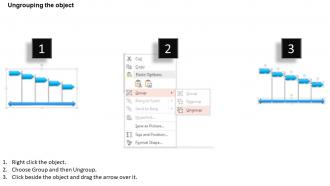
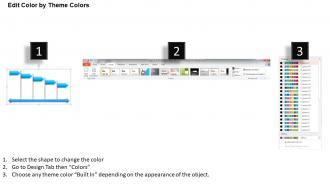
Content of slide is easy to understand and edit.
-
Visually stunning presentation, love the content.