

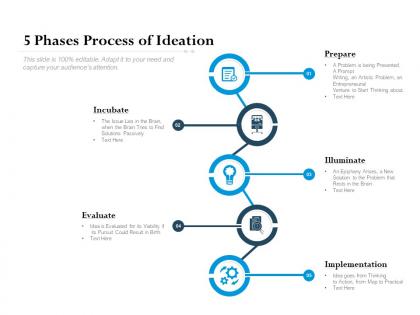
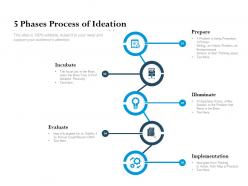
5 phases process of ideation




Try Before you Buy Download Free Sample Product
 Impress Your
 Audience
 100%
100% Editable
 Save Hours
 of Time


Create a breed of enterprising folks with our 5 Phases Process Of Ideation. Guide them to adopt an innovative approach.
People who downloaded this PowerPoint presentation also viewed the following :
5 phases process of ideation with all 2 slides:
Guide folks to adopt an innovative approach with our 5 Phases Process Of Ideation. Create a breed of enterprising folks.
FAQs for 5 phases
So I usually start by just dumping every possible idea out there - seriously, my first drafts are always a mess. Then figure out what your audience actually gives a shit about. What's the ONE thing you want stuck in their heads afterward? Take those good ideas and arrange them so they flow logically. Cut everything else ruthlessly - if it doesn't support your main point, it's gone. Oh, and set timers for each step! Otherwise you'll spend three hours brainstorming and never actually write anything. Been there way too many times.
Dude, stop doing those boring "everyone shout ideas" meetings. Mind mapping is way better for seeing how stuff connects. Also try "worst possible idea" sessions - sounds dumb but they're actually pretty fun and somehow spark good ideas. Silent brainstorming lets the quiet people contribute too. Oh and do that "yes, and" thing where you build on each other's thoughts instead of shooting them down. Timeboxing works great when you need urgency. Just pick whatever matches your team's vibe, honestly. Next time grab two techniques you haven't tried yet.
Dude, feedback is everything when you're brainstorming presentations. I've pitched ideas I thought were genius only to get blank stares - super humbling lol. Running concepts by people early saves you from those disasters. They'll catch confusing parts you missed and tell you what actually lands. Don't ask generic stuff like "is this good?" Ask specific questions about whether your message makes sense. Oh, and get multiple opinions if you can. Trust me, it's way better than bombing in front of your actual audience later.
Mixed teams beat the hell out of homogeneous ones for brainstorming presentations. Different backgrounds mean people actually challenge each other instead of everyone just agreeing. You get way more creative solutions that way. Plus it's honestly more interesting - I hate when meetings are just people nodding at obvious stuff. Your content ends up resonating with way more people too. Oh and you catch dumb mistakes early when someone's like "wait, that makes no sense." Next brainstorm, intentionally grab people from different departments or experience levels. Trust me on this one.
Ugh, don't get married to your first idea - that's the classic mistake. Also resist dumping everything you know into one presentation (guilty of this myself). Research your audience first or you'll totally whiff. Brainstorm with other people instead of sitting alone overthinking everything. Set a timer when you're ideating so you don't spiral. Oh, and try coming up with the worst possible ideas first - sounds weird but it actually loosens you up and gets the creative stuff flowing without all that pressure.
Dude, try mind mapping first - just dump everything out and you'll spot connections you missed. Sketching your ideas helps too, even if you suck at drawing (I definitely do). Sometimes I'll grab sticky notes and cluster stuff around my desk like a crazy person, but it works. Storyboarding is clutch for seeing your whole flow before you dive into slides. You can catch the boring parts early. Even rough wireframes spark ideas you wouldn't get from just typing. Start by sketching your main points instead of opening PowerPoint right away - seriously, weird stuff emerges when you think visually first.
Miro's probably your best bet for brainstorming - you can dump ideas everywhere and move stuff around visually. Notion works great for keeping all your research organized (I'm obsessed with it lately). Sometimes though, nothing beats just grabbing a whiteboard and going old school. XMind's solid if you need to structure messy thoughts into something coherent. ChatGPT can help when you're stuck - just throw your topic at it for different angles. Don't go crazy with too many tools or you'll spend forever switching between tabs. Pick maybe two max and stick with them.
Dude, the context of your presentation basically determines everything about your ideas and how you develop them. Executives? Go high-level with strategy and business impact. Technical team meeting? Dive into implementation details and where things might go wrong. I learned this the hard way once - skipped thinking about my audience and bombed. Expert audience means you can skip basic explanations, but beginners need analogies and simpler concepts. Also depends what you're trying to do - inform, persuade, inspire, whatever. Just make sure your ideas connect to what they actually care about. Sounds obvious but people mess this up constantly.
Flip the whole thing on its head - talk about what everyone gets wrong instead of the topic itself. Works every time. You can also borrow formats from random places. Budget planning as a cooking show? Compliance through sports metaphors? Weird but it works. I do this thing where I force myself to connect whatever boring topic to pop culture or current events - honestly makes everything more interesting. Mind mapping with random constraints helps too. Don't try to cover everything though, that's where people mess up. Pick one weird angle and just go with it. Way better than the same old approach everyone else uses.
Start by really getting into your audience's head - what problems are they dealing with? Define that core issue first before brainstorming solutions. When you're throwing out ideas, go wild and don't judge anything yet. Sticky notes are weirdly perfect for this because you can move stuff around. I'm probably too obsessed with them honestly. Build on other people's thoughts and focus on getting lots of ideas out there. Then sketch your best concepts quickly - doesn't need to be fancy. Test those rough ideas with a few people before you present. Map out audience pain points first thing next session.
Testing templates is honestly what makes or breaks them. Your beautiful mockup will fall apart the second someone stuffs three paragraphs where you planned a single line. Start with rough wireframes and test constantly - different content, different users, different skill levels. What works for you might confuse everyone else. Short sentences work. But you also need to see how designs handle longer blocks of text naturally. I've seen too many "perfect" templates that nobody actually uses because they only work under ideal conditions. Keep refining based on real feedback throughout the whole process.
Just dump everything onto paper first - don't judge anything yet. Whatever works for you: sticky notes, phone apps, random docs. I'm weirdly obsessed with voice memos while walking, but that's just me. Get thoughts out fast without stopping to think "is this good?" Group similar stuff together later. Throw in random inspiration, audience notes, weird structural ideas - whatever pops up. The formatting can be messy right now. You can always clean it up, but once an idea's gone from your brain, it's usually gone for good. Better to have too much than miss something brilliant.
Here's the thing about analogies - they force your brain to make weird connections it wouldn't normally find. Ask yourself "How is this problem like a beehive?" or "What would Netflix do here?" Sounds random, but you're basically tricking your pattern recognition into finding hidden solutions. Pick analogies that are totally unrelated to your actual situation. Like, comparing your marketing strategy to how ant colonies work will give you way better insights than looking at other marketing campaigns. I usually set a 10-minute timer and run through 3-4 completely random comparisons per problem. Works better than you'd think.
Honestly, just get out of wherever you're stuck right now - different location can totally shift your headspace. I swear by the "terrible ideas first" method too. Like, intentionally come up with the worst concepts possible to break through that mental block. Mind mapping works great if you throw in some random words and somehow connect them back to your topic. Oh, and try the 10-minute brain dump thing - set a timer, write whatever pops up, don't edit anything. That one's saved me so many times. Pick whatever feels doable first and just start there.
Honestly, working with subject matter experts is a game changer for your ideas. They'll catch stuff you'd never think of and tell you straight up if something's actually doable. Google can only get you so far - these people know the messy reality of their field, not just the surface-level problems everyone complains about. Here's what works: come with specific questions and rough ideas for them to tear apart. Don't expect them to brainstorm from zero though, that's kinda lazy. They're way better at reacting to something concrete. Oh, and reach out early in your process - you don't want to fall in love with a terrible idea first.
No Reviews