


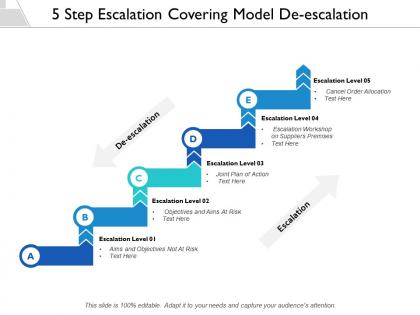
5 step escalation covering model de escalation




Try Before you Buy Download Free Sample Product
 Impress Your
 Audience
 100%
100% Editable
 Save Hours
 of Time


Convincing people is difficult at times. Smoothen the passage of your thoughts with our 5 Step Escalation Covering Model De Escalation.
People who downloaded this PowerPoint presentation also viewed the following :
5 step escalation covering model de escalation with all 5 slides:
Go through at a canter with our 5 Step Escalation Covering Model De Escalation. Gains will come galloping in.




FAQs for 5 step escalation covering
So you'll want to nail down four key things: escalation triggers that spell out when to bump issues up, a clear chain of command, set timeframes for each level, and good communication protocols. Honestly, the triggers matter most - I've seen teams either escalate literally everything or sit on problems way too long. Your people need to know what makes something Level 1 versus Level 2. Also document response times, like "managers respond in 2 hours, directors in 4." Oh, and map your current process first to see where stuff gets stuck.
Start by checking where stuff always goes wrong - look at old complaints and incidents for patterns. Your front desk people are gold mines for this info, honestly they see everything first. Map out who hands what to who, especially approval chains that get jammed up. Missing your response times somewhere? That's your red flag right there. Teams not talking to each other is another big one. Also watch for places where nobody really owns the problem - that's when things spiral fast. Maybe set up monthly check-ins so you can catch this stuff early instead of putting out fires later.
Communication is everything here - seriously, most escalations I've seen crash and burn because people weren't talking to each other, not because of tech problems. You'll want to map out who gets pinged at each stage and exactly what info they need. Don't wait for people to ask for updates either - be the one reaching out first. Set up some automated alerts if you can (saves your sanity). Oh, and this might sound obvious but always circle back with everyone once it's fixed. Nothing worse than thinking something's resolved when half your team is still waiting to hear back.
Honestly, tech makes escalations way less painful. You can automate most of the boring stuff - routing tickets to the right people, tracking how long things take, setting up alerts when something's about to blow up. Workflow tools are great for auto-assigning based on severity. Real-time dashboards show you exactly where things get stuck (which is super helpful). Some AI tools even predict escalations before they happen, though that might be overkill depending on your setup. Map out your current process first, then pick tools that handle the repetitive parts. Just make sure your triggers are crystal clear so nothing gets lost.
Honestly, you need to watch four main things: how fast escalated stuff gets fixed, what percentage of cases even escalate in the first place, customer satisfaction after everything's resolved, and whether you're actually solving things on the first try post-escalation. Oh, and track repeat escalations too - that's when the same annoying issue keeps coming back. Resolution time is probably your biggest tell since it hits both customer happiness and how well your team's working. Set some baselines first, then realistic targets. Check weekly and you'll start seeing patterns that actually help.
Okay so make a quick matrix thing - urgency vs impact, gives you four boxes. High urgency + high impact = drop everything obviously. High impact but less urgent? Still jump on it fast since it hits tons of people or breaks something critical. The tricky one is high urgency but low impact - honestly someone's probably just yelling loud but it can wait. Oh and define "high impact" upfront with your team because there's always that one customer who thinks their minor issue is the apocalypse. Trust me, you don't want to figure out priorities mid-crisis.
Honestly, role-playing is everything here. Your team needs to practice actual angry customer conversations, not just memorize scripts. I've watched people completely panic when they've only done book training - it's brutal. Set up mock calls where they rotate being the customer and agent. Use real escalations from your company as examples. Time pressure makes it realistic too. Also, cross-train everyone so they actually know what other departments can do instead of just saying "let me transfer you." Weekly practice sessions work best. Focus on your most common triggers first, then branch out from there.
Honestly, the worst thing is when nobody knows who actually owns the problem or when to escalate it. Teams just keep bouncing issues back and forth like it's some twisted game. Super frustrating. Don't make escalation feel like you're admitting you screwed up either - that just makes people wait too long to ask for help. Set clear rules about when to escalate and who handles what. Train everyone on the process too, obviously. Oh and definitely review your escalations regularly. You'll start seeing patterns that show you what's actually broken instead of just putting out fires constantly.
Here's the thing - build escalation rules right into your project plan from day one. Define exactly when issues get bumped up and to who. Budget hits 10% over? Timeline slips two weeks? Boom, escalate. Most frameworks already have checkpoints built in anyway, so just add your escalation triggers there. Honestly, I've watched so many projects crash because people were scared to speak up early. Create a simple matrix with names, phone numbers, who can actually make decisions. Document thresholds for budget, timeline, scope stuff. Oh and put this in your project charter - makes everything official.
Honestly, you really need an escalation team - it's a game changer. Critical stuff won't just sit there with nobody taking ownership (which happens way too often, trust me). Your team gets specialized at handling the worst problems fast. When everything goes sideways, they're your lifeline. Short response times, consistent process, the works. Just make sure everyone knows the exact triggers for escalating - like document that stuff super clearly so there's no confusion about when to pull them in. Otherwise you'll still have issues falling through cracks.
Honestly, it really depends on what industry you're in. Healthcare has super rigid escalation because people's lives are literally on the line - everything's documented to death. Financial services is similar with all the compliance stuff, but they're more worried about fraud and regulatory headaches. Tech companies are way more chill about it - informal chains, quick decisions, none of that bureaucratic nonsense. Retail and hospitality just want happy customers, so they focus on fixing things fast rather than getting approvals from five different managers. You've got to match your escalation process to what actually matters in your field, not just copy someone else's playbook.
Dude, you'll get way better results on escalations when different teams actually work together. Like, sales knows the client history, support has the technical details, and engineering can spot what's actually broken. Root causes become super obvious when everyone's sharing info instead of you trying to figure it out alone. Customers notice too - they get way less anxious when they see multiple people jumping on their problem. Makes it feel important, you know? Just make sure you've got clear channels set up ahead of time. Otherwise it's chaos when something big hits. Map out who handles what types of issues before you need them.
Start with the basics - what broke, who's affected, when it started, how bad it is. Then document literally everything as you go. Timestamp each step because you'll definitely forget the order later when your boss starts grilling you. Write down every email you sent, every fix you attempted, who you called for help. I learned this the hard way after scrambling to piece together a timeline weeks later. Update your notes in real-time instead of trying to remember everything afterward. Seriously saves your butt when similar issues pop up or someone needs the full story.
So basically it's when your team actually speaks up about problems before they become disasters. People don't just sit there hoping stuff will magically fix itself (which, let's be real, never happens). Everyone feels comfortable flagging issues early instead of waiting until it's crisis mode. Leadership gets time to actually think and make real decisions rather than just scrambling to put out fires. You end up solving things faster and nobody's left wondering why they heard about the problem so late. Honestly, the key is just making sure people know they won't get blamed for bringing up concerns early.
Think of escalation feedback as your cheat sheet for what's actually broken. Look at the patterns - are people constantly getting stuck on the same stuff? That usually means training gaps or confusing procedures. Honestly, customers are doing you a favor by showing you exactly where things fall apart. Once you spot the trends, you can fix documentation, tweak workflows, or figure out better ways for teams to hand things off. I'd start simple though - just grab last month's escalations and see what keeps popping up. It's surprisingly eye-opening once you actually sit down and categorize everything.
No Reviews