

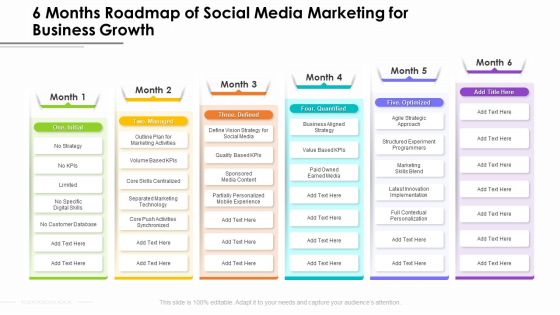
6 months roadmap of social media marketing for business growth





Try Before you Buy Download Free Sample Product
 Impress Your
 Audience
 100%
100% Editable
 Save Hours
 of Time


Utilize our pre build 6 Months Roadmap Of Social Media Marketing For Business Growth to present your plan of action in the most effective way. Reduce the paperwork and showcase how different activities are linked to each other by incorporating this attention grabbing PowerPoint theme. This completely editable roadmap PPT layout is suitable to fit all your needs and to have a structured outline of the entire process flow using color coding. Provide guidelines to your teammates about the progression process by employing our PPT theme. Team members can easily be designated into teams by accessing the work milestones to be accomplished within the timeframe. You can easily modify the PowerPoint slide according to real time situations. Download our stunning 6 Months Roadmap Of Social Media Marketing For Business Growth, and you are good to go to prove your expertise in strategic planning.
People who downloaded this PowerPoint presentation also viewed the following :
6 months roadmap of social media marketing for business growth with all 2 slides:
Use our 6 Months Roadmap Of Social Media Marketing For Business Growth to effectively help you save your valuable time. They are readymade to fit into any presentation structure.
FAQs for 6 months roadmap of social media marketing
Honestly, just focus on five main things and you'll be solid. First figure out your actual goals - like do you want more followers or actual sales? Then really know who you're talking to. Your content strategy is probably the biggest thing because that's what gets people to care about your brand. Post consistently too, but don't feel like you need to be on every single platform - that's exhausting and pointless. Oh and definitely track your metrics so you know what's actually working. I'd start with the goals first, then everything else flows from there. Otherwise you're just shouting random stuff online and hoping something sticks.
Look at who's already following you - check your social media and website analytics to see what these people actually look like. Their age, interests, how they behave online. Then peek at your competitors because why not steal their research, right? Build detailed profiles of your ideal customers - not just basic stuff like age, but what problems they have and where they hang out online. I'd probably start with small test campaigns to see what actually works instead of guessing. You can always adjust once you see real data coming in.
Think of content strategy as your game plan for social media. What you post, when you drop it, how it all ties back to what you're actually trying to accomplish. Random posting is just shouting into the void honestly - I've wasted so much time doing that. Your strategy maps out themes, key messages, different content types, plus when to post everything. Keeps things consistent instead of all over the place. Oh, and it should guide people through your funnel too. Start with 3-4 main themes that match what your audience cares about and your business goals.
Honestly, just go where your people actually are. LinkedIn's solid for business stuff and if you want to sound smart. Instagram's perfect when you've got pretty visuals and you're going after younger crowds. Facebook? Still huge for reaching basically everyone and building communities around your brand. TikTok though - man, that place is nuts but in a good way. Massive opportunity if you can embrace the chaos. Here's what I'd do: check who's already following you, then spy on your competitors to see what's working. But seriously, don't try to be everywhere at once. Way better to absolutely crush it on two platforms than suck at five.
Focus on stuff that actually matters to your bottom line, not just pretty follower numbers. Engagement rate is huge - likes, comments, shares divided by your total followers. Click-through rates to your site matter way more than most people think. Conversion rate from social to actual sales? That's where the magic happens. Lead gen and cost per acquisition if you're doing paid stuff. Oh, and keep an eye on what people are saying about your brand vs competitors. Seriously though, pick like 3-5 metrics max and check weekly. Don't drive yourself crazy tracking everything.
Honestly, social media is huge for getting your name out there. You'll reach people you never would have otherwise - I mean, everyone's constantly scrolling these days, right? The cool thing is you can actually talk to your customers directly, answer their questions right away, build real relationships instead of just shouting into the void. Yeah, algorithms can be a pain sometimes, but that genuine connection makes up for it. My advice? Pick one platform where your people actually are and focus on being helpful, not just pushing your stuff all the time. Way more effective than trying to be everywhere at once.
Honestly, most people try to be on every single platform and it's a disaster. Pick like 2-3 max and actually get good at those. Stop constantly pushing your stuff too - nobody wants that. I cringe whenever I see someone's feed that's just "buy my thing" over and over. You've gotta engage with people for real and give them something useful. Oh, and track your numbers! Sounds boring but you need specific goals upfront. Check monthly what's working. I learned this the hard way - was posting random stuff for months with zero plan.
Think of feedback like your GPS telling you to make a U-turn when you're headed the wrong way. Check your comments, DMs, how people engage - that stuff tells you what's actually working vs what you assume should work. I've been shocked by what my audience wanted compared to what I thought they'd love. If they're asking for behind-the-scenes content but you keep posting product shots, switch it up! Your posting schedule isn't written in stone either. Stay flexible with themes, timing, even platforms. Your content plan should evolve - mine definitely has.
Check your analytics first to see when your people are actually scrolling - mornings and evenings usually hit best during weekdays. Batch creating is a total game changer, trust me on this one. Tools like Buffer make scheduling super easy, but don't just disappear after posting. You've gotta jump in and reply to comments as they come in. Oh, and definitely mix up what you're posting - videos, photos, stories, whatever. I'd start with planning just one week ahead and see what actually gets engagement. It's way less overwhelming that way.
Honestly, user-generated content is like having your customers do the selling for you. People trust real reviews and photos from other buyers way more than your polished ads - it's just human nature. When someone posts a pic with your product or leaves a review, that's gold because it actually converts. The best part? Free content for your social feeds! You can repost their stuff (with credit obviously), run hashtag campaigns, or highlight customer stories. Just make sharing super easy for them. I swear this works better than most paid advertising.
Honestly, just start with one good platform like Hootsuite or Buffer - way easier than trying to learn five different tools at once. Canva's a lifesaver for making graphics quickly, even if you're not artistic at all. For tracking how stuff's performing, Facebook Insights and Twitter's built-in analytics are actually pretty decent. Oh, and Google Analytics obviously. If you're doing paid ads, you'll need Facebook Ads Manager too. I made the mistake of signing up for everything at first and got overwhelmed. Pick one main scheduling tool, get comfortable with it, then add other stuff as you figure out what you actually need.
Honestly, I'd say monthly check-ins work best. Quarterly is the bare minimum but social moves way too fast for that. Algorithms shift constantly and your audience changes what they want - waiting three months means you're probably missing stuff or throwing money at dead strategies. Monthly lets you catch things early. Though I'll be real, most people say they'll do monthly then end up doing it every few months anyway lol. Maybe start with a solid 2-hour deep dive next month to see how you're tracking against your original goals, then try to stick to lighter monthly reviews after that.
Honestly, paid ads are like putting your content on steroids. You get instant visibility instead of waiting around for the algorithm gods to bless your posts. The targeting is insane too - you can literally find people based on their exact interests and shopping habits. What I love most? The data it gives you back. You'll finally know which content actually works and what audiences are worth your time. Organic reach is pretty much dead anyway (thanks, Meta). Start small though - maybe boost a post or two first. Then just double down on whatever's actually converting. Way smarter than throwing money at random campaigns.
Okay so here's what I've learned from trial and error - mix popular hashtags with super niche ones. The popular stuff gets you into trending convos, but honestly the niche tags are where you'll find people who actually give a damn about your content. I do like 70% niche, 30% popular usually. Stalk your competitors to see what they're using (not creepy, just smart research lol). Make some branded ones for your own campaigns too. Stick to 5-11 per post depending on the platform. Oh and save your best combos as templates - you'll thank me later when you're not scrambling for hashtags at 11pm.
Honestly, just don't be shady about it. The FTC will come for you if you're not disclosing sponsored posts properly - learned that one the hard way watching other people mess up. Be real about what your stuff actually does instead of overhyping it. Fake followers are so obvious and cringy anyway. Privacy matters too, so don't be weird about people's data. Oh, and timing is everything - I've watched brands accidentally post tone-deaf content during disasters and it never ends well. People aren't stupid, they know when you're just trying to grab their money versus actually helping them out.
-
Great quality product.
-
Really like the color and design of the presentation.