


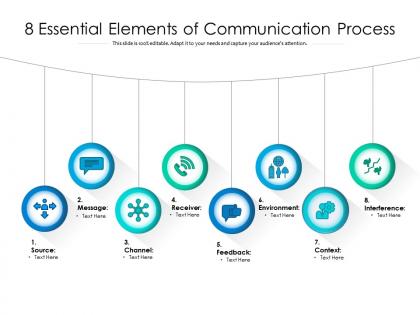
8 essential elements of communication process




Try Before you Buy Download Free Sample Product
 Impress Your
 Audience
 100%
100% Editable
 Save Hours
 of Time


Fulfil high expectations with our 8 Essential Elements Of Communication Process. Deliver on every commitment given.
People who downloaded this PowerPoint presentation also viewed the following :
8 essential elements of communication process with all 2 slides:
Our 8 Essential Elements Of Communication Process deliver on every commitment given. It always fulfils your high expectations.
FAQs for 8 essential elements
Honestly, good communication comes down to actually listening instead of just waiting for your turn to speak. Be direct without being a total asshole about it. Ask questions to check if people get what you're saying. Oh, and timing is huge - don't dump serious stuff on someone when they're already stressed out of their minds. Your body language says more than your words half the time, so watch that too. I always end important convos with something like "are we on the same page here?" It's saved me so many headaches.
Honestly, visual aids are a game changer - they stop people from zoning out after like 5 minutes of straight talking. Your audience will actually remember stuff when you throw in some charts or images, especially those visual learners who need something to look at. Complex ideas become way easier to follow too. Plus it keeps everyone off their phones (hopefully). Oh and don't be that person with crazy spinning animations everywhere - I've sat through those presentations and they're painful. Just keep your visuals clean and relevant. They should back up what you're saying, not compete with it.
Okay so apparently body language is like 55% of how we communicate - which is wild when you think about it. Your posture and facial expressions can totally contradict what you're actually saying. You know when someone goes "I'm fine" but they're clearly pissed? That's exactly it. People pick up on that stuff immediately. Honestly, I never realized how much I cross my arms when I'm uncomfortable until my friend pointed it out. Eye contact matters too - avoiding it makes you seem sketchy even if you're telling the truth. When everything matches up though, people just believe you more naturally.
First thing - figure out who you're talking to. Executives? Hit them with the bottom line right away, keep it short. Technical people want all the nitty-gritty details though. I once tried explaining database stuff to our marketing team and... yeah, crickets. Super awkward. Some people love bullet points, others want the whole narrative. Watch how they talk to other people first, then copy that vibe. Short sentences work sometimes. Other times you'll need to give them more context and background. Just ask yourself what they actually need to know and how they like getting info.
Honestly, start by figuring out what's actually blocking people - language gaps, cultural stuff, or just people making weird assumptions. Listen first before jumping in to make your point. I ask "wait, what do you mean by that?" way more now after bombing so many meetings lol. Match how you talk to who you're talking to - engineers want the technical details, but marketing people's eyes will glaze over. Oh, and make sure everyone knows they won't get roasted for saying "I'm lost" or pushing back on ideas. That's probably the biggest thing.
Dude, active listening is a total game changer. Instead of just waiting for your turn to speak, you're actually absorbing what they're saying. People feel heard when you ask questions and reflect back their words - honestly makes such a difference in building trust. You'll catch way more nuances and emotions too, which I totally miss when I'm distracted or scrolling. Put your phone face-down next meeting and watch how much more you pick up. Those annoying misunderstandings that kill projects? They happen way less when you're truly tuned in.
Honestly, just start with "Let me tell you about..." instead of boring bullet points. Opening with a story that actually connects to your point hooks people way better. Case studies work great as mini-stories throughout your presentation too. Personal failures? Gold - people remember when you screwed up more than random data. I always throw in "what if" scenarios to help audiences picture what I'm talking about. The trick is making sure your stories aren't just entertaining fluff - they need to support your actual message. Structure the whole thing like problem-journey-solution if you're feeling ambitious.
Timing matters - don't wait a week to bring something up. Give feedback within a day or two while it's actually fresh in both your minds. Focus on what they did, not who they are as a person. Like say "I noticed you interrupted me twice" instead of "you're always cutting people off." When someone's giving YOU feedback? Don't get defensive right away (trust me, I'm terrible at this). Ask questions instead. Oh, and start with something positive first - it makes the whole thing less brutal. Then circle back later to see how it's going. Makes it feel more like an actual conversation than getting lectured.
Honestly, start with Slack or Teams for quick messages - it cuts down on endless email chains. Video calls are clutch for anything complicated or when you're all working from home. Project management stuff like Asana saves you from those awkward "um, what was my task again?" situations. Everyone stays on the same page with deadlines. Oh, and cloud docs so you're not working on version 47 while someone else has version 52. Pick one tool first that your team will actually stick with - don't go crazy adding everything at once.
Yeah, culture totally changes how people talk to each other. Your direct feedback style? Works amazing with some people, but might come off way too harsh for colleagues from cultures that do the whole indirect communication thing. It's wild how even silence gets read differently - some see it as respectful, others think you're being weird or disagree with them. I'd just watch how your team actually communicates and adjust from there. Honestly, when you're not sure, ask them straight up how they like getting feedback. Saves everyone the guesswork.
Think of it like telling a story - hook them with something shocking or a problem they actually deal with. Most presentations die here because people just vomit data everywhere (seriously, don't do this). Walk through the problem first, build some tension, then show your solution piece by piece. You'll want smooth transitions so it doesn't feel choppy. Oh, and actually tell them what to do at the end - none of that vague "thanks for listening" stuff. Practice it out loud because what looks good on paper doesn't always flow when you're speaking.
Ugh, speaking anxiety is the worst! But I've got some tricks that actually work. That 4-7-8 breathing thing sounds weird but it's legit - breathe in for 4, hold for 7, exhale for 8. Game changer. Practice your opening until you could say it in your sleep. Show up early so the room doesn't feel scary. Oh, and here's something wild - try telling yourself you're excited instead of nervous. Your body literally can't tell the difference between those feelings! Don't overwhelm yourself though. Pick one thing and see how it goes.
Look, being clear and concise just makes everything easier for everyone. People get what you want right away instead of having to decode your message like some weird puzzle. Short messages show you actually care about not wasting their time - I mean, who has patience for reading through paragraphs these days? Plus you'll avoid that annoying back-and-forth when someone totally misses your point. Pro tip: read your stuff out loud before hitting send and ask yourself if you'd get it immediately.
Honestly, figure out what they actually care about first - their budget? Time crunch? Some problem that's driving them crazy? Then talk about your idea in those terms. Skip the fluffy "game-changer" BS and give them real numbers or examples instead. People see right through that stuff now. Ask questions that get them thinking rather than just pitching at them the whole time. Oh, and make it feel like you're brainstorming together. Nobody wants to feel like they're being sold to, you know?
Oh man, the worst thing you can do is assume people get what you're saying. I'm guilty of this too - you're already planning your comeback while they're mid-sentence, which is terrible for actually hearing them. Vague explanations are another killer, especially when you throw around team jargon that means nothing to outsiders. My go-to fix? Ask "what I'm hearing is..." and repeat it back. Simple words beat fancy ones every time. Also try waiting like 2 seconds after someone stops talking before jumping in - feels weird but works.
No Reviews