


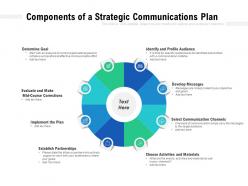
Components of a strategic communications plan





Try Before you Buy Download Free Sample Product
 Impress Your
 Audience
 100%
100% Editable
 Save Hours
 of Time


Use our Components Of A Strategic Communications Plan to hawk your ideas. They ensure that you find buyers.
People who downloaded this PowerPoint presentation also viewed the following :
Components of a strategic communications plan with all 2 slides:
Find buyers for your ideas with our Components Of A Strategic Communications Plan. They allow you to hawk them convincingly.
FAQs for Components of a
Alright, so first nail down your objectives - seriously, everything else is pointless without knowing what you're actually trying to accomplish. Then figure out who you're talking to and what makes them tick. Your messaging needs to hit different for each audience, which is honestly where most people mess up. Pick your channels based on where these people actually hang out, not just where you think they should be. Budget and timeline will probably suck, but work with what you've got. Oh, and set up some way to measure if this whole thing worked - you'll thank me later when your boss asks for results.
Look, you basically want your communications to actually help your business hit its goals instead of just throwing stuff at the wall. Figure out what your company's really trying to do first - grow market share, launch products, fix a reputation problem, whatever. Then make sure every press release, campaign, or even internal email actually serves that bigger picture. It's like having a roadmap instead of wandering around aimlessly (which honestly most companies do). Don't get caught up measuring stupid stuff like social likes. Focus on metrics that actually matter to your bottom line. Every piece of communication should have a real business reason behind it.
Dude, you literally can't do anything else until you figure out your audience first. Like, how are you gonna write messaging if you don't know who's reading it? I learned this the hard way on a project last year - total disaster. You need their pain points, how they make decisions, what channels they actually use. Otherwise you're just throwing stuff at the wall hoping it sticks. Create those detailed personas before you touch any content. Sounds boring but it'll save you so much time and money down the road. Trust me on this one.
Honestly, just pick 3-4 metrics that actually match what you're trying to do - don't get sucked into tracking everything. I'd go with the obvious stuff like engagement and reach, but also throw in sentiment tracking if you can swing it. Website traffic's pretty telling too. The qualitative side matters just as much though - surveys, feedback, that kind of thing. Oh and definitely figure out what "winning" looks like before you start, otherwise you'll be making up success stories later. Track it regularly, not just at the end when you're panicking about results.
Honestly, the worst part is always the politics - getting everyone aligned when they all have different priorities. Your timeline will get cut (obviously), and measuring real results vs just looking busy is harder than you'd think. People will fight you on messaging consistency because suddenly everyone's a marketing expert. Communication between departments falls apart fast, especially if you don't have someone with real authority backing you up. Oh, and your budget? It'll probably get chopped halfway through. Plans change constantly too. I'd say pad your timeline way more than feels reasonable and make sure you've got executive support before you even start. Trust me on that last one.
Start by figuring out who you're talking to - like, actually list them out. Each group cares about totally different stuff. Your employees? They want to know if their jobs are safe. Investors are all about the money and what could go wrong. Customers just want to know what's in it for them (and skip the corporate buzzwords, they hate that). Honestly, I learned this the hard way after bombing a presentation because I used the same slides for everyone. Also, timing's huge - some people need the early scoop, others get the final polished version.
Honestly, start with mapping out who you're actually talking to - spreadsheet works fine, don't overthink it. Google Analytics and social media insights will show you what's landing. For organizing content, I swear by Asana but use whatever your team won't ignore. Media monitoring tools are clutch for tracking mentions and seeing if people hate you or not. Here's the thing though - talk to sales, customer service, and leadership first. They know stuff you don't, and their input makes everything way less likely to flop.
Look, you've gotta bake flexibility right into your comms plan from day one. Have those crisis message templates ready to go and know exactly who can approve going off-script when shit hits the fan. Set up clear trigger points - like if there's a product recall or bad press coverage - that automatically switch you into damage control mode. Honestly, most companies totally blow this part. Make sure someone has the authority to approve real-time messaging changes without a committee meeting. Oh, and schedule regular reviews so you're not frantically updating everything mid-crisis.
Look, social media isn't just another channel anymore - it's where your whole comms strategy actually comes to life. That's where real conversations happen and you can engage directly with people instead of shouting into the void. It gives you instant feedback too (which yeah, can be brutal but incredibly useful). The trick is figuring out which platforms your audience actually uses - like, don't waste time on LinkedIn if you're trying to reach college students. Stay consistent with your messaging across everything. Honestly, I'd start by just seeing where your stakeholders are already hanging out online.
Honestly, visuals are a game-changer for getting your point across. People retain way more when they see charts or infographics instead of just walls of text - our brains are wired that way. Plus everyone's attention span is shot these days, so anything that cuts through the clutter helps. Data especially needs some kind of visual treatment or people's eyes just glaze over. I'd start by figuring out your main points, then see which ones are begging for a diagram or icon instead of another boring bullet list. Even simple graphics create emotional hooks that plain text can't touch.
Stories just hit different than regular corporate messaging - people actually remember them. We're basically hardwired to connect with narratives instead of dry facts. Like, bullet points don't make anyone *feel* anything, you know? But a good story creates that emotional hook that sticks. Complex strategies become way easier to digest when you frame them as stories. Here's what works: think "before, during, after" for whatever you're communicating. That simple structure instantly makes your message more engaging and shareable across teams.
Honestly, just ask your audience directly where they hang out online - don't guess. Check your current analytics too, see what's already getting traction. Stalking your competitors isn't a bad idea either since they've probably figured some of this out already lol. Focus on maybe 3-4 platforms tops and actually do them well instead of being mediocre everywhere. I've seen so many people spread themselves way too thin. Test stuff out, then put more energy into whatever's working. Drop the channels that aren't worth your time. Quality over quantity always wins.
Think of feedback loops as your reality check - they show you what's actually landing with people vs what you hope is working. Most teams just blast out content and cross their fingers, which is honestly pretty painful to watch. You'll catch messaging that's bombing, see which channels are duds, and spot opportunities hiding in plain sight. I'd set up weekly check-ins to review your numbers and actually listen to what people are saying back to you. Then just tweak things based on what you learn. It's way less complicated than it sounds.
Focus on whatever moves you closest to your main goals first - that's your North Star. Build those core messages like a foundation, keep them consistent everywhere. Then add your supporting stuff on top. Honestly, most people overthink this part and get paralyzed by options. Test your priority messages first, see what actually works, then tweak from there. Your main messages stay rock solid across all channels, but you can adjust the smaller tactical ones based on who you're talking to. It's way simpler than everyone makes it sound.
Honestly, you've gotta nail down the ethics stuff first or it'll bite you later. Be upfront about data privacy when you're grabbing audience info. Cultural sensitivity is huge too - one wrong move and you're trending for all the wrong reasons. Transparency should be baked into everything, not an afterthought. Watch out for conflicts of interest because they always pop up at the most inconvenient times. Think beyond just hitting your org's goals - what's this doing to society as a whole? Oh, and make your team an ethics checklist they can actually use before big launches.
No Reviews