


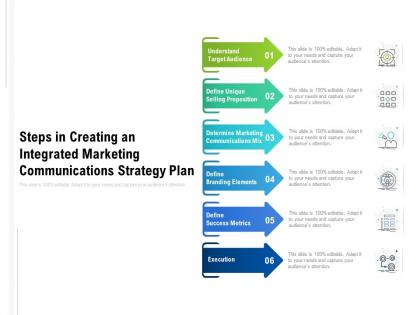
Steps in creating an integrated marketing communications strategy plan




Try Before you Buy Download Free Sample Product
 Impress Your
 Audience
 100%
100% Editable
 Save Hours
 of Time


Go far deeper than ever expected with our Steps In Creating An Integrated Marketing Communications Strategy Plan. They allow you to explore to a greater depth.
People who downloaded this PowerPoint presentation also viewed the following :
Steps in creating an integrated marketing communications strategy plan with all 2 slides:
Footprints become global with our Steps In Creating An Integrated Marketing Communications Strategy Plan. Gain entry anywhere on earth.
FAQs for Steps in creating an integrated marketing
Honestly, it all comes down to getting your messaging straight across every platform. First thing I'd do? Audit what you're doing right now - you'll probably find some weird inconsistencies that are confusing people. Make sure you're actually targeting the right audience segments instead of just throwing stuff at the wall. Then coordinate between social, email, PR, whatever channels you use. Oh, and set clear goals upfront so you can actually measure if this stuff is working. The hardest part is honestly keeping your creative team from going off-script with completely different campaigns!
Dude, you gotta have one central spot where ALL your messaging stuff lives - brand guidelines, tone, key messages, the works. Otherwise people just make shit up as they go (which is usually what's happening tbh). Set up templates and make sure someone's actually reviewing content before it goes out. I'd pick one person to be your "brand police" - sounds annoying but trust me, they'll catch the weird inconsistencies. Also do regular check-ins with your teams so social isn't saying one thing while email's doing something totally different. Most of this chaos happens because everyone's working off old docs or just winging it.
Dude, audience segmentation is like the whole backbone of your IMC strategy. Break your audience into different groups - demographics, behaviors, what they actually want. Makes total sense when you think about it. You can't message Gen Z the same way you'd reach Baby Boomers, that's just asking for disaster. After you figure out these segments, create messages that'll actually hit home with each group. Oh, and pick the right channels too - some people live on TikTok while others are still checking Facebook religiously. Start by digging into your customer data and find maybe 3-4 solid segments to work with.
Track your conversions and website traffic spikes first - that's the obvious stuff. But honestly? Don't sleep on the softer metrics like social engagement and brand sentiment. Those sometimes matter way more long-term than immediate sales bumps. Set your baselines before launching anything or you'll have no clue what actually worked. Monitor consistently across all channels, and here's the thing - give campaigns time to breathe before you panic and shut them down. Survey data on brand awareness is clutch too. The mix of hard numbers plus brand indicators will give you the real picture.
Honestly, you gotta start with something like HubSpot or Marketo - those marketing automation platforms are lifesavers for keeping everything coordinated. They handle your email campaigns, social scheduling, the whole nine yards from one spot. For social media specifically? Hootsuite or Buffer are pretty much non-negotiable at this point. I mean, trying to post manually across platforms is just asking for burnout. Content planning gets tricky though - that's where CoSchedule or Asana comes in handy for keeping your team on the same page. My advice? Pick whatever solves your biggest headache first, then add tools as you grow.
Honestly, social media should be your main command center that boosts everything else you're doing. Tease your upcoming stuff, post behind-the-scenes clips from shoots or events - people eat that up. Keep your voice consistent across all platforms so it matches your ads and emails. The real-time feedback is incredible for adjusting things while campaigns are still running. Cross-promote like crazy and funnel that social traffic to your other channels. Oh, and map out how each post connects to your bigger goals first - saves you from posting random stuff that doesn't help anything.
Think of branding guidelines as your cheat sheet for keeping everything consistent across channels. They've got your colors, fonts, messaging tone - all that stuff mapped out so your Instagram posts don't look totally different from your emails. Without them? Your campaign turns into a hot mess where nobody can tell it's even the same company. I learned this the hard way on a project last year. Start with those brand standards before you plan anything else. Use them for every piece of content you make. Trust me, it'll save you so much headache later when everything actually flows together instead of looking random.
Honestly, the hardest part is staying consistent when every platform has completely different vibes and rules. Instagram stories hit different than TV commercials, you know? Your brand has to adapt but still feel like... well, your brand. Different teams handling different channels makes it messy - plus tracking ROI becomes impossible when you can't see how everything connects. Budget allocation is another headache entirely. Oh, and timing coordination? Good luck with that. Best move is creating one master brand doc everyone can actually use, then put someone in charge of making sure nobody goes rogue across channels.
Honestly, data analytics is a game-changer for IMC - no more throwing stuff at the wall and hoping it sticks. You'll see which channels actually get people engaged and when your audience is scrolling. The messaging part is huge too since you can track what works across different platforms. I love how you can connect the dots between campaigns - like seeing your email blast boost social engagement. Super helpful for splitting your budget smarter and personalizing content for different groups. Oh, and definitely set up UTM parameters on everything first (kind of tedious but worth it) so you can actually prove ROI instead of guessing.
Start with one solid message that works everywhere, then adapt the format for each platform. Like take a blog post and turn it into Instagram slides or LinkedIn talking points - way easier than creating everything fresh. Your brand voice should stay the same though. Map out where your audience hangs out and what grabs them on each channel. Storytelling is clutch - emotions and relatable problems translate anywhere. But here's the thing: your TikTok hook won't work in an email, so test different approaches. Repurposing content saves your sanity, trust me. Focus on clear benefits people actually care about.
Honestly, you can't build a solid IMC strategy without really getting your audience first. Where do they hang out online? That tells you which channels to focus on. Their decision-making process - like, do they research for weeks or buy impulsively? - that shapes how you sequence your messages. Pain points drive your creative direction too. I always tell people to map out the customer journey before anything else, then build your touchpoints around how they actually behave. Otherwise you're just guessing and wasting budget. Quick tip - audit what consumer insights you already have before diving into strategy work.
Look, your story is what ties everything together in IMC - it's like the thread running through all your channels. People remember stories way better than random product specs, trust me. So you craft this core narrative that hits emotionally, then tweak it for different platforms. Your Instagram posts, emails, PR stuff - they should all feel connected but not copy-paste identical, you know? I always tell people to nail down their main story first. Then you can spin it for each channel while keeping that same vibe. Makes everything feel purposeful instead of all over the place.
Honestly, partnering up with other brands is where the magic happens. Find companies that aren't your direct competition but share similar audiences - maybe do co-branded campaigns or split costs on events. I've watched brands absolutely crush it this way, especially on social media collabs. Cross-promotions work too. The trick is starting small though - pick like 3-5 potential partners and test something tiny first. See how your audiences vibe together before going big. It's basically doubling your reach while cutting your budget in half, which... yeah, pretty genius move if you ask me.
OK so first thing - map out every channel you're using. Social, email, ads, all of it. Then create one central style guide that everyone can actually reference (not just ignore lol). The worst is when your Instagram sounds totally different from your emails - customers notice that shit. Get your teams talking regularly so nobody goes off-script. Honestly, I've watched so many brands mess this up by letting each team do their own thing. You want it to feel like one person is having a conversation with your audience, not like different departments are all shouting random stuff.
Honestly, don't wait until the end to see how things are going - that's a rookie mistake. Set up monitoring right from the start with social listening tools and analytics. My team checks metrics every week because catching problems early saves your butt later. A/B test different messages across channels, and definitely get feedback forms to your sales people since they actually talk to customers all day. Quick surveys help too. The whole point is making changes while the campaign's still running, not after it's already tanked or succeeded.
No Reviews