


Timeline For Implementing Integrated Marketing Communication Process




Try Before you Buy Download Free Sample Product
 Impress Your
 Audience
 100%
100% Editable
 Save Hours
 of Time


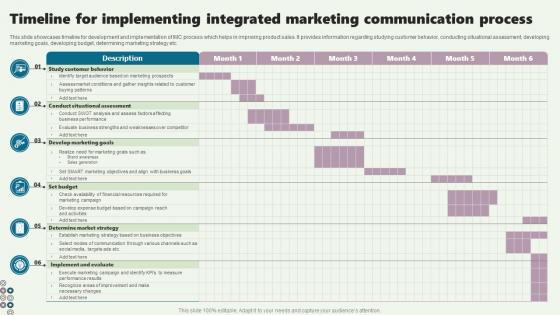
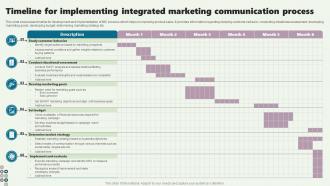
This slide showcases timeline for development and implementation of IMC process which helps in improving product sales. It provides information regarding studying customer behavior, conducting situational assessment, developing marketing goals, developing budget, determining marketing strategy etc.
People who downloaded this PowerPoint presentation also viewed the following :
Timeline For Implementing Integrated Marketing Communication Process with all 6 slides:
Use our Timeline For Implementing Integrated Marketing Communication Process to effectively help you save your valuable time. They are readymade to fit into any presentation structure.





FAQs for Timeline For Implementing Integrated
So Northwestern actually coined "IMC" back in the '80s, but it didn't really blow up until the '90s when companies figured out they were throwing money away on scattered campaigns. Digital hit in the 2000s and suddenly you're trying to match your TV spots with websites and email stuff. Social media made things crazy complicated in the 2010s - though honestly, way more effective too. Now? Everything's data-driven and you've got like 20+ touchpoints to worry about. Each decade just piled on more channels basically. I'd start by listing all your current touchpoints and see where your messaging gets wonky.
So digital stuff has basically turned IMC into this crazy juggling act. You're managing way more channels now and everything happens instantly - no more planning campaigns months ahead. Social, email, web data, mobile apps... it all feeds back in real time. Your customers expect the same vibe whether they see your Instagram post or get your email later that day. Can't just copy-paste messages everywhere anymore (learned that the hard way!). The trick is mapping out where people actually interact with you, then spotting where your messaging gets weird or inconsistent. That's honestly your fastest fix.
Honestly, social media flipped everything upside down. Instead of just pushing ads at people, brands actually have to *talk* to customers now - like, real conversations happening in real time. The tricky part? You've got to stay consistent across Instagram, TikTok, Twitter, and whatever new platform pops up next week (exhausting, right?). But here's the cool thing - small brands can totally blow up with one viral post while big companies spend millions on boring campaigns. Your customers basically run half your marketing now through reviews and shares. My advice? Figure out where your people actually hang out first, then focus there.
Track everything across all your channels since IMC hits multiple spots at once. Google Analytics is your best friend here, plus social listening tools and customer surveys. You'll need both the hard numbers - traffic, conversions, engagement - and the fuzzy stuff like brand awareness surveys. Attribution is honestly a nightmare because people don't convert in neat little boxes. Most of the time it's like three different touchpoints working together. Oh, and definitely measure your baseline metrics before you launch anything. Otherwise you're just guessing if your campaign actually worked or if Bob from accounting just got lucky that quarter.
Nike's "Just Do It" thing is basically the textbook example - same message everywhere for like 30+ years. Old Spice completely flipped their image with those weird but hilarious commercials (seriously, who didn't see the guy on a horse?). Then there's Dove's "Real Beauty" stuff that worked because everything matched up - ads, packaging, social posts, all of it. Here's what I noticed: they each picked one main idea and stuck with it across every single channel. No mixing messages. That's honestly the secret - find your thing and don't waver from it.
So basically, back in the day all the marketing departments were doing their own thing - ad teams, PR people, sales promo folks. Nobody talked to each other. Customers got totally confused messages everywhere they looked. Each group had separate budgets and goals, so your brand sounded different on every channel. Kind of a nightmare, honestly. IMC showed up in the '80s to force everyone to actually coordinate under one strategy. Now when I look at campaigns, I always wonder if the messaging actually matches across everything or if it's still all over the place.
Honestly, AI personalization is getting crazy good - like, scary good at predicting what people want. Voice shopping through Alexa and stuff is taking off too. Privacy laws are tightening everywhere, so you really need to focus on collecting your own customer data instead of relying on third parties. Social media checkout is blowing up faster than I expected - Instagram and TikTok are basically becoming storefronts. AR/VR used to feel gimmicky but now it's actually useful for trying products. Oh, and micro-moments on mobile are huge. Don't wait to test this stuff - everyone else is already experimenting.
Cultural moments totally flip IMC on its head because what worked before just... doesn't anymore. Look at how brands scrambled to sound "purpose-driven" when activism exploded, or how B2B went full digital during remote work. You can't just tweak your ads - honestly, campaigns I thought were genius in 2019 would flop hard now. Channels change, your tone shifts, even your whole value prop might need reworking. What helps me? Quarterly team check-ins to catch trends early. Way better than playing catch-up when everyone's already moved on.
Okay so break it into four phases. Pre-launch starts 8-12 weeks out - PR stuff, influencer collabs, teaser content. Paid ads and social kick in around 4-6 weeks before. Launch week is when you blast everything across all channels simultaneously. Most people totally crash during this phase but just power through it! Post-launch sustaining happens weeks 2-8 after. The main thing is keeping all your channels consistent at each stage. Oh and definitely make a shared calendar with deadlines for each channel - saves so much chaos later. Trust me on that one.
Yeah totally! IMC doesn't need a huge budget - consistency is what matters. Pick 2-3 channels you're already using and make sure they're all telling the same story. Your social posts, website, emails, whatever - they should feel like they're coming from the same brand. I've honestly seen some broke startups crush it because they had to get creative instead of just buying their way to success. Focus on nailing the coordination between your channels first. Way better to do fewer things well than spread yourself thin across everything. Oh and don't forget boring stuff like business cards - they count too.
Look, consumer feedback is basically your roadmap for fixing your IMC strategy over time. Set up feedback loops early - surveys, social listening, all that stuff. You'll start seeing patterns in what messages actually work and which channels people give a damn about. It's honestly like having a focus group that never stops running (which sounds exhausting but whatever). Track sentiment and response rates now, then check monthly for trends. This way you can shift budgets or completely change direction before burning through cash. The timing piece is huge too - people will tell you when they're actually paying attention.
Ugh, influencer marketing is such a pain for timing. You'll need to start reaching out like 2-3 months early because building those relationships takes forever. But then the actual content gets made super fast, which is weird. Coordinating everyone is honestly the worst part - trying to sync authentic posts with your other campaigns while working around people's random schedules. Traditional ads are so much more predictable! My biggest tip? Always have backup creators lined up because someone will definitely flake last minute. Start way earlier than feels necessary.
Ugh, it's such a mess when your social media person is posting one thing while someone else sends totally different emails. Each team has their own budget and timeline, so everything gets scattered. Different platforms have weird quirks too, which makes people want to customize every single thing. I swear, half the battle is just getting everyone to talk to each other regularly. Setting up shared brand guidelines helps, but honestly? You still need those check-ins where teams actually sync up. Your message can vary a bit across channels, but the core stuff needs to match or you'll confuse people.
Stories just stick better than boring product specs, you know? Nike's genius at this - they're selling dreams about pushing through challenges, not just sneakers. When someone sees your Instagram ad, then gets your email, then walks into your store, that same story hits them again and builds up. It's like... emotional compound interest or whatever. Your brain remembers narratives way easier than a list of features. Find one solid story that captures what you're about, then weave it through everything. Consistency across all those touchpoints is what really makes people remember you.
Honestly, you've gotta get everyone syncing up regularly - marketing, sales, creative, the whole crew. Set up a central hub where people can actually see what's happening with timelines and messaging. I swear, half the campaigns I've watched crash and burn could've been saved with better communication. Weekly check-ins beat those brutal monthly meetings every time. Make sure each team knows how they fit into the big picture, and create clear handoff points between departments. Oh, and don't assume everyone's reading minds - overcommunicate like crazy. Slack channels or project tools help keep conversations going when you're not in meetings.
-
Great quality slides in rapid time.
-
The customer care of SlideTeam is very responsive. I was having a payment issue and they fixed it for me in no time.