

Step by step process of creating a digital marketing strategy complete deck




Try Before you Buy Download Free Sample Product
 Impress Your
 Audience
 100%
100% Editable
 Save Hours
 of Time


Our Step By Step Process Of Creating A Digital Marketing Strategy Complete Deck are topically designed to provide an attractive backdrop to any subject. Use them to look like a presentation pro.
People who downloaded this PowerPoint presentation also viewed the following :
Content of this Powerpoint Presentation
Slide 1: This is the introductory slide of the "Step-by-step process of creating a digital marketing strategy" PPT presentation. Add your company name here.
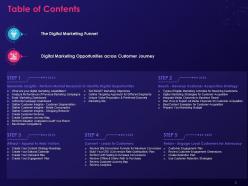
Slide 2: This slide represents the table of contents labeling all the important headings of this presentation, such as the digital marketing opportunities, funnel, generating insights, etc.
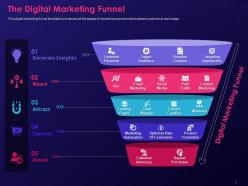
Slide 3: This digital marketing funnel template summarizes all the stages of marketing and channels to attract customers at each stage.
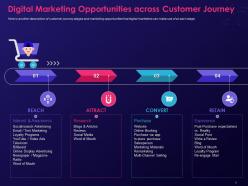
Slide 4: Here is another description of the customer journey stages and marketing opportunities that digital marketers can use at each stage.
Slide 5: Highlight the first step to perform the digital market research in this slide by generating the insights.
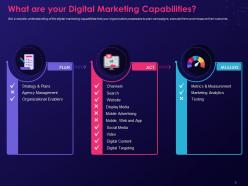
Slide 6: With this slide, get a realistic understanding of your organization's digital marketing capabilities to plan campaigns, execute them, and measure their outcome.
Slide 7: List out all the capabilities like mobile advertising, Pay-per-click, video targeting, etc, that you currently have or need to have to get the best results from your marketing department in this PPT template.
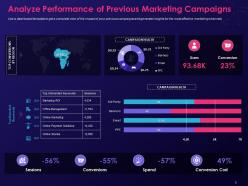
Slide 8: Use this dashboard template to get a complete view of the impact of your previous campaigns and generate insights for the most effective marketing channels.
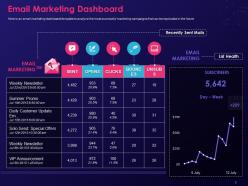
Slide 9: Here is an email marketing dashboard template to analyze the most successful marketing campaigns that can be replicated in the future.
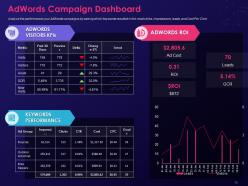
Slide 10: Analyze the performance of your AdWords campaigns by seeing which keywords resulted in the most clicks, impressions, leads, and cost per click.
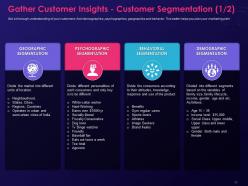
Slide 11: Get a thorough understanding of your customers' demographics, psychographics, geographics, and behavior with this template that can help you plan your marketing pitch.
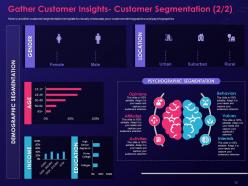
Slide 12: Here is another customer segmentation template to visually showcase your demographics and psychographics.
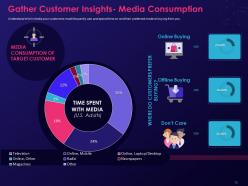
Slide 13: Understand which media your customers most frequently use and spend time on and their preferred mode of buying from you with this media consumption of the target customer template.
Slide 14: Dig deeper to get more insights into your customers' shopping behavior, their preferences, and motivations to purchase with this user ratings and reviews slide.
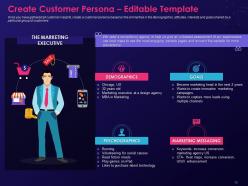
Slide 15: Once you have gathered all customer insights, create a customer persona based on the similarities in the demographics, attitudes, interests, and goals shared by a particular group of customers with this marketing executive slide.
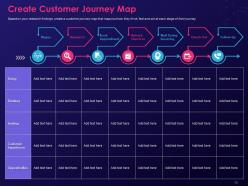
Slide 16: Then based on your research findings, create a customer journey map that maps out how they think, feel, and act at each stage of their journey with this slide.
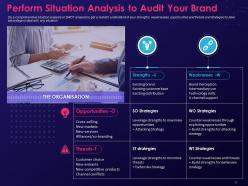
Slide 17: With this slide, do a comprehensive situation analysis or SWOT analysis to get a realistic understanding of your strengths, weaknesses, opportunities, threats, and strategies to take advantage of or deal with any situation.
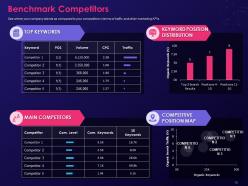
Slide 18: See where your company stands compared to your competitors in terms of traffic and other marketing KPIs using this slide.
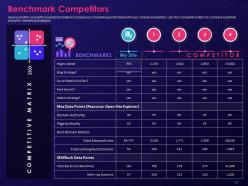
Slide 19: Here is another competitor analysis template to compare your marketing performance with your closest competitors. Use this competitive matrix to compare backlinks and other marketing strategies.
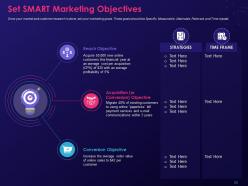
Slide 20: Set your marketing goals with this slide once your market and customer research is done. These goals should be specific, measurable, attainable, relevant, and time-based.
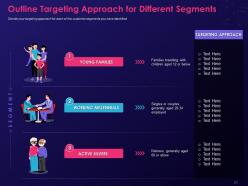
Slide 21: Using this template, decide your targeting approach for each customer segment you have identified.
Slide 22: Use this slide to ensure you have a strong pitch that covers your unique value proposition. List out the digital and traditional marketing channels you plan to use.
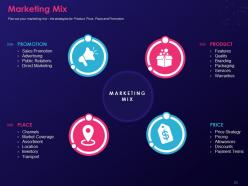
Slide 23: Plan out your marketing mix – the product, price, place, and promotion strategies in this template.
Slide 24: Here is the second step of this strategy devising i.e. reaching and developing the customer acquisition strategy.
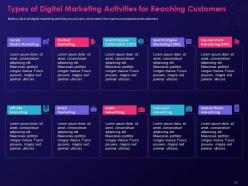
Slide 25: Make a list of all digital marketing activities you will carry out to reach the maximum prospects and customers with this slide.
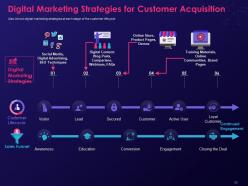
Slide 26: This slide will list digital marketing strategies at each stage of the customer lifecycle.
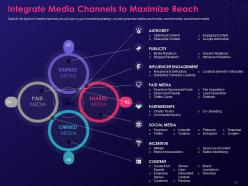
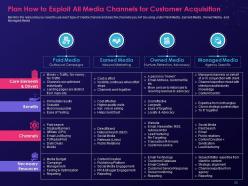
Slide 27: Specify the types of media channels you will use in your marketing strategy, including earned media, paid media, owned media, and shared media with this template.
Slide 28: Mention the resources you need to use each type of media channel and the channels you will be using underpaid media, earned media, owned media, and managed media using this slide.
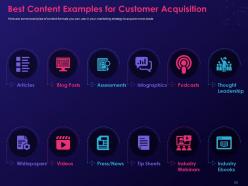
Slide 29: This slide presents some of the best examples of content formats you can use in your marketing strategy to acquire more leads.
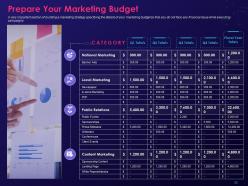
Slide 30: Prepare the most important section of building a marketing strategy with this slide, i.e, specifying the details of your marketing budget so that you do not face any financial issues while executing campaigns.
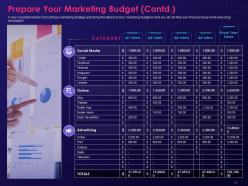
Slide 31: This is another slide in continuation with the previous slide to cover any and all miscellaneous expenses all along.
Slide 32: The next step in this journey is to attract website visitors.
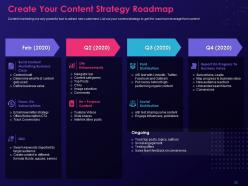
Slide 33: Use this slide to list your content strategy to get the maximum leverage from content.
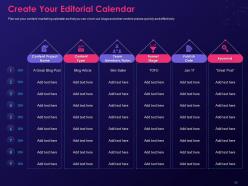
Slide 34: Next, in this slide plan out your content marketing calendar so that you can churn out blogs and other content pieces quickly and effectively.
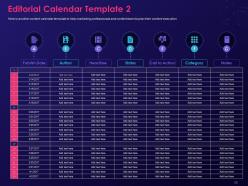
Slide 35: Here is another content calendar template to help marketing professionals and content team plan their content execution
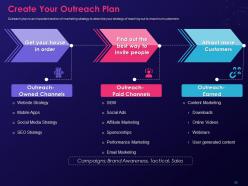
Slide 36: Next, create your outreach plan with this slide to describe your strategy of reaching out to maximum customers.
Slide 37: As schematically explained in this slide, once you have created a plan to reach customers, plan how you will engage those visitors on your website, social media, etc.
Slide 38: The fourth milestone of this strategy, i.e. to convert the leads to customers, is introduced here.
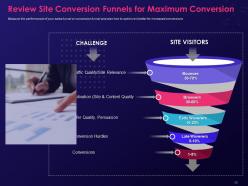
Slide 39: Measure the performance of your sales funnel or conversion funnel and plan how to optimize it better for increased conversions and record it in this slide.
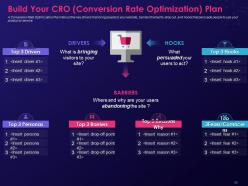
Slide 40: Next, build Your CRO (Conversion Rate Optimization) Plan as explained in this slide that lists out the key drivers that bring people to your website, barriers that led to dropout, and hooks that persuade people to use your product or service
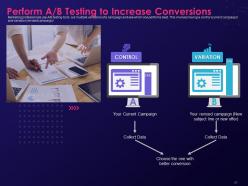
Slide 41: This slide guides you in performing the A/B testing to increase conversions, try out multiple campaign variations and see which one performs best, using a control (current campaign) and variation (revised campaign).
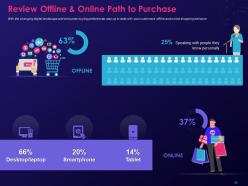
Slide 42: This slide impresses the need to review the offline & online path purchase to stay up to date with your customers' offline and online shopping behavior.
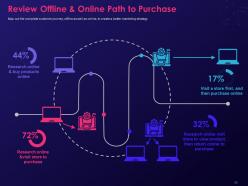
Slide 43: Use this slide to map out the complete customer journey, offline and online, to create a better marketing strategy.
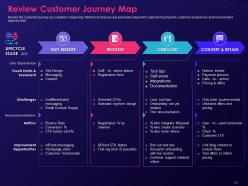
Slide 44: With this template, review the customer journey you created in the beginning. Refine it to be absolutely clear with customer touchpoints, customer experience, and improvement opportunities.
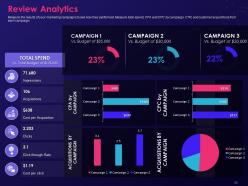
Slide 45: Measure the results of your marketing campaigns to see how they performed with this slide next. Measure total spending, CPA, and CPC by the campaign, CTR, and customer acquisitions from each campaign.
Slide 46: Focus on the fifth step of this strategy, i.e. retaining and engaging the loyal customers for advocacy with this slide.
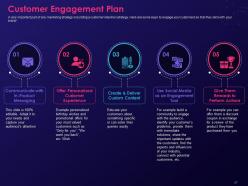
Slide 47: Next, build a customer engagement plan with this slide like communicating with them, offering personalized deals, etc.
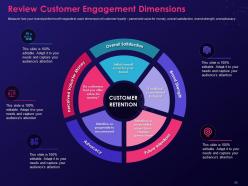
Slide 48: Then with this slide, review the various customer engagement dimensions. Measure how your brand performs with regards to each dimension of customer loyalty – perceived value for money, overall satisfaction, brand strength, and advocacy.
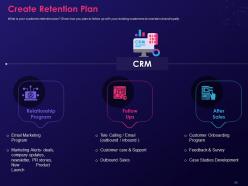
Slide 49: This slide provides the next plan of creating a retention plan to show how you plan to follow up with your existing customers to maintain brand loyalty.
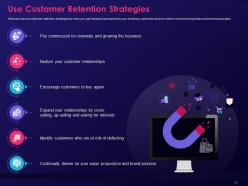
Slide 50: Finally, use this slide to deploy the Customer Retention Strategies to help you get repeat business from your existing customers and turn them into brand loyalists and brand advocates.
Slide 51: For this presentation, this slide offers a readymade one-stop library of all the icons used in it.
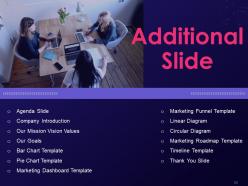
Slide 52: This slide marks the beginning of additional slides to follow comprising company details, statistics, and other miscellaneous slides.
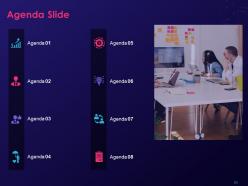
Slide 53: This is the slide to share the overall agenda for serving this presentation. Add up to 8 goals in this.
Slide 54: Share a brief of your company introduction in this slide.
Slide 55: This slide provides the mission, vision, and goal of your company.
Slide 56: Share the core goals being targeted with this strategy implementation using this slide.
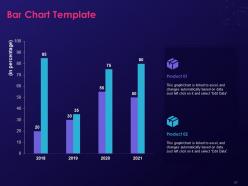
Slide 57: This is a graphical slide comprising a bar chart to compare and visualize the performance of multiple strategies or performance over numerous channels.
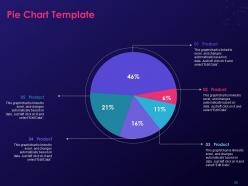
Slide 58: This graphical slide comprises a pie chart to visualize budget, revenue, or critical performance in general for variable products and strategies.
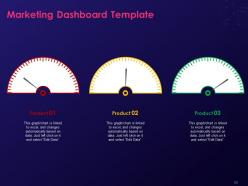
Slide 59: This is a Marketing Dashboard Template to quantify performances.
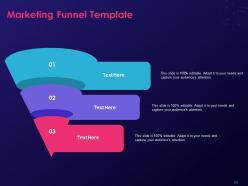
Slide 60: This slide contains a Marketing Funnel Template to filter out the best strategies, and then chart out the best fit.
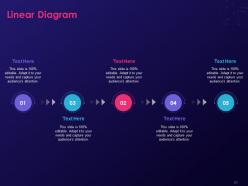
Slide 61: Here is a linear process slide to entail the sequence of the variables at play.
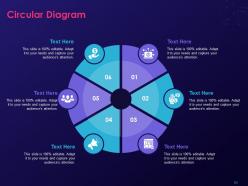
Slide 62: This is a circular pie chart slide to bring unison among the crucial steps, resources, and components of this strategy.
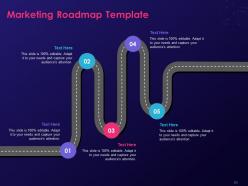
Slide 63: This is the marketing roadmap for the process flow slide to share the framework of your project.
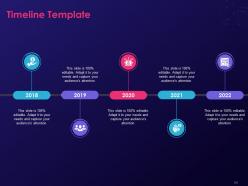
Slide 64: This is a timeline slide to share your growth and milestones creatively.
Slide 65: This is a Thank You slide where details such as the address, contact number, and email address are added.
Step by step process of creating a digital marketing strategy complete deck with all 65 slides:
Use our Step By Step Process Of Creating A Digital Marketing Strategy Complete Deck to effectively help you save your valuable time. They are readymade to fit into any presentation structure.






FAQs for Step by step process of creating a digital marketing
So you'll need audience targeting, content strategy, SEO, social media, and analytics tracking. Email marketing and paid ads too. I know, I know - sounds like a lot when I dump it all on you like that! Start with figuring out your audience though, that's what drives everything else. Your content needs to match where your customers actually are online, not where you think they should be. Focus on metrics that actually matter instead of just follower counts and stuff. Oh, and pick maybe 2-3 channels to start - don't try to be everywhere at once or you'll burn out.
Honestly, start with the data you already have - your website analytics will tell you tons about who's actually visiting and what they're doing. Social media insights are super helpful too since they show exactly when people are engaging with your stuff. I'd definitely do some customer surveys or interviews because sometimes you'll be totally wrong about who your audience is (happened to me before). Check out your competitors' followers while you're at it. Create one solid buyer persona first and test your messaging on them. You can always expand later, but don't try to target everyone at once.
Think of SEO as your website's always-on salesperson - works 24/7 without you paying for each visitor. When people see your Instagram post or get your email, they'll often Google you later anyway. You want to actually show up, right? Good SEO content pulls double duty too. Use it for social posts, newsletters, even talking points with clients. I learned this the hard way after spending way too much on ads. Don't treat SEO like it's separate from everything else you're doing. Just focus on answering what your customers are actually searching for first.
Honestly, social media is like having a megaphone that actually lets people talk back to you. You can hit huge audiences - both organically and with ads - which gets your name out there super fast. The cool part is when people start engaging, sharing your stuff, and basically becoming your hype squad. I swear half the brands I follow came from randomly scrolling Instagram at 2am. Just be consistent with posting, actually respond when people comment (don't be that brand that ghosts everyone), and post stuff that doesn't make people want to unfollow you immediately.
Look at what problems your audience actually has and create stuff that helps them solve it. Your headlines should make people curious without being total clickbait. Back up your points with real data and examples - I see way too many people just rambling about themselves instead of being useful! Break up your content with subheadings and bullet points so it's easy to scan. Think about search intent when you're writing. Always include clear calls-to-action too. Oh, and consistency matters more than perfection - pick a publishing schedule you can stick to. Promote across different channels and definitely audit your best posts first to see what's working.
Dude, analytics is a total game changer - you finally stop guessing and see what's actually moving the needle. Track your conversion channels and figure out which content hits. Customer patterns become super obvious once you dig in (I spend way too much time in Google Analytics tbh). The best part? You can tweak campaigns while they're running instead of waiting till they flop. Set up tracking for your main KPIs first. Then just double down on winners and ditch the losers.
Dude, go with the 70-20-10 split. Most of your money (70%) should hit what's already working for you. Then 20% on stuff that looks promising, and just 10% testing random new things. Track everything like crazy - you need to know what actually makes money, not just likes or whatever. Most people screw this up by trying everything at once, which is honestly just burning cash. Start small with experiments. Scale up the winners. Oh and don't get distracted by every shiny new platform that pops up.
Email is basically the thing that ties all your other marketing stuff together. Got leads from Instagram? Nurture them with email. Someone downloaded your freebie? Follow up through email. Website visitors who didn't buy anything? Email can bring them back. I swear, without it everything just feels disconnected. Oh, and definitely segment your lists - people who found you through social need different messages than your blog readers. The whole point is guiding people through your sales process instead of just sending random promotional stuff that nobody wants.
Google Analytics is your best starting point - it's free and covers traffic, conversions, all that stuff. Each social platform has decent built-in analytics, but if you're juggling multiple accounts, something like Hootsuite makes life easier. Mailchimp and similar email tools track opens and clicks automatically. Oh, and definitely add Google Search Console for SEO data - I always forget about that one but it's super helpful. Here's the thing though: pick maybe 2-3 tools tops. Way better to actually use a few consistently than sign up for ten different dashboards you'll never look at.
Don't think of traditional and digital as competing against each other - they're basically having the same conversation with your customers. Find where your audience overlaps first. QR codes on print ads work great for bridging that gap, or you can push your TV spots on social. Keep your messaging consistent everywhere (this sounds obvious but so many people mess it up). Use digital to boost what's already working in traditional, and flip that around too. Oh, and track everything so you actually know which combinations hit best with your specific people.
Okay so the biggest trends right now are AI personalization and interactive stuff - polls, AR filters, that whole thing. Voice search optimization is huge too. Short-form video obviously, I mean TikTok makes me feel ancient but the numbers don't lie lol. Zero-party data collection is becoming critical since cookies are basically dead. Conversational marketing through chatbots is getting pretty smart now too, not just those awful "how can I help you" bots from 2019. I'd start by looking at your content and figuring out where you can throw in more interactive elements or optimize for voice searches.
So find influencers whose followers actually match your customers - not just random big names. Micro-influencers with like 10K-100K followers? Way better engagement than celebrities, trust me. Build real relationships with them instead of just throwing money around. Focus on authentic content that doesn't scream "ad." I'd start small - test a few campaigns first to see what works. Track your engagement rates and conversions obviously. Oh and don't sleep on the relationship building part - that's honestly where most people mess up. Scale up once you know what's hitting.
Honestly, most people mess up by going way too broad with their targeting - like trying to reach everyone instead of focusing on who actually wants their stuff. Don't expect magic overnight either, this takes time. I see so many brands dump everything into Facebook ads then wonder why it doesn't work. Start small and test first! Pick maybe 2 channels max and actually get good at them. Track the metrics that matter for your wallet, not just how many people saw your ad (who cares if they don't buy anything?). Oh and set up tracking from the start or you'll hate yourself later.
Honestly, the secret is making it feel natural instead of forced. Run hashtag challenges or photo contests that people actually want to join. But here's where most brands screw up - they collect all this content then never use it! Actually feature customer photos in your ads and share reviews on social. Oh, and get permission first obviously. The real magic happens when you engage with people who tag you. Like their stuff, comment back, maybe throw them some freebies. Creates this whole loyalty loop that keeps content flowing.
Dude, you NEED to get your mobile stuff sorted out. Most people browse on their phones now - like 60%+ of all web traffic. Google actually ranks mobile-friendly sites higher too, so your SEO will suffer if you don't fix it. I made this mistake before and it was painful to watch the numbers drop. People just bounce if they can't easily buy something or navigate around on mobile. Honestly, it's kind of crazy how many businesses still mess this up. Just grab a few different phones and test your site - start there and fix the obvious problems first.
-
Presentation Design is very nice, good work with the content as well.
-
Unique research projects to present in meeting.
-
Perfect template with attractive color combination.
-
Use of different colors is good. It's simple and attractive.
-
Very unique and reliable designs.