


Content strategy powerpoint ideas





Try Before you Buy Download Free Sample Product
 Impress Your
 Audience
 100%
100% Editable
 Save Hours
 of Time


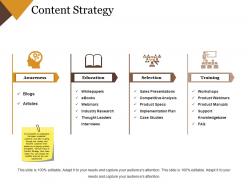
Do you want to develop a creative and professional way to showcase your business strategies? Here is our content strategy PowerPoint template. A four stages process has been used to develop this PPT diagram. This content strategy presentation slide show contains the concept of business analysis which can be used for business and management related presentations. Use this visual and build a professional presentation for your viewers. Strategic planning is about making choices, establishing priorities, allocating resources to strategic initiatives and coordinating to achieve desired results. Having a clear and focused strategy is critically important to the success of your business. Our content strategy PowerPoint design can prioritize the utilization of your resources. This way, the important things in your business are given priority over less important things. Just download this strategy PPT slide and see the impression which can be made on your audience. Elaborate on the huge benefits to be had with our Content Strategy Powerpoint Ideas. It helps inculcate good habits.
People who downloaded this PowerPoint presentation also viewed the following :
Content strategy powerpoint ideas with all 5 slides:
Create an enjoyable event with our Content Strategy Powerpoint Ideas. The entire exercise will be entertaining.
FAQs for Content
Honestly, start with figuring out your goals and who you're actually talking to - I've seen too many people skip this and wonder why nothing lands. Pick 3-4 main themes that make sense for your brand and what your audience cares about. Oh, and don't just focus on creating stuff - where you post it matters just as much. I'd probably audit what you've got first, then see what's missing. Distribution strategy is huge but everyone seems to forget about it until after they've made a bunch of content.
Honestly, just figure out what your business actually wants first - revenue targets, new customers, whatever. Then make content that directly helps with those things. If you're going after big clients, create stuff that educates decision-makers and builds trust. Don't just chase traffic because the numbers look nice (guilty of this myself). Before publishing anything, ask "does this help us hit our quarterly goals?" Can't answer? Then don't publish it. Really that simple. I know it sounds boring but connecting every piece of content to actual business outcomes is what separates companies that succeed from ones that just... make a lot of content.
Honestly, you can't skip audience research if you want your content to actually work. It's literally the difference between creating stuff people want vs. throwing spaghetti at the wall. Figure out what pisses them off, where they scroll endlessly (we all have our platforms), and how they like getting info. Surveys are clutch. Social listening too - though I always forget to check those analytics until it's too late lol. Even basic demographic stuff beats making assumptions about who's reading your content. Once you know your people, everything else falls into place way easier.
Focus on metrics that actually matter for your business, not just pretty numbers. Engagement rates and conversion rates tell you way more than traffic alone. I mean, who cares if 10,000 people visit if they all leave instantly, right? Track how long people stay on your pages, email signups, and whether your content pushes them toward buying. Social shares are good too - shows people actually like what you're putting out there. Set up some goals in Google Analytics and check monthly to see what's working, then do more of that stuff.
Honestly, educational stuff works best - tutorials, how-tos, that kind of thing. People eat up content that actually helps them solve problems. Interactive posts are gold too. Polls, Q&As, anything where your audience can jump in and participate. Everyone wants to feel like their opinion matters, you know? But honestly? Don't just follow what everyone else says works. Dig into your own analytics first. What's your crowd actually engaging with? Quick tip - look at your top 5 posts from last month and see what they have in common. That's your blueprint right there. Way more useful than generic advice online.
Honestly, I'd say every three months minimum - but don't be a slave to the schedule. If your metrics tank or your audience starts giving you weird feedback, pivot immediately. Those quarterly check-ins should cover the usual stuff: how you're performing, what people are actually saying, and whether you're still aligned with your bigger goals. Once a year though, do a proper deep dive - like really tear apart what's bombing versus what's crushing it. The whole point is being flexible between reviews anyway. Market shifts happen fast these days, so if something's obviously not working, why wait for your calendar reminder to fix it?
Honestly, start with Google Analytics and Search Console - they're free and show you what's actually working. I'm obsessed with Notion for content planning because it's way less overwhelming than those fancy tools everyone raves about. BuzzSumo's great for seeing what competitors are doing, and if you've got budget, Semrush or Ahrefs will blow your mind for keyword stuff. Hootsuite works for social listening too. Oh, and don't feel like you need everything at once - I made that mistake early on. Build up your toolkit as you figure out what you actually need.
Honestly, visuals are a game-changer for engagement. Your audience processes images like 60,000 times faster than text - which is wild when you think about it. Social posts with visuals get shared 40x more than plain text ones. I learned this the hard way after posting boring text-only content for months. The trick isn't just slapping any random photo on there though. Make sure it actually supports what you're saying, not just filler. Go through your old posts and see where you could swap out those chunky paragraphs for a simple infographic or photo. You'll be surprised how much better people respond.
Honestly, the worst mistake is jumping into content creation without figuring out who you're actually talking to first. You'll just end up with bland, generic stuff that nobody connects with. Pick like 2-3 platforms max - I see so many people burn out trying to be everywhere at once. Quality beats quantity every single time. Also, don't just post random stuff because you feel like you "should" be posting. Each piece needs a reason to exist. Oh, and here's something nobody talks about enough - you can create amazing content, but if you don't have a plan to actually get it seen, you're basically shouting into the void.
Honestly, just spy on where your people already spend their time. LinkedIn folks love those quick carousels - way more than long articles tbh. Check your analytics for what's actually working (not what you think should work). I'd start small with like 2-3 formats instead of trying everything at once. Sometimes I literally just ask in the comments what people want to see more of - works better than you'd think. The trick is matching your content to how they naturally consume stuff on each platform. Test it out first before going crazy with production.
Look, SEO is what gets people to actually see your content. Otherwise you're just shouting into the void - like making an amazing playlist nobody will ever hear. When someone searches for stuff you write about, you want to show up, right? Don't just stuff keywords everywhere though, that's so 2010. Figure out what your audience is googling first. Then build content around those searches. Honestly, it'll change how you plan everything - what topics to cover, how to structure posts, the whole deal. Your content calendar will actually make sense once you start thinking this way.
Honestly, you're probably sitting on a goldmine of content already. Grab that blog post you wrote and chop it up for Instagram stories, maybe turn it into an infographic. I remember this girl who took one whitepaper and somehow squeezed 15 different posts out of it - kinda genius actually. Old stuff works too if you just refresh it with new examples or data. The trick is knowing where your people actually spend time online. Go through your best-performing content first, then figure out 3-4 ways to repurpose each piece. Way easier than starting from scratch every time.
Honestly, storytelling is what makes content strategy actually work. Instead of just throwing product features at people, you're creating something they genuinely connect with. People remember stories way better than random stats - that's just how our brains work. Your brand needs a consistent voice, and stories help customers picture themselves using your stuff. I always tell people to figure out your core brand story first, then weave that same narrative through everything you create. It sounds obvious but most companies totally skip this step. Stories hit emotions in a way bullet points never will.
Honestly, people trust their friends way more than they trust brands - so lean into that. Get your customers sharing stuff that actually matches what you're trying to say. Don't just repost everything though, be picky about it. I'd create specific hashtags or little campaigns that nudge people toward making content that helps your goals. Use their posts as testimonials, for launches, whatever. The trick is being strategic about which ones you amplify across your channels. It's basically free social proof that does the selling for you.
Okay so content promotion - you've gotta hit multiple spots, not just post and pray. Your email list and socials are obvious starting points. Get your team sharing stuff too (seriously, employee posts perform way better than company accounts for some reason). One blog post can become like 5 different things - social clips, graphics, maybe a quick video. Cross-promotion with other brands helps if you can swing it. Oh and make yourself a checklist because I always forget half the channels when I'm rushing to get something out. SEO matters for the long game obviously.
-
Top Quality presentations that are easily editable.
-
Enough space for editing and adding your own content.