

Strategic Management Process Evaluation And Control




Try Before you Buy Download Free Sample Product
 Impress Your
 Audience
 100%
100% Editable
 Save Hours
 of Time


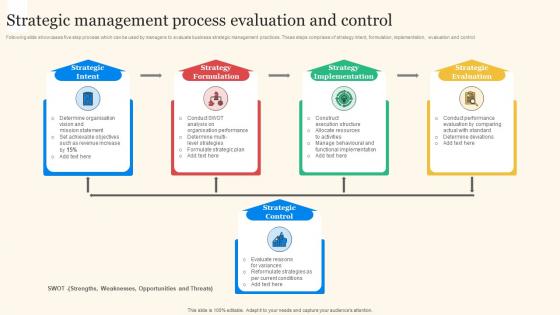
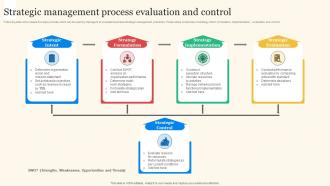
Following slide showcases five step process which can be used by managers to evaluate business strategic management practices. These steps comprises of strategy intent, formulation, implementation, evaluation and control.
People who downloaded this PowerPoint presentation also viewed the following :
Strategic Management Process Evaluation And Control with all 6 slides:
Use our Strategic Management Process Evaluation And Control to effectively help you save your valuable time. They are readymade to fit into any presentation structure.





FAQs for Strategic Management Process
Honestly, start with nailing down your vision first - everything else builds from there. You'll need mission statements, internal/external analysis, specific objectives, and timelines for implementation. But here's what most people mess up: they skip the metrics part and their plan just sits there doing nothing. Markets shift constantly so build in wiggle room for changes. Also, and this might sound obvious, but get your team involved in creating the plan instead of just dumping it on them later. I've watched so many businesses fail because leadership thought they could figure it all out in a boardroom. Work backwards from your vision and you'll be good.
First things first - your strategic objectives have to actually match what your vision and mission say, not what sounds good in your head. Break down that vision into stuff you can actually measure, then work backwards from there. Honestly, I've seen so many companies where their mission statement might as well be wallpaper because their strategy goes totally sideways. Get your team involved in mapping this out - like literally draw it so everyone can see how each objective connects. That way when something's off, people will actually speak up about it.
So environmental scanning is like your business radar - you're watching for threats and opportunities before they blindside you. Monitor competitor moves, regulations, tech changes, all that stuff. Way better than getting surprised by some industry shake-up (learned that one the hard way). Don't just randomly scroll news though. Create actual processes for it - maybe weekly scans or whatever works. Then actually use what you find in your planning meetings. I know it sounds boring but honestly, it's saved my butt more times than I can count.
Honestly, treat SWOT like your go-to framework, not some box you check once. Get your team to really dig into strengths and weaknesses - no sugarcoating the bad stuff. Then figure out what's happening in your market, threats and opportunities. Here's where most people mess up though - they just make lists and call it done. You've got to connect everything. Like, how do your strengths help you grab those opportunities? What weaknesses leave you exposed? Oh, and don't forget markets change constantly, so revisit this regularly. Most important part? Actually turn your findings into real actions you'll follow through on.
So basically, proactive means you're planning ahead and seeing stuff coming. Reactive is just scrambling when things hit you. Like Netflix saw streaming was the future and made the switch early - that's proactive. Most companies just wait until they're forced to change, which honestly sucks because you have way fewer options. You want to be constantly looking for what's next instead of always playing catch-up. Though real talk, even the best companies end up doing both. The trick is building enough forward-thinking into your process so you're not blindsided every time something shifts in your industry.
Look, governance is basically who gets to make the big calls and how decisions actually flow through your company. Board makeup, how execs get paid, risk frameworks - honestly sounds boring but it's huge for strategy. When governance is solid, you get clear processes and everyone knows their role. Mess it up? Your strategies will fall apart during execution every time. I've seen companies with brilliant plans that couldn't execute because their decision-making structure was a total disaster. If your strategy keeps failing, don't blame the strategy first - check if your governance is the real problem blocking everything.
Honestly, those old-school 5-year plans are pretty much dead now. New competitors just pop up overnight with some app that changes everything. I've watched companies waste months on those SWOT analysis things, only to have them become totally useless before they even started using them. Customer habits shift so fast these days - it's wild how quickly things change. Porter's Five Forces doesn't really work anymore either when you're dealing with all these platform businesses. You're better off staying flexible and updating your strategy constantly. Build capabilities that can adapt instead of getting locked into rigid plans. Way more realistic approach.
Dude, you can't just slap the same strategy everywhere and call it a day. What kills it in Germany? Probably bombs in Thailand - totally different ways of communicating and doing business. Meeting styles alone will mess you up if you're not careful. Map out the big cultural differences first, then build wiggle room into your plans. Local consumer habits, regulations, how teams actually work together - it all varies like crazy. I learned this the hard way when our "foolproof" approach face-planted in two markets last year. Bottom line: flexibility beats rigid planning every time when you're dealing with multiple countries.
Ok so honestly, start with the basics - revenue growth, profit margins, ROI. But that's just half the picture. You need operational stuff too like market share, customer acquisition costs, employee engagement scores. Oh and pipeline strength or brand awareness - those predict what's coming next which is super helpful. Here's the thing though - don't go crazy with like 20 different metrics. Pick maybe 5-7 that actually connect to what you're trying to achieve. Figure out what success looks like first, then find ways to measure it. Makes way more sense that way.
So scenario planning is basically thinking through different "what if" situations ahead of time. You map out a few plausible futures - best case, worst case, maybe some curveball scenario. Then figure out how you'd handle each one. Honestly, it's like rehearsing for stuff that hasn't happened yet. When crazy things do hit (which they will), you're not starting from zero because you've already thought through similar situations. My old boss was obsessed with this approach and it actually worked. Start with three scenarios around your biggest challenge and see what comes up.
Honestly, the biggest mess-ups happen when you don't get your team actually excited about the plan first. People will just fake it if they're not genuinely bought in. Have those "why are we doing this" conversations - don't assume everyone gets the vision like you do. Oh, and try not to panic and switch directions every few months when results aren't immediate (guilty of this myself). Real strategy needs time to work. You've gotta track actual numbers though, not just cross your fingers and hope. Set some milestone check-ins so you know if you're moving forward or just spinning wheels.
Don't treat innovation like some side project - weave it right into your main strategy. Set aside maybe 10-15% of your budget for crazy experiments that'll probably fail (and that's totally fine). People need to feel safe pitching weird ideas without tanking their careers, you know? Track innovation stuff alongside your regular metrics. Oh, and your leadership team actually needs to show up to brainstorming sessions instead of just telling everyone else to "be more innovative." That never works. Start small next quarter - grab people from different departments and run one pilot project. See what breaks.
Figure out who actually matters first - employees, customers, investors, community folks. Don't just do one big presentation at the end, that's awful. Mix it up with surveys, focus groups, maybe grab coffee with people. Skip the corporate speak too, nobody wants that. I've gotten way better feedback from random conversations than formal meetings, honestly. The key thing? Actually show people how you used their ideas in the final strategy. Otherwise they'll just tune out next time. Oh, and keep checking in regularly so it doesn't just die off.
Honestly, competitive analysis is just stalking your competitors in a business-appropriate way. Pick 3-5 companies in your space and see what they're doing right (or totally bombing at). You'll spot gaps they're missing and figure out what customers actually care about. Plus you get to avoid their mistakes - always a win. I usually check in on them quarterly because things change fast. The whole point is positioning yourself differently, whether you're going head-to-head or finding some weird niche they ignored. Once you start tracking patterns, it's like having cheat codes for your strategy.
Look, strategic alignment is what stops your company from being a total mess. You want your corporate strategy, business goals, and team objectives all moving the same way. Otherwise departments just fight each other or waste time doing the same stuff twice - I've watched that trainwreck happen. Better alignment means smarter resource use and things actually get done faster. The trick is helping everyone see how their day-to-day work connects to the big company goals. Honestly, most people don't even know why their job matters to the bigger picture. Start by mapping out how your team's current projects tie back to what leadership actually cares about.
-
SlideTeam just saved my project! Thank you so much. The variety of templates helped me showcase multiple perspectives easily.
-
Great quality slides in rapid time.