

Annual Operating Strategic Planning Process




Try Before you Buy Download Free Sample Product
 Impress Your
 Audience
 100%
100% Editable
 Save Hours
 of Time


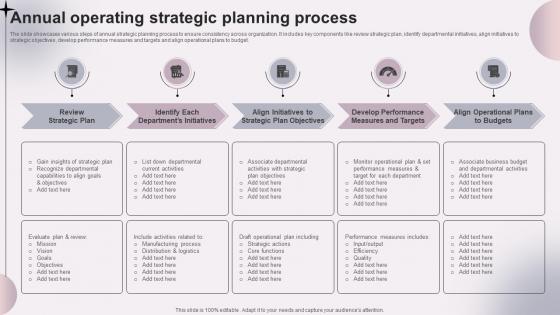
The slide showcases various steps of annual strategic planning process to ensure consistency across organization. It includes key components like review strategic plan, identify departmental initiatives, align initiatives to strategic objectives, develop performance measures and targets and align operational plans to budget.
People who downloaded this PowerPoint presentation also viewed the following :
Annual Operating Strategic Planning Process with all 6 slides:
Use our Annual Operating Strategic Planning Process to effectively help you save your valuable time. They are readymade to fit into any presentation structure.





FAQs for Annual Operating
Honestly, you'll want to start with environmental scanning - check your internal strengths and weaknesses plus what's happening externally. I can't tell you how many people skip this and wonder why things fall apart later. Next, nail down your vision and mission, then break those into actual measurable goals. Strategy comes after (not before) - make sure it connects to those goals with clear action plans and someone owning each piece. Oh, and build in review cycles because you'll need to pivot. The biggest thing though? Get your team involved from day one. Strategic plans that happen in isolation are basically expensive paperwork.
Honestly, break those big goals into smaller chunks that each team can actually work with. Map it down from department level to individual tasks - like, someone should be able to see how their Tuesday morning work ties back to your 3-year plan. That's the magic connection right there. Check in way more often than you think - weekly or every other week beats those useless annual reviews. Also make sure you're measuring stuff that actually matters, not just random busy work. Pick one strategic goal this week and trace it all the way down to daily activities. You'll probably be surprised how disconnected things are at first.
Dude, you absolutely need to get stakeholders involved from the start. I've watched so many good strategies completely bomb because people felt shut out of the planning. When stakeholders help build the plan, they become your biggest supporters instead of fighting you later. Plus you'll catch problems early that you'd never see on your own. Map out who actually has influence over your success - not just the obvious people, but the ones who can quietly kill your project too. Then give them real chances to contribute throughout the whole process. Trust me, it's the difference between plans that work and expensive paperweights.
Honestly, you can't just wing this part - start measuring from day one, not months later. Pick 3-5 metrics that actually matter and track them monthly. Revenue, market share, customer satisfaction, whatever ties back to your real goals. Do quarterly deep dives to see if you're hitting your original KPIs. Here's the thing though - some strategic stuff takes forever to show results, so don't freak out if things look flat initially. I'd probably set up a simple dashboard so you're not scrambling for data every time. The whole point is seeing whether you're actually moving the needle on outcomes that matter, not just busy work metrics.
Oh man, biggest mistakes? Don't make it super vague - I learned that one the hard way. Also realistic timelines are key, and get the right people involved early or you'll regret it later. The worst thing though is when companies create this gorgeous plan then never look at it again. Like, what's the point? Track your progress and actually adjust stuff. Skip trying to map out five years in crazy detail too. Get your next year or two really clear instead. Oh and set up regular check-ins so you can pivot when things inevitably go sideways.
Honestly, SWOT analysis is like a reality check for your business plans. You map out strengths, weaknesses, opportunities, and threats all in one spot. Super helpful for seeing the big picture instead of just hoping things work out. The magic happens when you connect everything - like using what you're good at to grab new opportunities, or fixing weak spots before they bite you. I'd probably run one every few months to stay on track. It's basically your strategy GPS so you actually know where you're starting from before picking a destination.
Honestly, tech is a game-changer for strategic planning. Real-time data analytics show you actual patterns instead of making you guess what's happening. Tools like Tableau make spotting trends so much easier than digging through endless spreadsheets (which is mind-numbing). Cloud platforms are clutch because your whole team can work together without those annoying email chains where nobody knows which version is current. AI forecasting helps you model different scenarios too. My advice? Pick one solid dashboard tool first. Don't go crazy trying to digitize everything at once - that's how projects die.
Honestly, your company culture is like this invisible force that can make or break any strategic plan. People will only get behind strategies that feel right to them - doesn't matter how smart the plan looks on paper. If it goes against how your team actually thinks and works, you're screwed. Culture decides everything from whether people take risks to how they communicate. My advice? Take a hard look at your current culture first, then either build your strategy around it or be ready to change the culture itself. That second option is way harder than most people think, btw.
Build in wiggle room from day one - don't box yourself into one path. I'd suggest checking in quarterly instead of waiting a whole year to see if things are working. Set up clear warning signs that tell you when to change direction. Honestly, I've watched teams crash and burn because they refused to admit their original plan wasn't cutting it anymore. Get your people comfortable speaking up when they spot problems, not just during scheduled reviews. Keep your ear to the ground with customers and competitors too.
Look, you absolutely need market research before making any big strategic moves. Can't stress this enough - I've watched so many companies crash because they just winged it based on hunches. Figure out what your customers actually want, what competitors are doing, where the industry's headed. That stuff should be driving every decision you make. Otherwise you're just throwing money at problems that might not even exist. Honestly? Start by listing what you don't know but really need to. Then go get those answers first before you do anything else.
Honestly, cross-functional teams are a game changer for strategic planning. You get all these different viewpoints that'll challenge what your core team thinks they know. Sales sees customer pain points leadership never hears about. Operations knows what's actually realistic vs. pipe dreams. When people help build the strategy instead of just getting it dumped on them, they actually care about making it work - which seems obvious but so many companies mess this up. You'll also spot implementation issues upfront rather than six months later when it's too late. My advice? Get at least one person from each department in your next planning session.
Basically you sketch out a few different futures - best case, worst case, the boring realistic one. Then figure out what you'd do in each situation. I know it sounds like overkill, but trust me on this one. Pick your 3-4 biggest uncertainties first, then build scenarios around those. Map out how you'd pivot your strategy for each one. The trick is developing skills and resources that'll help you no matter what actually happens. Oh, and definitely test your current plan against all the scenarios - you'll probably find some gaps you hadn't thought about.
Start with a strategy map - shows how everything connects from financial goals down to day-to-day processes. Gantt charts are solid for timelines. SWOT matrices? Super quick way to show where you stand competitively. Honestly, I've watched teams go overboard with fancy visualizations when a basic roadmap gets the job done. Balanced scorecards work if you're tracking tons of KPIs simultaneously. Here's what I'd do: pick one main framework your audience actually understands, then maybe add one more if needed. Don't bombard them with like eight different chart types - that's just cruel.
Honestly, most resistance comes down to fear - people think they'll lose their jobs or just don't get why you're changing things. Talk to them openly about what's happening and actually include them in planning stuff. I've watched so many good plans crash because leadership just bulldozed through without getting anyone on board first. Quick wins are huge for building momentum. Find the people who influence others (sometimes it's not who you'd expect) and get them excited about it. The funny thing is, your best champions often start out as the biggest skeptics.
You know how GPS keeps you from getting totally lost? That's what continuous feedback does for your strategic plan. Regular check-ins with your team and stakeholders help you spot problems before they spiral. I'd say monthly team meetings and quarterly leadership reviews work best - though honestly, some weeks you'll probably need more touchpoints than others. Performance metrics and market data show you what's actually working versus what you hoped would work. When things go sideways, you can tweak timelines or shift resources around without scrapping your whole strategy. Way better than the "set it and forget it" approach that usually ends badly.
-
SlideTeam was so customer-centric and quick service-provider that I doubted the amount I was paying and literally re-checked the transaction.
-
They had the topic I was looking for in a readymade presentation…helped me meet my deadline.