


Seven Stages Of Strategic Planning Process





Try Before you Buy Download Free Sample Product
 Impress Your
 Audience
 100%
100% Editable
 Save Hours
 of Time


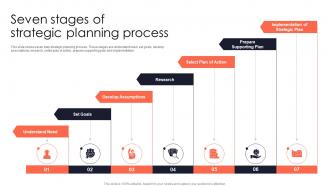
This slide shows seven step strategic planning process . These stages are understand need, set goals, develop assumptions, research, select plan of action, prepare supporting plan and implementation.
People who downloaded this PowerPoint presentation also viewed the following :
Seven Stages Of Strategic Planning Process with all 6 slides:
Use our Seven Stages Of Strategic Planning Process to effectively help you save your valuable time. They are readymade to fit into any presentation structure.





FAQs for Seven Stages Of
For your strategic planning template, start with vision/mission statements and a solid SWOT analysis. Add clear objectives with measurable goals - this part's crucial. You'll want action steps with realistic timelines too. Budget and resource allocation obviously matter. Oh, and include KPIs plus regular review dates because honestly, most plans just die a slow death in someone's Google Drive. Short sentences work better than long ones here. Make sure someone owns each initiative or nothing gets done. The whole thing should be simple enough that people actually use it instead of pretending it doesn't exist.
Start by breaking those big company goals into specific targets each department can actually work with. Most places completely blow this part - they just assume people will figure out how their daily tasks connect to the bigger strategy. Weekly meetings are your friend here. Use them to constantly link what teams are doing right now back to those main priorities. Yeah, it feels repetitive at first, but you've got to make those connections super obvious and keep hammering them home. Eventually it'll click for everyone and become automatic.
Think of environmental scanning as your company's radar system - you're constantly watching for changes in your industry, competitor moves, new regulations, tech trends, economic stuff. It's way better than getting blindsided by something you should've seen coming. The trick is making it systematic instead of just randomly scrolling through news articles (guilty of that myself). Set up regular processes to actually gather and analyze what's happening outside your bubble. Without this kind of intel feeding into your planning, you're basically making strategy decisions in the dark, which honestly never ends well.
Don't just dump your SWOT analysis on them and call it a day. Connect each part directly to what you're actually planning to do - show how your strengths help you grab those opportunities, or how you're fixing weaknesses before they become bigger problems. Real examples work way better than vague bullet points, trust me on this. Make it flow naturally into your main strategic goals. The whole point is proving your strategy isn't just random ideas you threw together - it's based on what the analysis actually told you about your situation.
Honestly, the biggest mistake is being way too vague with your plan. Don't just say "increase sales" - put actual numbers on it. Also, you've gotta get the right people involved from day one, not just leadership sitting in a room somewhere. I've watched teams get totally stuck analyzing everything to death while real opportunities slip by. Kinda painful to see, tbh. Skip copying what worked for another company - your situation's different. Set realistic timelines and budgets or you're screwed. Build in monthly check-ins because things will change. Trust me on that one.
Look, you've gotta measure both the early signals (employee engagement, customer acquisition) and the end results (revenue, market share). Pick 3-5 metrics that actually connect to your goals and check them monthly. Quarterly reviews are clutch for bigger picture stuff - honestly, every plan I've seen needs adjustments anyway, so don't stress about perfection. Numbers only tell part of the story though. Talk to people who are doing the actual work to see what's really happening. The key is staying consistent with tracking so you'll catch problems before they blow up. Most companies overthink this part.
First figure out who actually matters and what keeps them up at night. Run some workshops where people can brainstorm instead of just sitting through another PowerPoint. Honestly, the real gold comes from grabbing coffee with folks one-on-one - takes forever but worth it. Quick surveys help too, just don't make them a nightmare to fill out. Here's the thing though: you have to show people their ideas actually made it into the final plan. Otherwise they'll think you're just going through the motions. Oh, and always circle back with updates!
Dude, tech can totally save your butt with strategic planning. Start with data visualization - Tableau or Power BI make trends way easier to spot than staring at spreadsheets all day. Project management tools keep your initiatives from falling through the cracks (learned that one the hard way). You'll cut hours of manual analysis, which honestly feels amazing. AI scenario modeling is pretty solid too for testing different approaches. Cloud tools help your team actually collaborate instead of working in silos. Pick whatever fixes your biggest headache first - usually data viz or project tracking.
Build flexibility right into your planning process - don't wait until later. Map out 3-4 different scenarios so you're prepared when things go sideways. Quarterly check-ins beat annual reviews hands down. Nobody can predict a full year anymore, honestly. Rolling forecasts work way better than those rigid long-term projections everyone used to love. Set specific trigger points that tell you when it's pivot time. Oh, and this is crucial - make sure your team sees plan changes as smart moves, not failures. That mindset shift alone will save you so much headache down the road.
Ugh, competing priorities will absolutely wreck your strategic planning if you don't tackle them head-on. Here's what happens - you end up with some frankenstein plan that tries to please everyone and gets nowhere. Been there, seen that disaster unfold too many times. Get your leadership in a room early and force the hard conversations about what actually matters RIGHT NOW. Like, pick your top 3-5 things and stick to them before you even think about writing goals. Otherwise you're just spinning your wheels for months - trust me on this one. Build a priority matrix and make people choose what they'll give up to get their "must-haves." Sounds harsh but it works.
Honestly, measurable objectives are like your GPS for strategy - without them you're just driving around hoping you'll magically arrive somewhere good. Vague goals sound nice but they're useless when you need to actually get stuff done. Numbers and deadlines force you to be real about what's possible. Your team stops second-guessing what "success" means, and you can catch problems before they blow up. I've seen too many strategic plans that were basically expensive paperweights because nobody could tell if they were winning or losing. Just slap some percentages, dates, or targets onto whatever feels too wishy-washy right now.
Think of it like a budget - split your time between both instead of picking sides. I usually go 70% immediate stuff, 30% future planning, but honestly whatever feels right for you. Quarterly check-ins help me stay on track since short-term chaos will totally take over if you let it. The sweet spot? Finding ways your daily work actually builds toward bigger goals. That's where things get interesting. Don't overthink the exact percentages though - just be deliberate about protecting some time for the long game.
McKinsey's situation-complication-resolution is solid gold for exec presentations. Balanced scorecard works great when you need to tie strategy to actual numbers. Oh, and strategy canvas is perfect for competitive stuff - shows positioning super clearly. Business Model Canvas is clutch for transformation projects too (learned that the hard way on my last deck). Here's the thing though - don't mix frameworks. Pick one and run with it the whole way through. Your audience won't get confused, and honestly? You'll look way more put-together. Trust me on this one.
Honestly? Culture runs the whole show when it comes to what strategies actually work. Like, if everyone's super risk-averse, you're gonna get these boring, safe plans that don't move the needle much. Collaborative cultures naturally go for strategies needing teamwork across departments. But here's what really matters - even the smartest strategy falls flat if it goes against how people actually think and work. I've seen this happen so many times! Before jumping into planning mode, figure out what behaviors your company actually rewards versus what it says it values. That gap will tell you everything.
Look, risk management is just asking "what could screw this up?" before you commit. Honestly, I've watched so many good plans fall apart because people got excited and forgot to think through the downsides. You want to spot potential problems early - market changes, competitors doing something unexpected, or realizing your team can't actually pull it off. Build some backup plans while you're still thinking clearly. Test your assumptions against realistic scenarios, not best-case fairy tales. Make it part of how you think through decisions, not something you remember when everything's already going wrong.
-
Definitely recommend SlideTeam to all who need help with PowerPoint presentations. Their design team can create anything you need.
-
You guys are life-saver when it comes to presentations. Honestly I cannot do much without your services. Thank you!!!