7 step process for strategic procurement

7 step process for strategic procurement
Slide 1 of 5
Favourites Favourites

Try Before you Buy Download Free Sample Product

Audience Impress Your
Audience
Editable 100%
Editable
Time Save Hours
of Time
The Biggest Sale is ending soon in
0
0
:
0
0
:
0
0
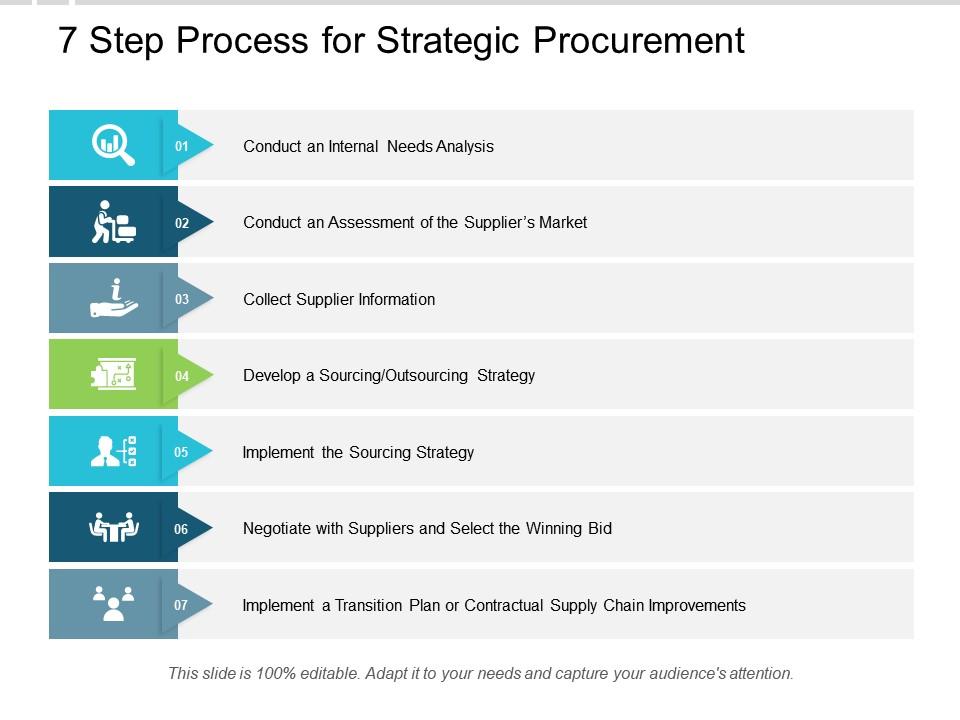
Presenting this set of slides with name 7 Step Process For Strategic Procurement. This is a seven stage process. The stages in this process are Sales Process, Content Marketing, Flowchart. This is a completely editable PowerPoint presentation and is available for immediate download. Download now and impress your audience.

People who downloaded this PowerPoint presentation also viewed the following :

FAQs for 7 step process

So honestly, don't just chase the cheapest option - I know it's tempting but you'll regret it. Focus on building real partnerships with suppliers who actually get your business goals. Total cost matters way more than sticker price when you factor in quality and reliability. Use your data to make smart calls, not gut feelings. Oh, and definitely spread your risk around - having backup suppliers saved my ass during COVID disruptions. Start by figuring out where you're spending the most money right now. That's where you can make the biggest strategic moves first.

Real-time data is a game changer - you'll catch cost savings and supplier issues way earlier. AI handles the boring stuff like predicting demand and automating routine decisions. Those e-procurement platforms make everything smoother too, from ordering to paying vendors. Cloud tools are great for working with suppliers anywhere and tracking what actually moves the needle. I probably save like 4-5 hours a week just from automation alone, which is honestly huge. Just don't go crazy with new tech - pick stuff that plays nice with what you already have and solves real problems, not flashy features you won't use.

Look, supplier relationship management is where procurement gets actually interesting. Instead of just buying stuff and calling it done, you're building real partnerships. Your best suppliers become like part of your team - they'll share market intel, help you innovate, spot problems before they hit. It's way more than just price negotiations (though obviously that matters too). The trick is figuring out which suppliers deserve that partnership treatment versus the ones you keep at arm's length. When you nail it, they're basically working for your success instead of just fulfilling orders.

Honestly, once you start digging into your procurement data, you'll be shocked at what you find. Pull everything into a basic dashboard first - I'm talking spend patterns, supplier performance, market trends. Way better than staring at individual purchase orders all day. You can actually spot where you're bleeding money or which vendors are always late with deliveries. Plus it helps you benchmark contracts against what everyone else is paying. The whole point is turning that mess of data into something useful so you can consolidate suppliers or push back on your biggest contracts. Even simple analysis shows quick wins.

Honestly, the trickiest parts are usually managing supplier relationships and keeping costs under control. Getting everyone internally to agree on what they actually need? That's a whole other headache. Supply chain disruptions will absolutely wreck your plans if you're not careful. I'd start by mapping out your current suppliers and figuring out where your biggest risks are. Build real partnerships with key vendors instead of just treating them like order-takers. Good data analytics help tons for tracking spending and performance. Oh, and those cross-functional meetings everyone hates? They're actually worth it for keeping priorities straight.

Honestly, when procurement actually matches what the business is trying to do, you're turning buying stuff into a real advantage instead of just another expense. Your company wants faster innovation? Better quality? Cost cuts? Procurement can directly support that instead of working in some silo. It's way better than having departments pull in different directions - been there, seen that mess. Smart vendor picks, contracts that actually matter to leadership, results people can measure. Start simple though: just ask your business folks what their top 3 priorities are this year.

So basically, bake your ESG stuff right into how you pick vendors. Put sustainability requirements in your RFPs - carbon targets, fair labor, circular economy things. Suppliers are actually getting decent at this now, so push them harder. Weight environmental and social metrics alongside cost and quality when scoring bids. Oh, and stop just going for cheapest option every time. Find suppliers who actually care about the same green goals you do and stick with them. Track your sustainability KPIs too - otherwise you're flying blind on whether any of this is working.

Cost savings is the obvious one, but honestly cycle time reduction hits different - procurement moves like molasses most of the time. Track supplier performance too: delivery times, quality scores, contract compliance. Risk stuff matters more than you'd think - how spread out are your suppliers? Single points of failure will bite you later. Stakeholder satisfaction scores are surprisingly important. Keep your dashboard simple though, maybe 5-7 metrics tops. Monthly reviews work best, and definitely tie everything back to business goals or leadership won't care about the data.

Build compliance checks right into your procurement from the start - seriously, don't skip this step. I got burned once by a vendor who seemed amazing until they weren't. Do financial health checks and look at their compliance history before signing anything. Your contracts should have audit requirements and compliance clauses baked in. Set up monitoring so you catch problems early instead of scrambling later. Templates and checklists are your friend here - they make the boring compliance stuff automatic. Oh, and automated approval workflows will save you so much headache down the road.

Honestly, three massive things are reshaping everything right now. AI analytics and predictive tools are catching problems way before they tank your projects. Sustainability isn't optional anymore - ESG requirements will literally kill deals if you don't have them covered. Then there's the whole geopolitical mess forcing companies to spread suppliers around instead of putting all eggs in one basket. Digital platforms are pretty much eating up all the manual work too. Supply chain resilience went from "nice idea" to absolutely critical after everything that's happened. I'd take a hard look at your tech setup first, then map out where your suppliers actually are geographically.

Look, pooling resources with other departments or organizations is a game-changer for buying power. Better pricing, shared risk, access to suppliers you'd never reach solo. Way less stressful too - nobody wants to handle massive contracts alone, trust me. The best part? You free up budget and resources for actual business priorities instead of procurement drama. My advice is start small though. Pick one department, run a pilot project first. Build some internal support before going bigger. It's honestly one of those things that sounds complicated but works pretty well once you get rolling.

So globalization totally opens up your supplier options - you can source from anywhere now, which is awesome for costs and finding specialized stuff you can't get locally. But man, it gets complicated fast. Currency swings, different regulations, way longer supply chains. Plus geopolitical drama can screw everything up overnight (remember the whole Suez Canal thing?). I'd say start by looking at where all your suppliers are clustered right now. You don't want to be too dependent on one region. Building relationships across multiple areas is clutch - gives you backup options when things go sideways.

Look, don't wait until later to think about supplier diversity - build it in right from the start. Set some actual targets and go hunt for minority, women, and veteran-owned businesses when you're doing RFPs. Once you find the right databases it's honestly not that hard. Here's the thing though - you gotta mentor these suppliers so they can actually scale up and handle your needs. Otherwise you're just doing performative BS. Track everything obsessively and report on it monthly. Oh, and add diversity metrics to your vendor scorecards next to cost and quality stuff.

Honestly, preparation is everything here. Look up what others are paying and figure out your backup options first - that's your real power in these talks. Don't just focus on price either; think about the whole package (delivery, quality standards, payment terms). I'd bundle your needs together for better volume too. One thing I learned the hard way - negotiate everything at once instead of piecemeal. Makes a huge difference. Go in thinking partnership, not war, but be ready to bail if they're being unreasonable. Oh, and bring actual data to back up your asks!

Honestly, just start tracking everything and actually use that data. Set up regular check-ins with your suppliers and listen when people complain - they usually know what's broken before you do. Get different teams together to brainstorm fixes, and test new ideas on smaller stuff first (way less risky). I swear, half the problem is teams just doing things the same way forever. Do quarterly reviews where you literally ask "what was terrible this time?" Then - and this is crucial - actually fix those things instead of just nodding and moving on. It's pretty simple but most people skip the follow-through part.

Ratings and Reviews

0% of 100
Write a review
Most Relevant Reviews

No Reviews