


Annual Human Resources Operational Plan




Try Before you Buy Download Free Sample Product
 Impress Your
 Audience
 100%
100% Editable
 Save Hours
 of Time


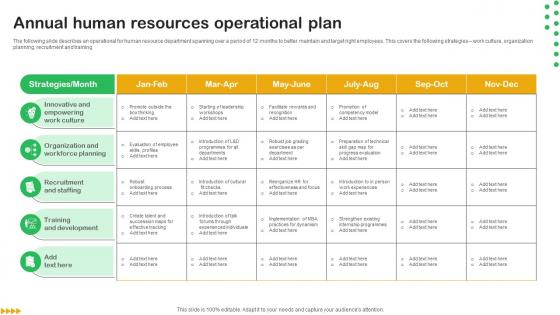
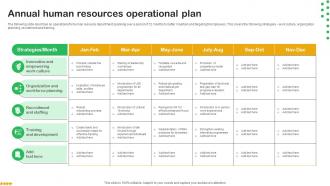
The following slide describes an operational for human resource department spanning over a period of 12 months to better maintain and target right employees. This covers the following strategies work culture, organization planning, recruitment and training.
People who downloaded this PowerPoint presentation also viewed the following :
Annual Human Resources Operational Plan with all 6 slides:
Use our Annual Human Resources Operational Plan to effectively help you save your valuable time. They are readymade to fit into any presentation structure.





FAQs for Annual Human
So you'll need workforce planning, talent acquisition, performance management, and employee development programs. Compensation structures and compliance stuff too. Succession planning is huge but honestly most companies totally bomb this part - nobody wants to plan for people leaving lol. Track everything with metrics, and build in change management processes because things always shift. Oh, and make it flexible but still structured enough so your team isn't confused about goals. I'd start by looking at what you have now, then tackle the biggest gaps first. That's usually the fastest way to see results.
Start with what your company actually wants to achieve - growth, cost cuts, new markets, whatever. Then build your HR stuff around that. Expanding somewhere new? Focus on hiring and getting people integrated. Need efficiency? Time for performance reviews and maybe some awkward workforce decisions (ugh). I swear half the HR teams I know just do their own thing without checking what the business actually needs. You've gotta track the same numbers leadership obsesses over. Convert those business metrics into people metrics, then design everything else from there. Makes way more sense.
Track turnover rates and employee satisfaction scores first - those are your big indicators. Time-to-hire and training completion rates matter too. Honestly, I'd skip the fancy stuff at first and focus on absenteeism, internal promotions, and diversity numbers. Cost-per-hire is useful but don't get obsessed with it. Pick maybe 5-6 metrics that actually connect to what your company cares about. Otherwise you'll drown in data that doesn't mean anything. Set up something simple to check monthly - doesn't have to be perfect. That way you can adjust quickly if things aren't working.
Start with where you are now vs where you'll be in 12-18 months. Growth plans, new projects, who's retiring, normal turnover - all that stuff. I just throw it in a basic spreadsheet honestly, nothing complicated. Map out current headcount against what you'll actually need and when. Budget reality check comes next, plus how long different roles take to fill (some are brutal, you know how it is). The trick is being honest about what's doable instead of building some fantasy hiring plan that'll never happen.
Dude, HRIS systems are total game-changers for tracking headcount and budgets. AI tools actually predict when people will quit before it happens - kinda creepy but super helpful. Spreadsheets for workforce planning? Hard pass, that's like medieval torture. Analytics help you nail down hiring timelines and training needs instead of just winging it. Oh, and make sure your tools talk to each other - nothing worse than managing a dozen random platforms. Start with automating whatever eats up most of your time first. Trust me, you'll wonder how you survived without it.
Look, you can't just slap D&I onto your HR plan like an afterthought - it needs to be baked into everything. Set actual targets for diverse recruiting and track promotion rates by demographics. Survey people regularly about whether they actually feel included (not just if they show up). Honestly, most companies mess this up by not assigning real budget or ownership. Create mentorship programs, update hiring to reduce bias, maybe start some employee resource groups. The measurement part is huge though. Without concrete goals and someone accountable, it'll just gather dust while everyone pats themselves on the back for "trying."
Honestly, the worst mistake is being way too vague - like having zero actual deadlines or ways to measure success. Also don't create this thing by yourself! I can't tell you how many times I've watched plans crash because nobody bothered talking to department heads first. Oh, and resist the urge to tackle everything at once. You'll just burn out your team and half-ass a bunch of stuff. Focus on what actually moves the needle for your business, not whatever trendy HR thing sounds cool. Pick maybe 3 solid priorities and map out real steps for those.
Honestly, just build feedback collection right into your planning timeline - pulse surveys, exit interviews, focus groups. Don't wait for annual reviews. Timing matters here because you need that data *before* you lock in budgets and strategies. I've watched so many HR teams mess this up by collecting feedback too late. Once employees tell you about their pain points and what training they actually want, use that stuff to guide your hiring priorities and policy changes. Oh, and make it a regular agenda item or you'll totally forget. Trust me on that one.
Dude, compliance stuff will save your ass from major legal headaches and crazy expensive fines. Build labor laws, EEOC requirements, and safety regs into your plan right from the start - trust me on this one. Trying to fix compliance issues later is such a nightmare compared to just doing it right initially. It affects everything too: how you hire people, manage performance, write policies. I've seen companies get absolutely wrecked because they ignored this stuff. Start by checking what you're doing now against the actual regulations and fix whatever's broken immediately.
Honestly, you've got to flip everything to focus on outcomes instead of watching people sit at desks. Communication becomes huge - set up regular check-ins and be super clear about response times. Virtual onboarding is a must, plus you'll want to cover home office stipends and tech setup. Performance reviews should track what people actually accomplish, not hours logged (way better system anyway). Mental health support matters more than you'd think in remote work. Oh, and do those pulse surveys to see what's really working versus what sounds nice in theory.
Compensation and benefits will eat up most of your budget - like 70-80% usually. Recruitment stuff adds up quick too: job boards, background checks, headhunter fees if you go that route. Training costs, HR software, compliance audits - all that boring but necessary stuff needs money set aside. Honestly, I'd look at what you actually spent last year versus what you budgeted. Most people lowball it. Add maybe 10% on top for inflation and unexpected hires because there's always something that comes up mid-year. Oh, and don't forget salary bumps - those catch people off guard.
Honestly, start tracking metrics before you even launch the training - that's where most people mess up. Pre and post assessments are your best friend here. Sure, completion rates and test scores matter, but the real gold is seeing if people actually change how they work afterward. I'd get managers involved to tell you what they're observing on the job. Oh, and don't just measure right after training ends - check back in a few months. Employee retention might surprise you as a useful metric too. The whole point is connecting it back to what the business actually cares about.
Honestly, start with monthly check-ins instead of those useless annual reviews. Clear career paths help tons - people need to see where they're going. Oh, and recognition goes way further than you'd think, even just peer shoutouts work. Flexible work stuff is basically expected now. Getting employees involved in decisions makes them feel valued too. I'd survey your team first though - see what they actually want instead of guessing. Then just tackle whatever they care about most. Skill-building programs are solid but don't go overboard right away.
Quarterly reviews are the bare minimum, but monthly check-ins work way better if you have the bandwidth. HR moves crazy fast - regulations shift, priorities change overnight, hiring gets frozen or suddenly explodes. I've watched teams cling to their January plans in like September, which is just painful to see. Monthly reviews keep your plan actually useful instead of some dusty document nobody follows. Set those calendar reminders now or you'll forget. Don't stress about tweaking things mid-quarter either. Flexible beats perfect every single time.
Honestly, your leaders will make or break this thing. Get them involved from day one - not just signing off on stuff, but actually understanding what they need to do. Strong leadership champions the plan and gets you the resources you need. Managers handle the daily grind of keeping teams on track and hitting deadlines. Here's the thing though - if they don't buy in, your plan just sits there doing nothing. They've got to model the changes too. I've seen too many good plans fail because leadership treated it like just another paperwork exercise. Make sure they're actually invested, not just going through the motions.
-
Perfect template with attractive color combination.
-
Unique and attractive product design.