


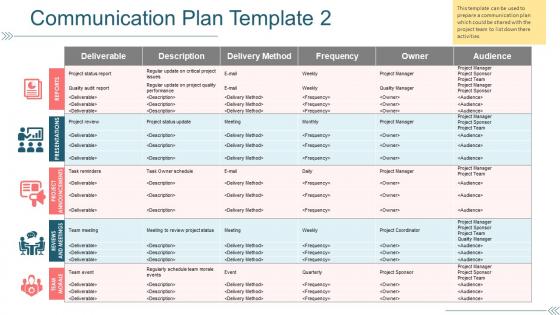
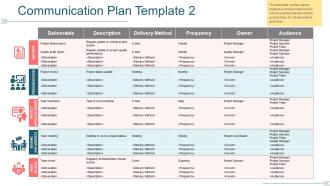
Communication plan template 2 ppt background





Try Before you Buy Download Free Sample Product
 Impress Your
 Audience
 100%
100% Editable
 Save Hours
 of Time


Cut across boundaries with our Communication Plan Template 2 Ppt Background. For them geography is no barrier.
People who downloaded this PowerPoint presentation also viewed the following :
Communication plan template 2 ppt background with all 5 slides:
Avoid insignificant debates with our Communication Plan Template 2 Ppt Background. Identify any baseless arguments.

FAQs for Communication plan template
So for your comm plan template, you'll want these key things: figure out your audience first, nail down your main messages, pick your channels (email, Slack, whatever), and map out timing. Oh and don't skip the success metrics part - sounds boring but you'll actually want to know if this thing worked. Stakeholder roles are huge too because someone always gets left out and then complains later. Honestly, the timeline piece saves your butt more than anything since it stops that crazy last-minute rush. Maybe throw in a feedback section so you can tweak things as you go?
Communication plan templates are total lifesavers - they make you think through who needs to know what and when. Map out all your key people first and figure out how they like to be contacted. Trust me, I've watched projects completely blow up because someone important got left out. Oh and definitely set expectations about how often you'll update everyone. The template helps you see if people are actually paying attention too, so you can switch things up if needed. Start with a basic contact list of stakeholders - that one step will save you so much drama down the road.
Start by figuring out who you're actually talking to - different groups need totally different approaches. Some people live in their email, others never check it (I'm definitely guilty of this). Timing's huge too since everyone's in different time zones. Honestly, visuals like infographics work way better than walls of text for most people. If language might be a barrier, keep things simple or get translations. The whole trick is making these audience profiles first, then you can customize everything instead of just blasting the same message everywhere and hoping it sticks.
Honestly, picking the right channel is huge for getting your message across. Like, if you're emailing busy executives with long project updates, they'll probably just ignore it. But throw that same info in a quick Slack message? You'll actually get responses. Match your channel to how people prefer to communicate - urgent stuff works better as calls or texts, while complex things need something they can save and look back at later. I learned this the hard way at my last job. Bottom line: figure out how your audience actually likes to get information and just go with that.
Here's the thing - your template probably looks great on paper, but real people using it? That's where things get messy. Ask three coworkers to actually walk through it and watch where they stumble. I'd set up feedback loops after each project or maybe quarterly check-ins. Stakeholders and team members will tell you what's confusing or redundant way better than you'd guess. Then use that input to fix your messaging frameworks or streamline those annoying approval processes. Templates are weird like that - they always seem perfect until someone actually tries to follow them!
So here's what I've learned the hard way - don't make your communication plan too rigid from day one. Break it into chunks you can easily switch around when things inevitably go wrong. Milestone triggers work way better than strict dates, trust me on this. Having backup communication channels is clutch because something always breaks at the worst moment. Oh, and definitely assign someone to review it every few months or it'll get stale fast. Train your team on the main messaging so they can roll with changes but won't go completely off-script.
Track your open rates, click-throughs, and email responses first - those are your bread and butter metrics. Meeting attendance matters too. But honestly? The soft stuff is where you'll really see if it's working. Survey people about message clarity and whether they're actually changing what they do based on your comms. Timing is huge - I learned the hard way that Friday afternoon emails basically don't exist. Oh, and set up a monthly dashboard so you can catch problems early. Response rates will tell you more than reach numbers ever will.
Oh definitely use visuals! Flowcharts are perfect for showing decision points, and timelines help map out when stuff goes live. I swear, most communication plans are just boring walls of text that sit in someone's inbox forever. Stakeholder matrices work great too - shows who gets what info super clearly. Your team will actually look at charts instead of ignoring dense paragraphs. Even something basic like an org chart makes everything way more digestible. Trust me, people's eyes glaze over with text-heavy docs, but they'll engage with visual stuff.
Don't make it too vague - like saying "we'll communicate more" without actually spelling out how. I've learned this the hard way, but skip the massive 20-page plans nobody reads. Figure out who your real stakeholders are first because missing someone important totally derails everything. Also build in ways for people to give feedback instead of just talking at them. Oh, and realistic timelines are key - I once set deadlines that stressed everyone out for no reason. Short version: keep it specific and doable.
Dude, get a crisis communication template ready NOW - seriously, it's a game changer when everything goes sideways. You won't be scrambling around trying to remember who to call or how to reach people. All your contacts, approval chains, and channels will already be mapped out. Plus it keeps your messaging consistent, which matters way more than people think when rumors start flying. I learned this the hard way at my last job lol. Just customize it for different scenarios ahead of time, then when crisis hits you're just filling in blanks instead of building from zero. Trust me on this one.
Definitely hit the big privacy stuff - GDPR, CCPA if you're collecting personal data. Industry regs too depending on what you do. Get proper consent for email marketing (learned that one the hard way once). Don't forget accessibility rules and keep everything truthful - false advertising lawsuits are expensive nightmares. Social media policies are smart, plus guidelines about sharing confidential stuff. Oh, and honestly? Run it past legal before you launch, especially if you're in healthcare or finance. International stuff gets messy fast with all the different rules.
Tools like Asana or Monday can automate your communication workflows and deadlines. Plus collaboration platforms let people comment directly instead of drowning in email threads - honestly, game changer. Real-time analytics show which messages actually work with your audience. AI can draft initial content too, though sometimes it gets a little weird with the tone. My advice? Pick one tool that fixes your biggest headache first. Don't go crazy trying to digitize everything at once - I learned that the hard way on a project last year.
Honestly, just grab a basic template and tweak it for your industry. Healthcare? Focus on privacy rules and compliance stuff. Tech companies need those quick agile updates. Manufacturing is all about safety protocols - totally different vibe than retail's customer-focused messaging. Start by swapping out who your stakeholders actually are, then adjust how often you're communicating and what approval hoops you need to jump through. Way easier than starting from zero, trust me. Match whatever your audience expects and you'll be good. Each industry has its own rhythm, you know?
Oh man, this is huge and so many people mess it up! Different cultures have totally different expectations around timing - like some want to chat and build rapport first before any business talk. Then there's the whole hierarchy thing about who needs to know what and when. Some cultures want super direct bullet points while others need way more context and softer language. Even basic stuff like email vs phone calls vs those messaging apps varies everywhere. I'd definitely look up communication styles for whoever you're dealing with before writing anything - saves you from looking clueless later.
Honestly, blast it everywhere or people won't see it. Email obviously, but also drop it in your main Slack channel - that's where everyone actually lives anyway. Bring it up in team meetings too. Oh and tailor what you're saying - like, executives just want the big picture stuff while your project teams need all the details. I'd personally follow up with your key people one-on-one to make sure they actually read it. Better yet, just schedule a quick walkthrough meeting instead of sending it cold. Way more effective.
No Reviews