

Marketing communication plan calendar ppt image





Try Before you Buy Download Free Sample Product
 Impress Your
 Audience
 100%
100% Editable
 Save Hours
 of Time


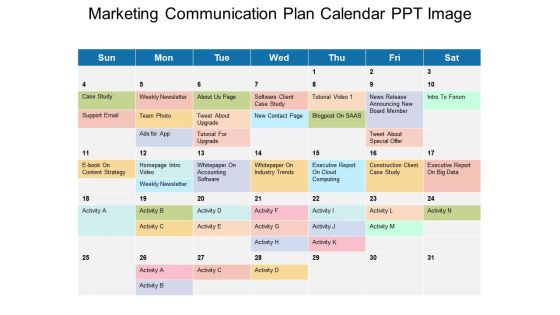
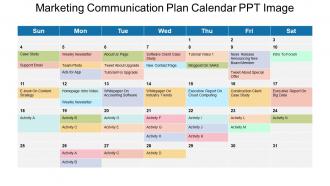
Present your important marketing communication plans and meetings with our marketing communication plan calendar PPT image template. This professional marketing communication plan calendar presentation graphic has been created to meet your business and marketing requirements. You can develop a strategic vision on various marketing opportunities and platforms that make your company come up with new and innovative methods to promote the offerings to your customers. With the help of our marketing communication plan calendar PowerPoint slideshow, you can define the methodologies and tactics adopted by your company to convey the message in a unique and creative manner to your existing and prospective customers about the offerings of your products and services. Our calendar PowerPoint design is easily editable as you can edit it as per your business need. So, share this calendar PPT design with your stakeholders, associates and team members. You may also check other PowerPoint slides that can easily fit into your presentation. Be the dark horse with our Marketing Communication Plan Calendar Ppt Image. Strike outof the blue with our Marketing Communication Plan Calendar Ppt Image
People who downloaded this PowerPoint presentation also viewed the following :
Marketing communication plan calendar ppt image with all 5 slides:
Institute definite guidelines to follow with our Marketing Communication Plan Calendar Ppt Image. Bring an end to any ambivalence.
FAQs for Marketing communication plan
Okay so first thing - figure out exactly who you're talking to, not just "millennials" but like specifically what kind. Set clear goals (sales? just getting your name out there?). Pick channels where your people actually are, not where you think they should be. Your messaging has to actually connect with them, you know? Budget everything out across those channels and map your timeline with real deadlines. Oh and definitely track metrics so you're not just throwing money into the void. The creative stuff brings it all together - how it looks and sounds. Honestly, just start with a basic template and adjust as you learn what works!
So SWOT analysis is basically your messaging blueprint. You take your strengths and build your main talking points around those. For weaknesses, figure out how to address them before your competition calls them out - trust me on this one. Market opportunities? Perfect for creating new content angles. The threat stuff is clutch because you're not caught off-guard when problems hit. I'd start by matching your biggest strengths to your key messages, then brainstorm content ideas based on whatever opportunities you spotted. It's way more straightforward than it sounds.
Okay so audience segmentation is honestly everything for your marketing plan. You're basically throwing money away without it. Different groups want completely different things - like that 25-year-old scrolling TikTok vs. some executive reading trade mags, you know? When you segment properly, your messaging actually hits instead of being ignored. Pick maybe 2-3 main groups to start with. Then you can speak their language instead of using boring generic stuff that nobody cares about. It's way more work upfront but you'll actually see results.
So basically you want all your channels saying the same thing, just in different ways. Like your TV ad sends people to a landing page, or you throw QR codes on flyers that link to your Instagram - that stuff actually works pretty well these days. Your email blasts can mention whatever's on the radio, social can boost your PR wins. Just don't make people feel like they're talking to totally different companies, you know? I'd start by figuring out where your customers actually go first, then build around that. Keep the look and messaging tight across everything.
Start with your basic reach stuff - impressions, website traffic, social engagement rates. Then dig into what actually makes you money: leads, email signups, sales. Brand awareness surveys are super valuable but honestly such a headache to do right. Match everything back to what you originally wanted - like if it was brand awareness, don't freak out about sales yet. I'd stick to maybe 3-5 key metrics so you're not overwhelmed. Oh, and definitely set up some kind of automated dashboard because manually checking everything gets old fast.
Dude, forget listing features - that stuff's boring as hell. Tell stories instead. Real customer struggles, how they found your solution, maybe some behind-the-scenes drama from building your company. People actually remember narratives way better than product specs. I swear, everyone tunes out during normal sales pitches. Structure everything around conflict and resolution - it's like basic storytelling but for business. Track what story bits get engagement and lean into those. Trust me, emotional hooks beat bullet points every single time.
Honestly, you really need a proper brand style guide first - logo rules, colors, fonts, messaging, all that stuff. Don't let people just improvise across different platforms (I've watched brands totally butcher their image this way). Get your team actually using the guide, and maybe assign someone to check content before it goes live on each platform. Oh, and do monthly audits to catch weird inconsistencies. Sounds boring but it works. Your brand will look way more professional when everything matches up instead of looking like five different companies.
So competitor analysis shows you what everyone else is doing so you can figure out your own angle. You'll see their messaging, what channels they use, and honestly where they're screwing up - which is gold for you. It helps you position yourself properly, like are you going budget or premium? I always find gaps they're missing too. The whole point is using that info to stand out, not just copying their playbook. Oh and don't get too caught up analyzing forever - I've seen people do that instead of actually launching anything.
So for executing your plan, I'd start with email stuff - HubSpot or Mailchimp work great. Buffer's my go-to for scheduling social posts, way better than posting manually all the time. Asana keeps everything organized (trust me, you'll need it). Google Analytics is non-negotiable for website tracking. Social listening tools like Mention are clutch for monitoring what people say about your brand. Don't go crazy though - pick maybe 3-4 tools that actually work together. I've seen teams burn out trying to juggle like 10 different platforms. Start simple, then add more once you've got the hang of it.
Honestly, build your crisis plan into your regular marketing strategy from day one - don't wait until you're panicking. Have templates ready to go, figure out who's gonna be the spokesperson for different situations, and map out how decisions get made when everything's on fire. I've watched companies totally bomb this and dig themselves deeper holes. Think about what could actually go wrong in your specific industry and write some basic holding statements ahead of time. Oh, and whatever tone you normally use? Stick with it during the crisis too - nobody wants your brand suddenly sounding like a robot lawyer when things get messy.
Honestly, short-form video is everything right now - TikTok and Reels are crushing it, even for boring B2B stuff which still blows my mind. AI personalization is huge too, plus interactive content like polls and AR filters. Oh, and micro-influencers beat out big names for authentic partnerships now. Voice search optimization matters more than people think. With third-party cookies dying, privacy-first marketing isn't optional anymore. Brands are building actual communities instead of just throwing ads everywhere. Don't try everything at once though - pick one or two that fit your audience and test them first.
Honestly, stop just posting and start actually talking to people. Figure out where your stakeholders hang out first - LinkedIn's solid for business folks, but Instagram and Twitter work better for regular customers. Share some behind-the-scenes stuff (people eat that up), then actually reply when someone comments. I know it sounds obvious, but most companies just ignore their mentions. Mix your promotional posts with genuinely helpful content they'd want to share with friends. The whole thing falls apart if you're not consistent though - can't just post randomly when you remember.
Honestly, just don't be shady about stuff. Be upfront about sponsorships and any paid content - people hate finding that out later. Also, back up whatever claims you make with actual proof. Privacy's huge too, so get consent before collecting data and tell people what you're doing with it. I'd also think about whether your messaging might accidentally exclude people or come off wrong. Oh, and don't manipulate emotions in sketchy ways, obviously. My rule? If you wouldn't want a brand doing it to you, don't do it to your customers. Pretty straightforward.
Honestly, you've gotta make feedback collection a regular thing - surveys, checking social media, actually talking to customers. Engagement rates and conversion data will tell you way more than your gut instincts (learned that the hard way). Don't wait for those boring quarterly meetings to make changes either. Real-time adjustments based on what people are actually saying? That's where the magic happens. Pick one feedback method this week and commit to monthly check-ins. Your campaigns will thank you later, trust me.
Honestly, internal communication makes or breaks everything. Your team has to get the messaging and timing before you launch anything external. Otherwise you'll have sales people looking confused when customers ask about your new campaign - super awkward. When everyone's on the same page though? They naturally become your best advocates at every touchpoint. Brief all your customer-facing teams first, always. It's like... you can't expect them to deliver consistent experiences if they don't know what you're promising. Short campaigns die fast when there's internal confusion.
-
Excellent design and quick turnaround.
-
Really like the color and design of the presentation.