

Análise da percepção dos consumidores em relação aos produtos lácteos Case Competition Complete Deck




Try Before you Buy Download Free Sample Product
 Impress Your
Audience
 100%
Editable
 Save Hours
of Time


No mundo atual de crescente concorrência, onde várias marcas vendem os mesmos produtos, os consumidores têm muitas opções e muitos fatores diferentes afetam seu comportamento de compra. A percepção do consumidor em relação aos produtos lácteos pode ser positiva e negativa, que são afetadas pelas estratégias da empresa. Aqui está um pitch deck projetado profissionalmente sobre Análise da Percepção dos Consumidores em relação aos Laticínios para resolver todos os problemas enfrentados pela indústria. Isso ajudará as empresas a identificar as novas estratégias, recomendações e soluções para superar os desafios, ou seja, a queda nas vendas de produtos lácteos devido à percepção dos clientes sobre os produtos lácteos. Essas estratégias podem ajudar a empresa a mudar positivamente a percepção dos clientes em relação aos produtos lácteos da empresa e ajudar a aumentar as vendas dos produtos. Usando gráficos e tabelas, pode-se mencionar as vendas totais mundiais das vendas, receitas e outros dados de suas empresas de produtos lácteos. Este pitch deck abrange a receita da empresa e a participação de mercado após a implementação bem-sucedida do plano. Ele também abrange as previsões financeiras com previsões de vendas de produtos lácteos para os próximos cinco anos e painéis relacionados às empresas de laticínios. Baixe o pitch deck e conecte-se conosco agora. Fale com nossos especialistas para todas as suas dúvidas e acesse o pitch deck para as percepções do consumidor em relação aos produtos lácteos.
People who downloaded this PowerPoint presentation also viewed the following :
Conteúdo desta apresentação em PowerPoint
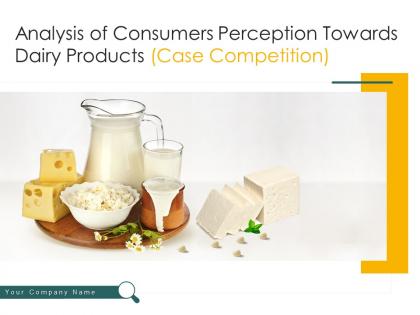
Slide 1 : Este slide apresenta a Análise da Percepção dos Consumidores em relação aos Laticínios. Indique o nome da sua empresa e comece.
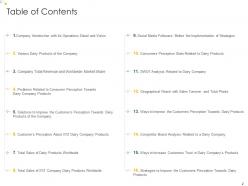
Slide 2 : Este slide mostra o Índice da apresentação.
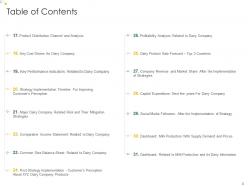
Slide 3 : Este é outro slide que continua o Índice da apresentação.
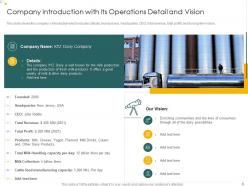
Slide 4 : Este slide mostra a introdução da empresa que inclui detalhes, ano de fundação, sede, etc.
Slide 5 : Este slide apresenta Diversos Laticínios da Companhia.
Slide 6 : Este slide mostra a Receita Total da Empresa e a Participação no Mercado Mundial.
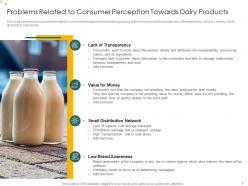
Slide 7 : Este slide mostra vários problemas relacionados à percepção do consumidor, incluindo falta de transparência, custo-benefício, pequena rede de distribuição etc.
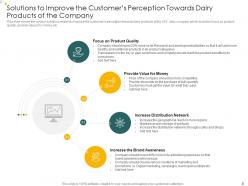
Slide 8 : Este slide representa Soluções para Melhorar a Percepção do Cliente em relação aos Laticínios da Companhia.
Slide 9 : Este slide mostra as várias soluções para melhorar a percepção do cliente em relação aos produtos lácteos.
Slide 10 : Este slide apresenta a Percepção do Cliente sobre os Produtos da XYZ Dairy Company.
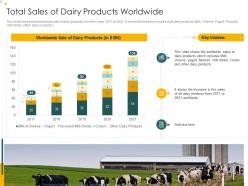
Slide 11 : Este slide mostra as vendas totais mundiais de produtos lácteos.
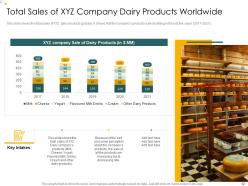
Slide 12 : Este slide representa as vendas totais de produtos lácteos XYZ globalmente.
Slide 13 : Este slide mostra os Seguidores de Mídias Sociais: Antes da Implementação das Estratégias.
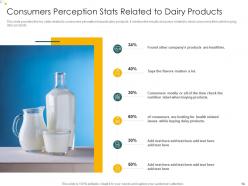
Slide 14 : Este slide apresenta as principais estatísticas relacionadas à percepção dos consumidores em relação aos produtos lácteos.
Slide 15 : Este slide mostra os pontos fortes, fracos, oportunidades e ameaças relacionadas à empresa de laticínios.
Slide 16 : Este slide apresenta o Alcance Geográfico com Volume de Vendas e Total de Plantas.
Slide 17 : Este slide mostra Maneiras de Melhorar a Percepção dos Clientes em relação aos Laticínios.
Slide 18 : Este slide representa a Análise da Marca Concorrente: Pelas Operações da Companhia.
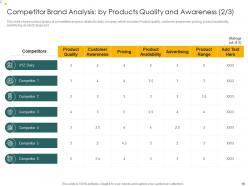
Slide 19 : Este slide mostra vários fatores de análise competitiva relacionados à empresa de laticínios.
Slide 20 : Este slide apresenta vários fatores de análise competitiva, incluindo Gestão, estrutura organizacional, etc.
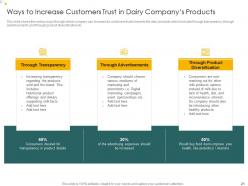
Slide 21 : Este slide mostra Maneiras de Aumentar a Confiança dos Clientes nos Produtos de Laticínios.
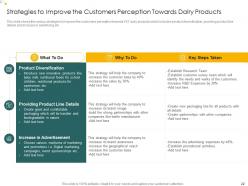
Slide 22 : Este slide representa Estratégias para Melhorar a Percepção dos Clientes em relação aos Laticínios.
Slide 23 : Este slide mostra o Canal de Distribuição e Análise do Produto.
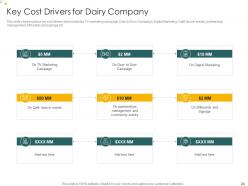
Slide 24 : Este slide apresenta os principais fatores de custo para a Dairy Company.
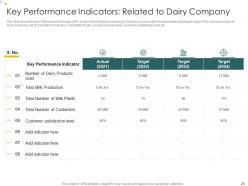
Slide 25 : Este slide mostra os Principais Indicadores de Desempenho: Relacionados à Companhia de Lácteos.
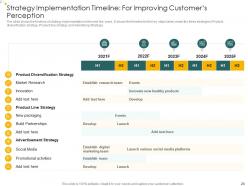
Slide 26 : Este slide representa o Cronograma de Implementação da Estratégia: Para Melhorar a Percepção do Cliente.
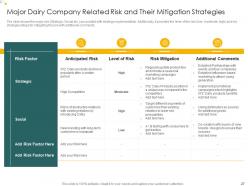
Slide 27 : Este slide mostra o risco relacionado às principais empresas de laticínios e suas estratégias de mitigação.
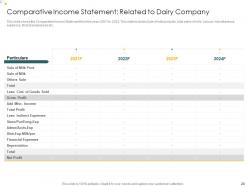
Slide 28 : Este slide mostra a Demonstração do Resultado Comparativo: Relacionado à Companhia de Lácteos.
Slide 29 : Este slide apresenta o Balanço Patrimonial de Tamanho Comum: Relacionado à Companhia de Laticínios.
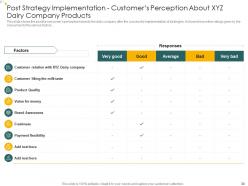
Slide 30 : Este slide mostra a percepção positiva do consumidor em relação à empresa de laticínios após a implementação bem-sucedida das estratégias.
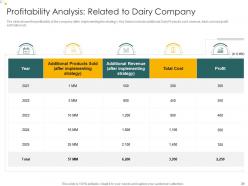
Slide 31 : Este slide mostra a Análise de Rentabilidade: Relacionada a Laticínios.
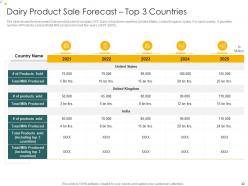
Slide 32 : O slide representa a previsão de venda de produtos lácteos da empresa XYZ Dairy nos três principais países.
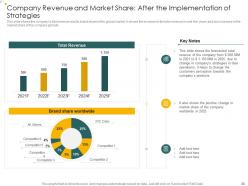
Slide 33 : Este slide mostra a Receita da Empresa e a Participação de Mercado: Após a Implementação das Estratégias.
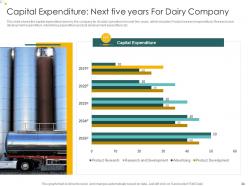
Slide 34 : Este slide apresenta o investimento de capital realizado pela empresa para suas operações diárias para os próximos cinco anos.
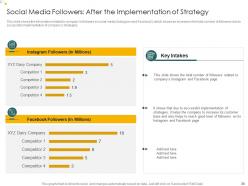
Slide 35 : Este slide mostra Seguidores de Mídia Social: Após a Implementação da Estratégia.
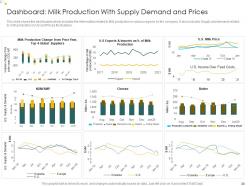
Slide 36 : Este slide mostra o Dashboard: Produção de Leite com Demanda de Oferta e Preços.
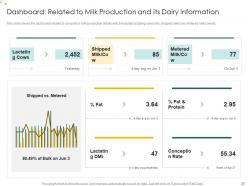
Slide 37 : Este slide representa o dashboard relacionado aos detalhes da produção de leite da empresa.
Slide 38 : Este slide mostra a Análise da Percepção dos Consumidores em relação aos ícones dos Laticínios.
Slide 39 : Este slide é intitulado como Slides Adicionais para avançar.
Slide 40 : Este é o slide Sobre Nós para mostrar as especificações da empresa etc.
Slide 41 : Este slide mostra o gráfico de colunas com a comparação de dois produtos.
Slide 42 : Este é o slide Nossa Missão com imagens e textos relacionados.
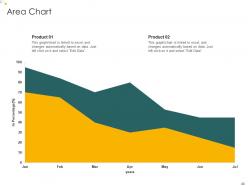
Slide 43 : Este slide mostra o gráfico de área com a comparação de três produtos.
Slide 44 : Este slide mostra Post It Notes. Poste suas notas importantes aqui.
Slide 45 : Este slide representa o Puzzle com ícones e textos relacionados.
Slide 46 : Este slide mostra o Roteiro com caixas de texto.
Slide 47 : Este slide representa o diagrama de Venn com caixas de texto adicionais.
Slide 48 : Este é um slide de linha do tempo. Mostrar dados relacionados a intervalos de tempo aqui.
Slide 49 : Este é o slide Nossa Meta. Indique os objetivos da sua empresa aqui.
Slide 50 : Este é um slide de agradecimento com endereço, números de contato e endereço de e-mail.
Análise da percepção dos consumidores em relação aos produtos lácteos Case Competition Deck completo com todos os 50 slides:
Use nossa análise da percepção dos consumidores em relação aos produtos lácteos Case Competition Complete para ajudá-lo a economizar seu valioso tempo. Eles estão prontos para se encaixar em qualquer estrutura de apresentação.















FAQs for Analysis of consumers perception towards dairy products case
Honestly, it comes down to three main things. Reviews are huge - people check Google, scroll through your socials, ask friends. Everything creates this overall vibe about your brand. Speed matters too when stuff goes sideways online. Don't leave people hanging because silence looks sketchy. Your brand story helps, but people have BS detectors now - authenticity isn't just nice to have, it's survival. I mean, fake reviews and corporate speak? Dead giveaway. Focus on getting real positive feedback and actually responding when problems pop up. Quick responses can turn disasters into wins sometimes.
Dude, packaging is HUGE for sales decisions. It's literally the first thing people see on the shelf. Colors and fonts hit you emotionally before you even think about it - makes stuff look expensive or cheap instantly. I'm totally guilty of buying random products just because they looked sleek lol. But the practical stuff matters too. Good spacing and clear info help shoppers figure out what you're selling fast. If you're redoing your packaging, definitely test it in actual stores with real people. Something that looks amazing in your office might completely disappear next to competitors.
Dude, social media reviews are huge for how people see your stuff before buying. Trust me on this - I check reviews for literally everything, even toothpaste sometimes lol. People believe other customers way more than ads these days. One bad review going viral can totally wreck your reputation overnight. Volume matters, but so does how recent the reviews are and the overall vibe. You've gotta stay on top of monitoring what people say across platforms. Respond fast when complaints pop up, and don't forget to ask happy customers to actually leave reviews. It's basically word-of-mouth but amplified like crazy.
Honestly, quarterly brand surveys are your best bet - maybe twice a year if money's tight. Ask the same questions each time about awareness and how people feel about you, otherwise you can't track changes. Social listening tools are amazing for catching real conversations about your brand as they happen. NPS surveys help with the loyalty piece too. Pick your metrics early and don't switch them up constantly or you'll never see patterns. Oh and definitely set up some kind of dashboard to visualize everything - way easier than staring at spreadsheets all day.
Dude, storytelling changes everything for how people see brands. Instead of being just another company selling stuff, you become something they actually give a damn about. Look at the brands you remember - bet it's because of their story, not their product features. Stories stick in people's heads way better than specs do. They make customers feel like they're part of something bigger. Honestly, it's probably the easiest way to stand out when everyone's competing on price. Find your authentic stories first - maybe how you started, crazy customer wins, or what you're actually trying to change in the world. That's your gold right there.
Dude, culture totally changes how people read your marketing stuff. Like, Americans might love a hard sell, but try that in Japan? You'll come off as super aggressive since they're all about being subtle. Colors mean different things, humor doesn't always translate - I learned this the hard way once. Family values, communication styles, even symbols hit people completely different depending where they grew up. Those generic global campaigns usually bomb because they ignore this stuff. Short version: do your homework on each market or you're basically shooting in the dark.
Dude, start with social proof - testimonials and reviews are everything because people just copy what others do. There's also this thing called the halo effect where if someone likes one part of your product, they'll think the whole thing is amazing. Honestly works way better than you'd expect. Try anchoring too - show your expensive option first so everything else looks like a deal. I'd probably pick one of these and just test it out first though, since even tiny changes can totally shift how people see your brand.
Honestly, consistency might be the most underrated thing in branding. People get sketched out when your stuff looks different everywhere - makes you seem unprofessional or like you don't have your act together. I've seen brands totally confuse customers by switching up their look randomly. Your visuals and messaging should feel the same whether someone's on your website or seeing your Instagram. Even tiny inconsistencies mess with people's heads. Just do regular check-ins on how everything looks and give your team some actual guidelines they can follow without overthinking it.
Honestly, celebrity endorsements work because we're wired to trust people we look up to - there's real psychology there. Your brand instantly feels more credible when the right celebrity backs it. Purchase intent can jump like 4% when done right. But here's where it gets tricky - if your celebrity gets caught in some scandal, your brand goes down with them. I'd say pick someone whose vibe actually matches your company, not just whoever has the most Instagram followers. That authenticity thing really matters more than pure star power these days.
So here's the thing - people shop completely differently online vs in stores, and it messes with their heads in totally different ways. When they're online, they're basically doing homework - reading tons of reviews, comparing specs, because obviously they can't touch anything. But in stores? It's all about the feels. They want to squeeze the fabric, get help from someone, walk out with their stuff immediately. The risks they worry about are different too - online it's like "will this even show up and not be a scam?" In stores they're more worried about annoying salespeople or not finding what they want. You gotta hit these different buttons when you're marketing to them.
Be upfront about what went wrong - don't try to sugarcoat it. Actions matter way more than words, so you'll need to consistently prove things have changed over time. Get happy customers sharing their stories, that social proof is gold. Honestly, I've watched companies try to fast-track this and it never works. Trust takes forever to rebuild, which sucks but that's reality. Keep your messaging simple. Show concrete proof of improvements - stuff people can actually see and check for themselves. Small wins first, then build from there.
Dude, your visual stuff is literally your first impression - and you don't get do-overs. People see your logo and colors and instantly decide if you're trustworthy, cheap, or worth their time. Starbucks? You spot that green from a mile away. Blue makes people think "reliable," red screams urgency, green feels chill or natural. Honestly, your visuals can make someone assume you're premium or bargain-bin before they even know what you do. So look at your current logo and colors - do they actually match the vibe you want customers to feel?
Look, when people actually use your stuff, that becomes their truth about your brand. Way more powerful than any ad you could run. They'll remember if it worked or if it was a pain to figure out - and honestly, those memories stick way longer than whatever you told them it would do. There's this emotional piece too that's hard to shake once it's formed. I mean, think about it - you'd trust your own experience over some company's promise, right? Bottom line: nail those first interactions because they're basically doing all your marketing work after that.
Okay so here's the deal with pricing - people literally judge quality by price tags. Charge more? They think it's better. But if your product sucks and you're charging premium prices, you're screwed because trust disappears instantly. Low prices have the opposite problem though - customers assume you're selling garbage even when you're not. Honestly, I've seen great products fail because they priced themselves into the "cheap crap" category. Your best bet is figuring out what your customers actually value most, then matching your price to that. It's like dating - everything has to align or it gets weird fast.
Dude, ethical branding is honestly a game-changer for how people see your company. Consumers genuinely want to back brands that match their values - especially younger crowds who'll actually pay more for stuff they believe in. Authenticity is everything though. People can smell fake "we care about the planet" BS from a mile away, and it backfires hard. Focus on real initiatives that matter. When you nail it, customers develop serious loyalty and emotional connections. My cousin's startup saw this firsthand - once they started genuinely supporting local causes, their repeat business doubled.
-
Design layout is very impressive.