


Application Of Artificial Intelligence In Manufacturing AI In Manufacturing




Try Before you Buy Download Free Sample Product
 Impress Your
 Audience
 100%
100% Editable
 Save Hours
 of Time


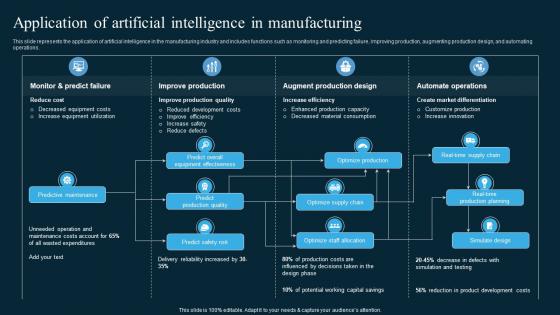
This slide represents the application of artificial intelligence in the manufacturing industry and includes functions such as monitoring and predicting failure, improving production, augmenting production design, and automating operations.
People who downloaded this PowerPoint presentation also viewed the following :
Application Of Artificial Intelligence In Manufacturing AI In Manufacturing with all 9 slides:
Use our Application Of Artificial Intelligence In Manufacturing AI In Manufacturing to effectively help you save your valuable time. They are readymade to fit into any presentation structure.








FAQs for Application Of Artificial Intelligence In Manufacturing
Honestly, start with predictive maintenance - it's a game changer. Your equipment basically tells you when it's about to break, so no more surprise downtime killing your schedule. Quality control gets crazy good too with AI spotting defects faster than any human ever could. Real-time production optimization is huge for efficiency, plus your energy bills drop since everything runs smarter. Oh, and supply chain stuff gets way smoother. Most companies see ROI in like 12-18 months, but don't try to do everything at once - pick one thing and nail it first.
So basically, AI watches all your equipment sensors around the clock and spots problems before they actually break. It picks up on weird patterns in vibration, temp changes, stuff like that - things we'd totally miss. Pretty game-changing if you ask me. Instead of dealing with surprise breakdowns, you can actually plan your maintenance ahead of time. Companies see like 20-40% less unexpected downtime, plus way cheaper repairs since you're catching things early. I'd start with whatever equipment would hurt most if it died, then get sensors feeding data into an AI system.
Honestly, AI crushes this stuff compared to human inspectors. The computer vision tech catches defects in real-time - scratches, weird dimensions, all that stuff we'd miss. Never gets tired either, which is huge for overnight shifts. What's cool is the machine learning actually improves as it goes, picking up new defect patterns and cutting down on false alarms. You'll get instant reports on quality trends too, plus it can predict when your equipment's about to start acting up. I'd say test it on whatever product line runs the most volume first - easier to see the impact that way.
So ML can totally transform your supply chain - it predicts demand way better than just guessing based on last year's numbers. The algorithms spot patterns we'd never catch and optimize inventory so you're not stuck with tons of dead stock. Route optimization saves serious money on shipping too. Oh, and predictive maintenance is huge - no more surprise equipment failures screwing up production schedules. Honestly, demand forecasting blew my mind when I first saw it work. I'd start there with your bestsellers, then build out to other areas once you see how well it performs.
Dude, AI is actually pretty incredible for workplace safety. Computer vision systems can catch unsafe stuff way faster than any human - like spotting equipment problems or workers doing risky things. They'll automatically shut down machines when something's wrong and send instant alerts to everyone. What's really smart is how they analyze patterns to figure out which areas of your workplace are accident magnets. My buddy's company rolled it out slowly instead of all at once, which was definitely the right call. Just make sure people actually get trained on it properly or they won't use it.
Yeah, totally! So AI can dig through your production data and spot where things are getting stuck. It'll figure out better ways to move materials around and suggest smarter equipment placement. The crazy part is how fast these algorithms can test thousands of different layouts - way quicker than doing it manually. You can cut down on worker walking time, shrink those inventory areas, and it even predicts where quality problems might happen based on how stuff flows. Some companies are hitting 15-20% efficiency boosts just from this. I'd probably start by getting your current setup mapped out digitally, then run it through some layout optimization software to see what pops up.
Dude, the AI robots are honestly crushing it compared to old-school manufacturing. You're looking at 20-40% better productivity most of the time. They predict when stuff's gonna break before it happens, adjust workflows on the fly, and don't need babysitting. Traditional setups just follow the same rigid schedule - kinda feels outdated now that I think about it. The smart systems actually get better over time by learning from data patterns. My advice? Try it on just one production line first. You'll notice the difference in speed and quality control pretty much right away. Worth the experiment for sure.
Honestly, you're gonna deal with three big headaches: job cuts, privacy stuff, and biased algorithms. Workers will lose jobs when you bring in AI - and that whole retraining thing gets messy fast. Plus these systems hoover up so much employee data it's kinda scary. Bias is probably the worst part though. If your AI makes hiring or safety decisions, it could totally screw over certain groups without you realizing. You need workers to actually understand what's happening to them. Set up solid data rules first, then - this sounds obvious but people skip it - actually talk to your team before rolling anything out.
Honestly, AI for inventory is a game changer. Your system can crunch historical data, seasonal patterns, even weird stuff like weather and social media trends - which sounds crazy but actually works. No more guessing with basic spreadsheets. It learns constantly and gets scary good at predicting exactly what you need and when. Prevents those annoying stockouts and expensive overstock situations. The forecasting adjusts in real-time too. I'd start with your best sellers first - you'll see results fast and it's less overwhelming than doing everything at once.
Oof, data integration is going to be your biggest headache. Legacy systems hate talking to modern AI stuff - they just weren't built for it. You're looking at pricey middleware or rebuilding everything from scratch. Most older equipment doesn't even have the sensors you need for real-time data collection. Good luck getting your operators on board too, they'll probably think the robots are coming for their jobs lol. Security's another mess since connecting old systems creates new ways to get hacked. Honestly? Start with small pilot programs on less critical stuff first to show it actually works.
Honestly, you need to track both the obvious savings and the productivity stuff. Direct cost cuts are easy - less labor, waste, downtime. But don't forget efficiency gains like faster production or fewer defects. The annoying part? Indirect benefits like safety improvements are real but super hard to put numbers on. Most people I talk to use this basic math: total benefits minus what you spent, divided by what you spent. Track it quarterly for a year minimum - anything less is pretty useless. Oh, and set up your dashboards now because scrambling for data later sucks.
So basically, AI analyzes your customer data to figure out what people actually want, then tweaks production automatically. Pretty smart stuff. Machine learning optimizes everything - product specs, packaging, whatever - based on individual preferences or regional trends. The system learns from past orders and market patterns, which is honestly kind of wild when you think about it. You can use computer vision and robotics to handle different product variants without overhauling your whole production line. My advice? Start with one product where you've already got solid customer data to work with.
So AI basically lets you see around corners in manufacturing. Predictive analytics spot demand changes before they actually happen, then you can shift production and inventory on the fly. The algorithms crunch everything - sales data, consumer patterns, even social media buzz (wild how much people reveal about buying habits online). Best part is real-time adjustments to your whole setup based on what's coming. You're not stuck making decisions off old data anymore. Honestly, start with demand forecasting tools first - they'll give you the most immediate improvement in how fast you can pivot.
So the big thing right now is predictive maintenance with IoT sensors - honestly, it's probably where you should start since the payback is pretty obvious. AI quality control using computer vision is everywhere too. Cobots are getting really popular because they can actually work next to people safely, which is wild if you think about it. Digital twins let you build virtual copies of your production setup to test stuff out. Oh, and supply chain optimization is huge. The crazy part is how these systems spot patterns in your data and catch problems before they even happen. Start with predictive maintenance though - seriously.
Honestly, I'd hit this three ways. Train your current people first - they already get how your company works, so teaching them AI stuff is way easier than starting fresh. Community colleges have decent AI programs now, and online courses are everywhere. The hiring market for "AI experts" is totally bonkers expensive right now, so don't stress about that. Partner up instead - maybe grab some contractors for specific projects or work with a local university. Your team can learn while they're doing actual work. Way more practical than throwing money at some consultant who'll disappear in six months.
-
“Excellent information with easy access.”
-
You guys are life-saver when it comes to presentations. Honestly I cannot do much without your services. Thank you!!!