

Application Of Artificial Intelligence In E Commerce Business




Try Before you Buy Download Free Sample Product
 Impress Your
 Audience
 100%
100% Editable
 Save Hours
 of Time


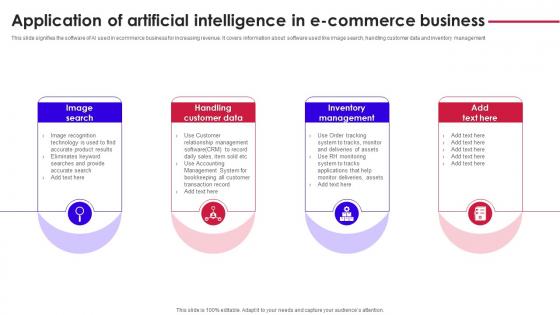
This slide signifies the software of AI used in ecommerce business for increasing revenue. It covers information about software used like image search, handling customer data and inventory management
People who downloaded this PowerPoint presentation also viewed the following :
Application Of Artificial Intelligence In E Commerce Business with all 6 slides:
Use our Application Of Artificial Intelligence In E Commerce Business to effectively help you save your valuable time. They are readymade to fit into any presentation structure.





FAQs for Application Of Artificial Intelligence In
So basically, AI tracks everything you do online - what you buy, what you browse, even how long you stare at stuff. Kind of creepy but also useful? It builds this profile of your taste and then shows you products you'll actually want instead of random junk. Those "recommended for you" sections aren't just lucky guesses - that's the AI doing its thing. Honestly, it's gotten scary good at predicting what I want to buy before I even know it myself. Saves time though since you don't have to dig through tons of irrelevant products anymore.
So basically, ML algorithms crunch through your sales history and spot patterns you'd never catch - like how rain spikes umbrella sales or whatever. They're actually pretty good at predicting when you'll need more stock. You can set up automatic reordering so you don't have to babysit inventory constantly. Plus they catch weird trends early, which is honestly kind of cool. No more tying up cash in dead inventory or pissing off customers with empty shelves. I'd start with just your bestsellers first though - test it out before going all in.
Honestly, the biggest headaches you'll deal with are privacy stuff, biased algorithms, and consent issues. Shopping data is super personal - it can expose health problems, money troubles, all sorts of private things. Your AI might accidentally discriminate against certain groups too, which leads to unfair pricing or weird recommendations. I'd be transparent about data collection and give customers actual control over their info. Oh, and definitely audit for bias regularly - that's huge. Get a decent data governance setup going first, then worry about the fancy stuff later.
Honestly, AI chat support is a game changer for online stores. Your customers get help instantly instead of waiting around for email replies - super important for stuff like tracking orders or return policies. The bot handles all the basic questions (seriously, it's way faster at finding order info than most people), then passes the tricky stuff to your team. Response times get so much better and customers actually like it. I'd start by looking at what people ask about most - those repetitive questions are perfect for automating. Oh, and it works 24/7 which is clutch.
Dude, AI is a game changer for demand forecasting. It crunches insane amounts of data - purchase history, seasonal stuff, social media chatter, even weather (which sounds random but actually makes sense). Your team won't have to guess anymore because these algorithms predict demand spikes crazy accurately. Pretty sure it's witchcraft at this point. You'll optimize inventory, cut overstocking costs, and dodge those awful stockouts. Best part? Most of it runs automatically. So your people can focus on bigger picture strategy instead of drowning in spreadsheets all day.
Dude, AI is a game changer for ads. It digs through all your customer data - what they buy, where they browse, demographics stuff - and finds these super specific audience groups you'd never spot yourself. The real magic happens with real-time optimization though. It automatically shifts your ad spend and targeting based on what's actually working. You can even personalize the creative and timing for each person, which honestly feels a bit creepy but works incredibly well. My advice? Start with dynamic retargeting campaigns first - they're usually your biggest quick win.
The fraud detection stuff is crazy good now - ML analyzes transaction patterns in real-time and catches sketchy activity way better than those old rule systems. Chatbots handle payment questions using natural language processing, and computer vision does identity verification through document scans and facial recognition. Speed improvements are honestly insane. Your payment routing gets optimized with predictive analytics to cut down failures. Risk scoring is personalized for each customer too. Oh, and definitely ask payment providers about their ML fraud models when you're shopping around - that's where you'll see the biggest boost in conversion rates. Trust me on that one.
So basically AI fraud detection works by spotting weird patterns in real-time that we'd totally miss. It tracks your purchase history, what device you're using, where you are, all that stuff. When something looks off - like suddenly buying a MacBook from Thailand when you live in Ohio - it flags it before the purchase goes through. Machine learning makes it smarter over time too, which is honestly pretty impressive. The tricky part is getting the sensitivity right so you're catching actual fraudsters without blocking regular customers who are just shopping somewhere new.
Dude, voice shopping is getting crazy good right now. The AI can actually follow complex stuff like "reorder my usual coffee but make it decaf this time" without getting confused. Smart speakers sound almost human now - it's honestly a bit creepy how natural they are. They're also getting better at predicting what you want based on your voice patterns and past orders, which is pretty cool I guess. If you're doing e-commerce, definitely try adding voice options for your bestsellers and reorder stuff first. Those seem to work best from what I've seen.
Dude, AI totally changes the game for product recommendations. Your system can track what customers browse, what they've bought before, and spot patterns you'd never catch - like how people buying organic stuff usually grab eco-friendly cleaners too. Way better than those basic "other customers viewed" suggestions everyone ignores. The algorithms actually learn from clicks and purchases, getting smarter over time. Honestly, it's pretty wild how accurate they get. Try collaborative filtering first, or check out Amazon Personalize if you want something more robust. Should definitely boost your conversion rates once it starts learning your customers' habits.
Dude, image recognition is a game changer for online stores. Your customers can literally just take a pic of something they saw and find similar stuff you sell. Virtual try-ons are huge too - way fewer returns when people can see how clothes or makeup actually look on them. I honestly think visual search beats typing keywords any day. People upload photos instead of trying to describe what they want. Oh, and you'll get way better at recommending products based on actual style instead of just "people who bought this also bought that" nonsense. Start with basic visual search though - it's not as complicated as it sounds.
Honestly, the scariest part is when AI screws up customer interactions - like making terrible product suggestions or handling complaints like a heartless robot. People get SO pissed when they feel ignored. Data privacy is another huge headache, plus algorithms can be weirdly biased against certain groups without you even realizing it. You'll also stop trusting your own judgment if you rely on AI for everything. My advice? Keep humans involved in big decisions and check your systems regularly. Otherwise you might wake up one day wondering why everyone hates your brand.
Oh this is actually really cool - NLP makes search understand what people actually want instead of just keyword matching. Like if someone types "comfy shoes for walking," it knows to show sneakers, not heels. It handles typos and synonyms too, plus context matters - "apple" in grocery vs electronics sections, you know? Honestly, the conversion boost alone makes it worth it since customers find stuff faster. I'd start with semantic search tools or even just better autocomplete. Way better than the old days of hoping customers type exactly the right words.
Honestly, start with conversion rates and average order value - that's where you'll see if the AI actually moves the needle. Customer lifetime value matters too. Click-through rates on your recommendations are huge. I'd also track how accurate your personalization is getting. Response times for chatbots, search relevance scores, cost per acquisition - all that operational stuff adds up. Oh and customer satisfaction scores because sometimes AI can feel super robotic, you know? Pick like 3-5 metrics that actually connect to revenue first. You can always add more later once you've got those figured out.
So AI can track competitor prices 24/7 and adjust yours automatically - way faster than doing it manually. It watches demand patterns and inventory too. Honestly, the speed is crazy impressive. Instead of updating prices weekly, you're constantly tweaking based on what's happening in the market. Plus it predicts when demand will spike and optimizes your margins without you babysitting it. I'd definitely test it on just a few products first though. See how it performs before you let it loose on everything - learned that one the hard way with other automation tools.
-
I have just started downloading templates for my presentations and I must say this is a great design. It helped accelerate my presentation design process and made it more visually appealing.
-
Innovative and Colorful designs.