


Architecture of master data management diagram




Try Before you Buy Download Free Sample Product
 Impress Your
 Audience
 100%
100% Editable
 Save Hours
 of Time


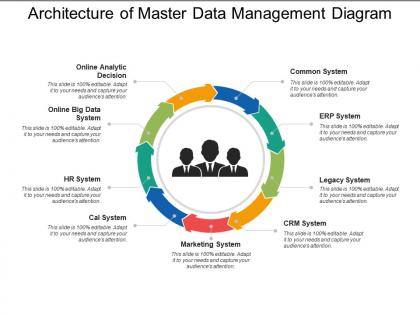
Download architecture of master data management PPT diagram that has been designed to understand the concept of MDM in the most desired way. Today it is crucial for every corporate firm to protect their business data and give complete attention towards its management. Professionals working in the corporate firms are always advised to protect the data and stay alert towards it. The key aspects that are shown in the presentation template are common system, ERP system, legacy system, CRM system, marketing system, call system, HR system, online big data system and online analytic decision. All leading companies adopt master data management to ensure best practices for the data protection. Our PPT slide has been crafted by experienced and skilled designing experts with complete focus to provide you the reliable source to share the information related to data management. So just download architecture of master data management presentation layout and just share it with your audience. To get access to more related designs and other business concepts, you can access our website. Our Architecture Of Master Data Management Diagram don't allow disparities to build up. It ensures equal empowerment.
People who downloaded this PowerPoint presentation also viewed the following :
Architecture of master data management diagram with all 5 slides:
Be charitable in your comments with our Architecture Of Master Data Management Diagram. Display the goodness of your heart.

FAQs for Architecture of master
So you've got a few key pieces to think about. Master data repository holds your clean "golden" records. Then there's integration tools for pulling data in and keeping everything synced up. Data quality engines handle the messy cleanup work - trust me, you'll need those. Don't skip the governance workflows either, they manage changes without chaos. You'll want matching logic to catch duplicates, plus APIs so other systems can actually use the data. Metadata management is huge too, otherwise you'll drown in confusion about what's what. Most setups include interfaces where business folks can review changes before they go live. Honestly, I'd map your current data mess first, then tackle whatever's causing the biggest headaches.
So you know how customer data gets scattered everywhere - sales has one version, marketing another, support something totally different? Traditional data management is basically playing catch-up constantly, fixing duplicates and errors after they've already caused problems. MDM flips that around. It creates one master record that feeds everything else. Instead of each department doing whatever they want (which honestly creates a nightmare), you're controlling data quality upfront. Way less cleanup, way more sanity. It's like having one person manage your address book instead of five people all making their own copies.
So data governance is like the foundation for your whole MDM setup. It decides who's responsible for which data and sets the quality rules. Plus it controls how master data gets created and updated across all your systems. Trust me, skip this part and you'll have duplicate customers everywhere - total nightmare. Picture it as traffic lights for your data flow, keeping everything consistent between apps. Oh, and make sure you define clear stewardship roles early on. Your MDM is only gonna be as good as your governance game plan.
Oh man, data quality is gonna be your worst enemy - duplicates everywhere, missing info, inconsistent formats. It's honestly exhausting. Getting different systems to play nice together is another nightmare. Plus the office politics around data ownership? Departments will literally fight over it. Building the whole infrastructure is way more complex than it looks on paper, and everything takes twice as long as planned. I learned this the hard way at my last job. Start with just one area first. Get the executives on your side early or you're screwed. And seriously, triple whatever time you think data cleaning will take.
Build data quality into your MDM from day one - don't try adding it later. Automated validation rules will catch duplicates and formatting mess before they pollute your master records. Trust me, I've watched teams skip this and it's painful. Someone needs to own data stewardship too, otherwise quality just... doesn't happen. Run regular profiling and cleanup routines. Oh, and get your business users involved - they'll spot issues you'd never catch. Set up feedback loops so they can flag problems as they see them. They're honestly your best quality control.
So there's a bunch of different tools you'll run into. Most companies use specialized MDM platforms - Informatica MDM, IBM InfoSphere, stuff like that. For storage, it's usually Oracle, SQL Server, or cloud things like Snowflake. ETL tools like Pentaho or SSIS handle moving data around. APIs are super important for real-time syncing between systems. Data quality tools like Trillium help keep everything clean (which trust me, you need). The whole tech stack gets messy fast depending on your data volume. I'd start by mapping your current sources first - makes choosing tools way easier.
So MDM is basically your data cleanup crew - it takes all those messy customer records floating around different systems and creates one master version everyone uses. No more "wait, is this the right phone number?" chaos. Your teams stop arguing about which database has the correct info, and suddenly your forecasts actually make sense. Leadership meetings become way less awkward when everyone's looking at the same numbers. Honestly, it's one of those things that sounds boring but saves your sanity. I'd start by figuring out where your worst data disasters are happening first.
Go with a hub-and-spoke setup first - it scales way better than anything else I've tried. Your data model should be flexible but honestly, don't overthink it or you'll be stuck refactoring forever. Build in governance stuff right away (validation, approvals, all that). APIs are your friend for connecting things since you can swap systems later without everything breaking. Oh and data quality monitoring? Set that up early and automate the cleaning - future you will thank me. Start with just customers or products to test it out, then grow from there once it's working.
Honestly, MDM is a lifesaver for compliance stuff. You get one clean dataset instead of pulling from like 15 different systems when auditors show up - which is always fun, right? It tracks where your data comes from and how it's changed over time automatically. No more spending weeks trying to make inconsistent data match up for reports. The whole thing becomes way less painful when you're not scrambling around different sources. I'd start by figuring out which regulations are gonna hit you hardest, then map out those data requirements first.
You're looking at six main types - Customer, Product, Supplier, Employee, Location, and Financial data. Customer stuff is what most companies freak out about (names, addresses, contact details, buying habits). Products cover your SKUs, descriptions, pricing structures. Suppliers handle vendor relationships and contracts. Employee data manages HR info and org charts. Location tracks facilities, warehouses, regions - basically anywhere you do business. Financial keeps accounting codes straight. Honestly, I'd start with whatever's causing your team the biggest headaches right now. That's where you'll see the most immediate improvement from getting your data house in order.
First thing - map out where all your data actually lives right now. Don't do the "big bang" approach, seriously, I've seen that blow up so many times. Instead, set up MDM as a hub that works with your existing stuff through APIs and ETL. Pick one area to start with (customer data usually works best), get your governance rules straight, then expand from there. The whole point is having one source of truth without breaking everything that's already running. Oh, and make sure you can show quick wins early on - executives love that stuff.
Track data quality stuff first - completeness rates, accuracy percentages, that kind of thing. Business metrics matter too though, like how many fewer duplicate records you're dealing with or if customer onboarding got faster. ROI numbers are huge for getting exec buy-in, so definitely measure cost savings from data integration. User adoption's key - are people actually using the system? Oh, and time savings on data tasks. Honestly, executives love seeing hard numbers on efficiency gains. Get your baseline measurements before you roll out, then check progress monthly. Don't go crazy with metrics though - 5-7 max or nobody'll pay attention.
Look, build security into your MDM from the start - don't try adding it later like some afterthought. Role-based access controls are your friend here, plus encryption everywhere and audit trails. Trust me, the compliance stuff will bite you if you skip this step. Also set up data masking for your test environments and automated monitoring for weird access patterns. Oh, and map out who actually needs what data first - sounds boring but it'll save you tons of headaches down the road. Your future self will thank you.
Cloud-native MDM and AI-powered data matching are the big ones right now. Real-time sync is everywhere too. Most companies are finally dumping their on-premise stuff for cloud flexibility - took them long enough! Self-service data governance is pretty cool actually, lets business users handle their own master data without bugging IT constantly. Data fabric architectures are connecting all those messy disparate systems way better than before. Oh, and graph databases are getting popular for complex entity relationships. You should probably check how your current MDM stack stacks up, especially if you're stuck with legacy systems.
Dude, cloud computing is totally changing how MDM works. Instead of being stuck with whatever hardware you bought, you can just scale up processing power when you need it - super helpful for those crazy data spikes. The APIs and microservices make everything connect way easier too. No more dropping tons of cash on server upgrades every few years (my last company was spending like $200k annually on that garbage). Short sentences hit different sometimes. Your data pipelines will actually work smoothly instead of constantly breaking. If you're dealing with multiple data sources or volume issues, definitely start looking at cloud-first solutions now.
-
Qualitative and comprehensive slides.
-
Great designs, really helpful.