

Barbara Minto Pyramid Principle Diagram




Try Before you Buy Download Free Sample Product
 Impress Your
 Audience
 100%
100% Editable
 Save Hours
 of Time


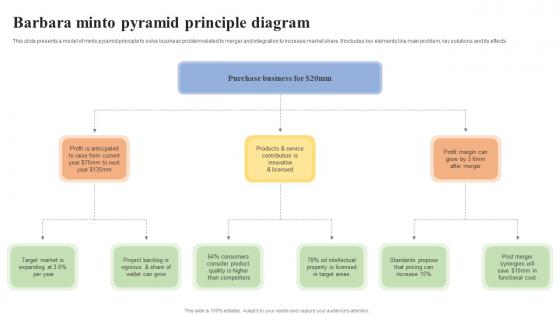
This slide presents a model of minto pyramid principle to solve business problem related to merger and integration to increase market share. It includes key elements like main problem, key solutions and its effects.
People who downloaded this PowerPoint presentation also viewed the following :
Barbara Minto Pyramid Principle Diagram with all 6 slides:
Use our Barbara Minto Pyramid Principle Diagram to effectively help you save your valuable time. They are readymade to fit into any presentation structure.






FAQs for Barbara Minto
Oh dude, the Minto Pyramid thing is a game changer! You basically flip your whole presentation - start with your conclusion RIGHT up front, then back it up with all your supporting stuff grouped below. It's so much better because people aren't sitting there wondering what your point is. I used to ramble through data for like 10 minutes before getting to my actual recommendation and everyone looked confused as hell. Just try it next time: boom, here's what I think you should do, now here's why in organized chunks. Way less painful for everyone.
So the Minto Pyramid is basically about flipping how you normally present stuff. Start with your big conclusion right at the top. Then underneath, group your supporting points logically - each level should answer "why?" or "how?" about what's above it. Honestly, it's way better than just throwing information at people randomly. I tried it last month and my boss actually understood my proposal for once lol. When you're prepping your next deck, just lead with whatever you're recommending upfront. Then build your case with 3-4 solid arguments underneath. Takes some practice but it really works.
Honestly, the Minto Pyramid is perfect when you're dealing with executives or anyone who's constantly checking their watch. Start with your conclusion first, then build your supporting points underneath. Board meetings? Client pitches? This structure is clutch because busy people will literally zone out if you take too long to get to the point. I mean, you've got maybe 30 seconds before they're scrolling through emails. Works great for complex recommendations or strategic stuff where you could easily ramble. Trust me, your audience will actually pay attention when you cut straight to what matters.
So the visual hierarchy thing basically mirrors how you're building your argument. Put your main point right at the top - that's your conclusion. Then stack your supporting reasons underneath, and save all the nitty-gritty details for the bottom. It's kinda like an org chart but for thoughts, which sounds weird but actually works really well. When people are skimming (and let's be honest, they always are), they'll still catch your key message. Use headings and bullet points to make those levels super obvious. The whole "conclusion first" approach feels backwards at first, but it's a game changer.
So basically, put your main point right at the top - that's what grabs people. Then underneath you've got your supporting arguments (I usually stick to 3-4 because more gets messy). Each argument needs backup data at the bottom level. It's like building upside down - start with what matters most instead of making people wait. Your conclusion should hit the "so what?" right away. The rest flows from big picture down to specifics. Honestly, most presentations do this backwards and lose people. Try leading with your recommendation next time, then prove why you're right.
Start with your main point right up front, then back it up with 3-5 solid arguments. People get bored fast when they don't know where you're headed. I used to bury my conclusion at the end - big mistake! Now I lead with the bottom line in every section, then get into the details. Your audience will actually follow along instead of checking their phones. The whole thing flows way better too. Honestly, it's kind of obvious once you try it, but took me forever to figure out. Give it a shot next time - you'll notice people way more tuned in.
Oh totally, the Minto Pyramid thing is perfect for reports! Lead with your main point right up top, then back it up with your supporting arguments below. Honestly way better than presentations because people can jump around to whatever section they care about. No more burying your conclusion on page 5 - which I've definitely been guilty of before. Short sentences work great too. Just map out the pyramid structure before you start writing and you'll avoid rewriting the whole thing three times like I usually do.
Don't bury your main point - that's the biggest mistake I see. Start with your conclusion, not some dramatic buildup. Also, stick to 3-4 supporting points max per section or people's eyes glaze over. Make sure your groupings actually make sense together too. The thing that drives me nuts? When people just list stuff without connecting the dots. Oh, and don't mix argument types - like putting "here's what happened" with "here's what we should do" at the same level. Keep each layer focused on one question. Quick test: could someone follow your logic reading only the headers?
So with the Minto Pyramid, you basically start with your main point right away - no beating around the bush. Then you organize all your supporting stuff underneath in logical chunks. People can actually follow what you're saying instead of zoning out. It creates this natural flow where they ask better questions and think through problems more systematically. Honestly, most presentations are such a slog because people save their conclusion for the end. Try structuring your next one this way and watch how differently people engage. They'll ask way sharper questions since they know where you're headed from the start.
You want smooth bridges between your main point and proof. Throw in phrases like "Here's why" or "This breaks down into..." - stuff that feels natural. I always picture building steps where each one makes sense after the last. Your facts should answer the "so what?" questions people are already thinking. Honestly, half the battle is just reading it out loud. If it sounds choppy, keep tweaking until it flows like you're actually talking to someone. Each piece should feel like a logical next step, not some random jump.
So Minto basically flips presentations on their head - you start with your conclusion instead of making people wait for it. Like, open with "here's what we need to do" then back it up with your reasoning. Way better than the old school approach where you drag everyone through analysis before getting to the point. Who has time for that? Your audience actually knows where you're going from the start, which honestly just makes more sense. Next time you present something, try leading with your recommendation first. Then group your supporting stuff logically underneath it. Game changer.
So audience analysis is huge for the Minto Pyramid - it literally shapes your whole structure. Figure out what they already know and what keeps them up at night. Your CEO cares about different stuff than your teammates, obviously. The pyramid framework stays the same, but you'll emphasize different supporting points and frame your main conclusion differently. Honestly, I always map out their probable concerns first - saves me from restructuring everything later. Which arguments you push hardest really depends on their priorities and how much context they need.
Honestly, hands-on workshops work best. I'd grab some actual company emails or reports - the messy ones - and have new hires restructure them using pyramid thinking. Those "before and after" exercises really click for people. Then drill the "So what?" test into everything they write. Lead with your conclusion, dump the supporting stuff underneath. Give them templates for the usual suspects (project updates, proposals, whatever). The whole point is making it automatic through practice, not lecturing about theory. Oh, and get managers to actually call this stuff out during reviews - otherwise people forget.
Dude, McKinsey basically made their whole thing around the Minto Pyramid - now every consulting firm trains people on it. CEOs use it for board presentations, investment banks structure their pitch decks this way (seriously, those things are like shrines to pyramids). Government policy briefs, tech product docs, you name it. Oh and banks are obsessed with it for some reason. But honestly? It works. Start with your conclusion, then hit them with your three best points to back it up. Super simple but game-changing for presentations and even important emails.
Presentation software is your best friend here - Prezi or PowerPoint can reveal your pyramid piece by piece, which looks way cleaner than dumping everything at once. I always plan mine out first in Miro or similar mind mapping tools (total game changer for organizing thoughts). Interactive dashboards are cool if you want people clicking through at their own speed. Oh, and don't go overboard with fancy animations - they're distracting as hell. Pick whatever makes your main point → supporting details hierarchy super obvious. The tech should just make your logic easier to follow, not harder.
-
The customer care of SlideTeam is very responsive. I was having a payment issue and they fixed it for me in no time.
-
Designs have enough space to add content.