


Behaviour and attitudes powerpoint slides




Try Before you Buy Download Free Sample Product
 Impress Your
 Audience
 100%
100% Editable
 Save Hours
 of Time


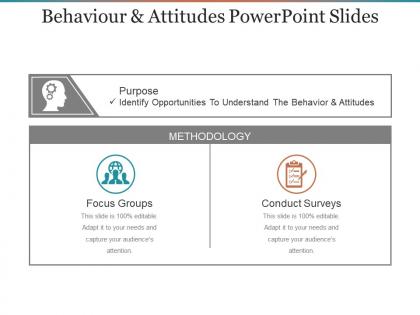
Behaviour attitudes PowerPoint slides are designed by professionals after extensive research and covers all the major aspects of this domain. One can readily use this behavioral study PowerPoint template to explain the behavioral analysis of the group under study. Furthermore, the presenter can also focus on advanced topics related to the domain and more. In this way, the presenter is sure to cover this topic without much trouble. The entire layout of the slide includes vector-based illustrations that are extremely easy to comprehend. This behavior and attitude PPT Powerpoint graphic is a perfect visual aid, that helps to explain the topic to your audience. With so many advanced features, namely the one mentioned here below, this PowerPoint infographic is undoubtedly an essential slide graphic for every professional related to almost any company or industry. Our Behaviour And Attitudes Powerpoint Slides provide the pitch to bowl on. Mesmerise your audience with your guile.
People who downloaded this PowerPoint presentation also viewed the following :
Behaviour and attitudes powerpoint slides with all 5 slides:
Connect the dots using our Behaviour And Attitudes Powerpoint Slides. Fan expectations as the whole picture emerges.
FAQs for Behaviour and
Dude, culture basically programs how we think about everything - what's normal, what's not, how to act around authority figures. Like, some cultures are all about the group while others worship individual success, you know? And people express disagreement totally differently too. I swear half the miscommunications I see happen because someone's not picking up on these cultural differences. If you're trying to understand why someone acts a certain way, you've gotta look at their cultural background first. Otherwise you're both just talking past each other.
Dude, emotions totally run the show when people buy stuff. Most customers think they're being logical, but really? Their feelings made the decision already. Fear works great. So does nostalgia - that one's like marketing gold honestly. You want people to *feel* something about your product first, then maybe sprinkle in some facts later so they can tell themselves it makes sense. I've seen campaigns bomb because they led with features instead of hitting people in the gut first. Storytelling is your best friend here. Logic is just the excuse people use after their heart already said yes.
Honestly, I'd start simple with surveys and maybe Google Analytics to see what customers actually do on your site. Social media monitoring is clutch too - people don't hold back when they're complaining about brands online lol. Customer interviews take more time but give you way better insights than just looking at numbers. Heatmapping tools show where people click and scroll, which is pretty cool. A/B testing different approaches helps figure out what actually works. Don't try doing all this stuff at once though - pick maybe two methods first. Mix the hard data with the actual stories people tell you.
So basically, understanding how people actually *feel* about stuff helps you predict what they'll do - not just what they claim they'll do in surveys. You can group your audience by what actually motivates them, then hit those emotional buttons that work. Way better than just guessing, honestly. Like, if someone's already skeptical about your product type, you know to tackle that head-on. Or if they're pumped about certain benefits, lean into that. I'd start by asking customers how they really feel about what you're selling, then build your messaging around those insights. Makes everything way more targeted.
Honestly, social media messes with your head more than you realize. Those algorithms feed you stuff that already matches what you think, so your views get more extreme over time. The whole likes and shares thing? It's basically training your brain to crave validation in weird ways. Plus you're constantly seeing everyone's perfect moments - which obviously isn't real life but still makes you feel crappy about yourself. I've noticed I get way more stubborn about my opinions when I'm scrolling a lot. Try mixing up your feed or just taking breaks. Sounds basic but it actually helps reset your brain.
Your customers' brains are basically working against you half the time. They'll assume expensive = better quality (anchoring bias is wild). Or they stick with crappy solutions just because switching feels risky - even when yours is obviously superior. People also desperately want what others have, so social proof becomes huge. Here's the weird part: they care way more about avoiding loss than gaining something new. You've gotta spot these patterns when you're doing customer research. Work with their psychology, don't fight it. Otherwise you'll accidentally trigger the wrong mental shortcuts and mess up your whole positioning strategy.
Honestly, I'd start by just asking people what's bugging them - surveys or casual conversations work. Most folks will tell you straight up if you actually listen. Get your managers to model the right stuff first though, because if they're being negative, forget it. Nothing's gonna change. Recognition programs help when people do act positive. Training can work too, but look at your actual policies - sometimes you're accidentally rewarding the wrong behaviors without realizing it. Oh, and don't try to fix everything at once. Pick one team to test things out with first. Way easier to course-correct that way.
Honestly, you've gotta figure out what actually drives each person on your team - and I'm not talking about salary stuff. Some people light up with public shoutouts, others cringe at that and want quiet recognition instead. Pay attention to who needs autonomy vs. structure, who's hungry for growth opportunities. Then design your approach around those patterns instead of doing the same thing for everyone. I learned this the hard way tbh - used to think team lunches motivated everyone equally (spoiler: they don't). Just ask people directly what makes work meaningful for them. Most managers skip this step but it's game-changing.
So here's the thing - people stick with brands they actually like. Sounds obvious but it's true. Positive feelings about your brand = customers who keep coming back instead of jumping ship to competitors. You know how you probably have that one coffee shop or whatever that you're weirdly loyal to? Same concept. Strong brand attitudes make people less likely to care about competitor deals and more willing to pay extra. The whole thing comes down to building those good emotional connections through experiences that actually matter to your customers. Focus on that consistency and you'll turn random buyers into repeat customers.
You can't just blast the same message to everyone anymore - each generation wants completely different stuff. TikTok's where Gen Z hangs out, and they love raw, authentic content plus brands that actually care about causes. Millennials are all about that personalized touch and live on Instagram. Gen X? Keep it simple and direct (they're kinda over flashy marketing tbh). Boomers still check email religiously and use Facebook way more than you'd think. Figure out which group you're actually targeting first, then match your vibe to theirs.
So reinforcement is basically what makes attitude changes actually stick. You reward the behaviors that match the new attitude you want, and the old habits just fade away. Think of it like your brain rewiring itself - honestly, it's pretty wild how well it works. Positive reinforcement beats punishment every time though. Catch people doing the right thing and call it out right away. If you're trying to change your team's mindset about something, celebrate those small wins when you see someone acting how you want them to. That's what makes it permanent.
Honestly, attitudes spread through teams faster than office gossip. Positive vibes - like people actually helping each other or bouncing back from setbacks - create this safe space where everyone feels comfortable speaking up. Bad attitudes though? Total nightmare. I've seen one grumpy person poison an entire department (and management just... ignored it for months). When attitudes go south, you get people quitting left and right. Productivity tanks. Different teams start acting like enemies instead of teammates. The trick is jumping on attitude problems early and showing people how you want them to act.
Dude, people's attitudes are everything when it comes to policy success. Ignore how the public actually thinks? Your policy's dead in the water. Tax compliance, vaccination rates, voting - it all comes down to how people feel about government, risk, fairness, you name it. Psychology literally drives politics (which is kinda terrifying if you think about it). The smart politicians? They design stuff that works WITH human nature instead of fighting it. So yeah, whenever you're looking at some new policy proposal, just ask yourself what's gonna make people love it or hate it.
So basically, everything that happens to you becomes this mental reference library for how you'll handle stuff later. Good experiences, bad ones, even boring ones - they all stack up and influence your reactions. Childhood stuff hits different because you're so impressionable then, which is honestly kind of unfair when you think about it. But here's the thing - you're not stuck with those patterns forever. New experiences can totally rewrites old programming. You just gotta notice which past experiences are still running the show and actively seek out different ones if they're not serving you anymore.
Social proof works really well - show people that others like them are already doing what you want. Give something first, then people feel like they owe you (reciprocity thing). I'd avoid going too hard on fear tactics though, they usually just make people tune out. One trick that's pretty effective is pointing out how someone's actions don't match their values - creates this uncomfortable feeling they'll want to fix. But honestly? It all depends on who you're talking to. Test different approaches with your specific crowd and see what actually gets them moving.
-
Awesome presentation, really professional and easy to edit.
-
Top Quality presentations that are easily editable.